


Stories from the Field
SHARE
SHARE
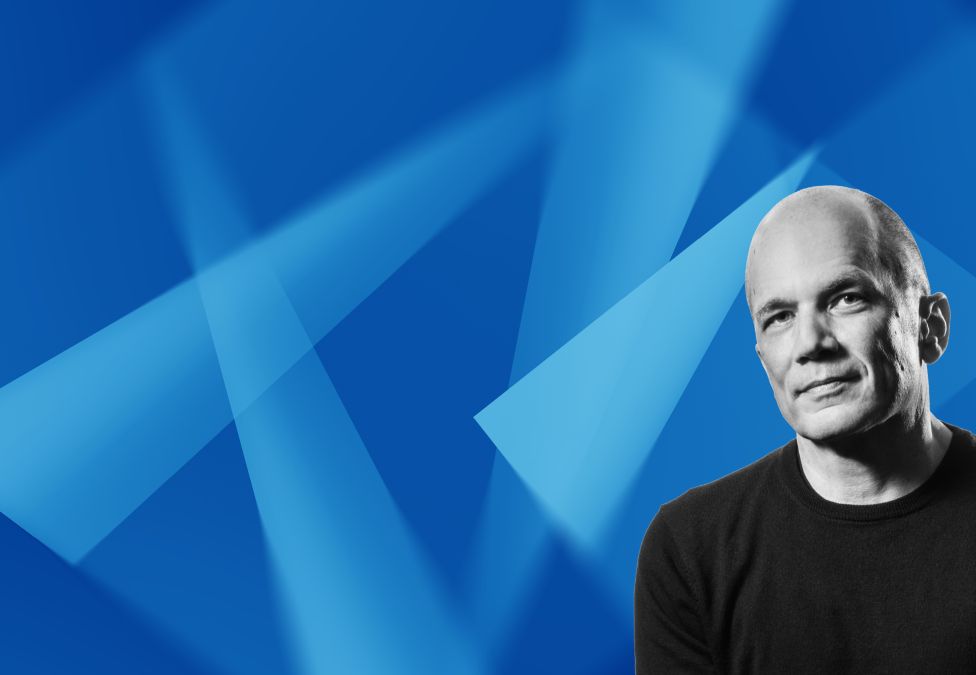
You founded Michael Maltzan Architecture in 1995, and your work spans cultural institutions, city infrastructure, and some of Los Angeles’ most recognized housing. What drew you to work at the intersection of architecture and the public interest?
From our very first project, Inner-City Arts in Skid Row, Los Angeles, CA, our work has explored ways in which architecture can have meaningful consequences in every part of society and culture. I believe all architecture has a responsibility to serve the public interest, no matter its scale or budget. Working with organizations and individuals who share that commitment matters to me personally, but it’s also a way to test architecture’s ability to create positive change on some of our most pressing issues.
Much of your work, including permanent supportive housing, treats buildings as social catalysts, not simply structures. How do you see design’s role in making communities more resilient, both physically and socially?
The challenges many communities face aren’t one-dimensional; they’re numerous, complex, and interconnected. To create genuine, positive change, you often have to find solutions that work across those relationships. Architecture is a unique discipline because its very nature is to take complex inputs, synthesize and distill them, and propose a considered, designed response. That makes design a powerful tool for bringing economic, social, cultural, and even aesthetic potential together into a unified approach to problems that often seem intractable. Architecture thrives on complexity, and that’s a defining strength of the discipline.
The 2025 Los Angeles fires exposed how vulnerable even long-established communities can be. How has that moment shaped the way you think about rebuilding neighborhoods to be more resilient and equitable?
Designers and architects can do a great deal to make communities more resilient as they rebuild after the fires. Many of those approaches aren’t complicated; they may be technical, but much of that knowledge already exists. Making communities more equitable is the bigger challenge, because it requires a wide range of groups, from community organizations and government to finance and insurance, to agree that they want an equitable future. As designers, we can propose, plan, and hopefully build test cases that show what’s genuinely possible, but we need to create partnerships across all of these groups to move a vision for equitable development forward towards realization.
At the Milken Institute’s Financial Innovations Lab® on community resilience, one idea was a stakeholder-driven community plan bringing residents, insurers, government, and investors together to identify and finance risk-informed projects, and your firm applied it to Altadena. What led you to propose this approach, and how could it change the way neighborhoods are rebuilt?
I’ve seen how essential all of these stakeholders are to moving any community plan forward. In Altadena, we’re working to rebuild an entire block, with multiple landowners and varied residential and commercial uses, around a forward-looking idea: an intergenerational village. There really isn’t anything like it, yet it has the potential to give physical form to a vision of Altadena’s future. It would provide a model for how we can be both ambitious and simultaneously rooted in a community.
What was one insight from the Lab conversations that surprised you or reshaped how you approach your own work?
What stood out to me was the extraordinary depth of talent and experience the other participants brought in government, economics, and finance. But all of that expertise needs a shared vision to rally around and move forward. That’s where architecture and design can be of great benefit, proposing a vision that acts as a catalyst to prompt collective innovation.
If the Altadena plan succeeds, what do you hope it proves to other communities, and what will it take for design, insurers, and private capital to come together at that scale?
If we can realize even a part of what we are proposing in Altadena, I think it proves, simply, that it’s possible: that ambitious plans can come from the community, serve the community, and offer a model for how other communities might build their futures. What struck me at the Lab was that the partners we need in insurance and private capital aren’t abstractions. At the end of the day, they’re individuals. It takes a group of people with the ambition and motivation to drive forward-looking, beneficial change. After the Lab, that seemed clear: it’s individuals coming together and leveraging their talents to make something great, something we can all be proud of, something we can participate in collectively with shared optimism.
SHARE
Related Content
-

As Global Disaster Losses Top $200 Billion a Year, a New Report from the Milken Institute Identifies Pathways for Greater Investment in Resilience Against Extreme Weather Events
A Financial Innovations Lab project identified key building blocks of a resilient community and developed financial, policy, and partnership pathways to achieve them.Read ArticleImage
Chad Clinton
Director, Media RelationsChad Clinton is the director of media relations for the Milken Institute. Hired to this role in August 2021, Clinton develops and executes strategies to amplify the Institute’s core messages by generating coverage of its pillar workstreams, experts, and events. -
Ensuring a Better Future: Innovative Financing for Resilient Communities
We live in a new reality of extreme weather events, unprecedented in their intensity and frequency. Thunderstorms, hurricanes, and fires intensify within hours, catching entire neighborhoods off guard.Read Report
-

One Year After the Fires, A Lesson in Community Resilience
One year after the January 2025 Los Angeles wildfires, the costliest wildfire event in global history, with over $130 billion in extreme weather losses, communities face a growing resilience crisis as insurance markets retreat, public...Read ArticleImage
Théo Cohan
Director, Catalytic Capital, Milken InstituteThéo Cohan is a director of catalytic capital at the Milken Institute, focusing on communications and marketing strategies, and partnerships, and working with her team to develop and execute Financial Innovations Labs®. -

Stories from the Field: Lynn Faria
Over the past decade, I’ve witnessed a profound evolution in how lesbian, gay, bisexual, transgender, and queer (LGBTQ+) aging is understood and prioritized within our communities and systems of care.Read Article -
Request for Information on Implementation of the Community Disaster Resilience Zones Act of 2022
The Milken Institute welcomes the opportunity to comment on the implementation of the Community Disaster Resilience Zones Act (CDRZA). We commend Congress and the Federal Emergency Management Agency (FEMA) for lifting up the importance of...Read LetterImage
Dan Carol
Managing Director, Milken Institute FinanceDan Carol is a managing director on the Milken Institute Finance team. He leads Institute programming to accelerate effective deployment and financing of community-scale and climate resilient infrastructure, scale up regional innovation, and scale-up public-private partnerships. -

Staying Power: The Effects of Short-Term Rentals on California’s Tourism Economy and Housing Affordability
Short-term rentals (STRs) are critical to regional economies, offering unique and affordable experiences to visitors, generating significant tax revenue to support local governments, and providing hosts significant income. In some places...Read Report -
Provo-Orem, Utah Tops Milken Institute’s 2021 Ranking of Best-Performing Cities
California’s San Francisco and San Jose—in the top five last year—dropped to Tier 2 due to high housing costs and short-term job loss; Idaho Falls, Idaho, is No. 1 among small US cities. Los Angeles – Feb. 17, 2021 – Provo-Orem, Utah has...Read ArticleImage
Kevin Klowden
Senior Fellow, Milken Institute FinanceKevin Klowden is a senior fellow at Milken Institute Finance. He specializes in the study of key factors that underlie the development of competitive regional economies (clusters of innovation, patterns of trade and investment, and concentration of skilled labor) and how these are influenced by public policy and, in turn, affect regional economies both globally and nationally.
