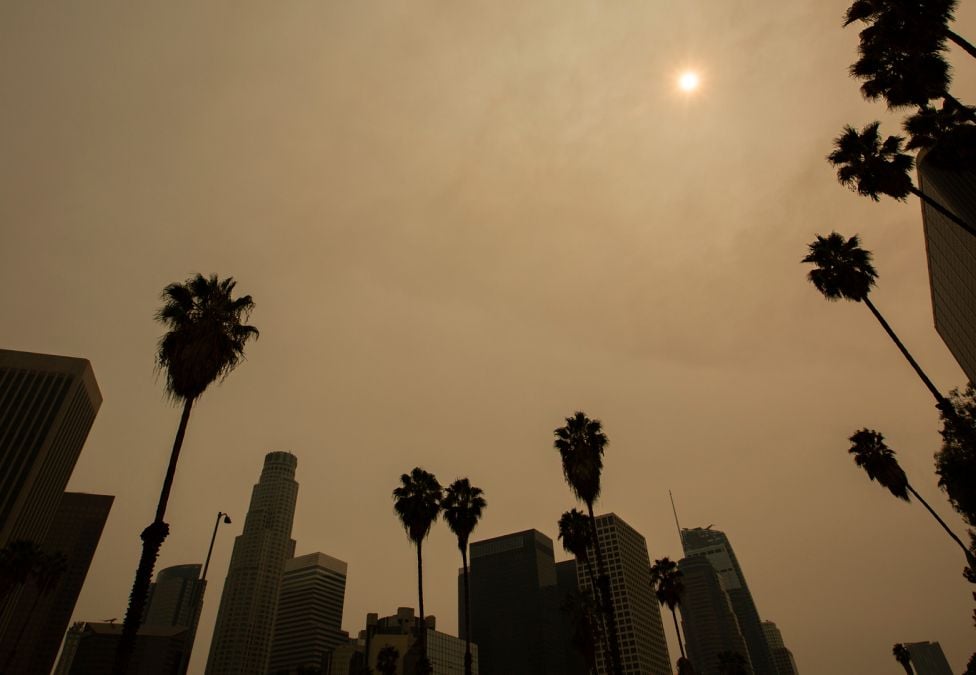
One year after the January 2025 Los Angeles wildfires, the costliest wildfire event in global history, with over $130 billion in extreme weather losses, communities face a growing resilience crisis as insurance markets retreat, public funding stalls, and climate risks accelerate. Beyond the immediate devastation, the fires exposed a deeper, growing vulnerability: As climate risks intensify, many communities are increasingly ill-equipped to recover, adapt, or remain economically viable.
Public funding sources are strained and unable to keep pace with the scale of damage. Insurance markets are pulling back, shrinking coverage or raising premiums to levels that price out households and businesses. Rebuild timelines are lengthening, and in some areas, uncertainty is becoming permanent. Left unaddressed, this convergence risks rendering communities uninsurable, uninvestable, and ultimately unlivable.
Yet the year since the fires has also surfaced important lessons about what resilience can look like when planning, governance, and private investment are aligned. One of the clearest examples comes not from emergency response, but from preparation.
Designing for Risk Before Disaster Strikes
The Getty Museum offers a compelling case study in investing for institutional resilience. Since the 1970s, the original Getty Villa in the Pacific Palisades has operated with an explicit awareness that it sits in a wildfire-prone zone. When the modern Getty Center complex was built in the Brentwood Hills in the late 1990s, that same risk consciousness was embedded in its design.
Both sites were constructed to withstand extreme weather events. The Getty Center includes a one-million-gallon water reservoir, while the Villa features an extensive irrigation system and double-walled construction designed specifically to resist fire. Advanced air-handling systems allow the buildings to be fully sealed, preventing smoke and particulate infiltration. When the sites reopened after the fires, there was no lingering scent of smoke inside—an outcome that reflects engineering decisions made years earlier.
These measures were often viewed as extraordinary, but they were actually the result of long-term planning informed by risk, not optimism.
Governance, Training, and Active Risk Management
Physical infrastructure alone did not protect the Getty. Years of thoughtful planning and operational readiness were equally decisive.
Sixteen staff members with leadership responsibilities were specially trained in emergency preparations, and the Getty maintains regular contact with the Los Angeles Fire Department. Training protocols are updated annually, ensuring preparedness evolves alongside changing conditions. During the fires, staff operated from an emergency command room equipped with extensive camera coverage across both locations, providing real-time visibility as threats advanced.
As the fires moved closer, teams sealed doors and windows to prevent air exchange and continuously monitored conditions. The Getty had also invested in small, maneuverable fire trucks capable of navigating the grounds. Staff used extinguishers and hoses to suppress nearby brush fires, preventing escalation.
At the time of the fires, the Getty Villa was hosting a valuable exhibition. Archives and artworks were deemed safer inside facilities designed for these conditions than in transit elsewhere—a decision rooted in preparation rather than improvisation.
Landscape Management as Infrastructure Strategy
Equally instructive is the Getty’s approach to its surrounding environment. The grounds are kept meticulously clear. After the fires, the institution went a step further, removing approximately 2,000 trees and eliminating highly flammable vegetation such as eucalyptus, cypress, pine, and rosemary. More fire-resistant species, including oaks, were retained.
This approach reframes landscape management as a form of infrastructure investment—one that reduces risk, protects assets, and lowers long-term costs.
A Broader Market Failure Comes into Focus
While the Getty's foresight paid off, many neighborhoods lack basic vegetation management, underscoring how uneven resilience investment remains. As public funding declines and insurance markets retreat, the gap is widening.
The result is a systemic market failure as communities face rising exposure. Without new approaches, the ripple effects extend beyond individual households to local economies, tax bases, and regional investment prospects.
This challenge is no longer theoretical. As rebuild and recovery timelines stretch, uncertainty itself becomes a deterrent to capital. Developers hesitate, insurers exit, and investors reassess long-term viability. The fires in Los Angeles underscored the urgency of strengthening resilience before these dynamics take hold.
Toward Scalable, Investable Resilience
One year after the fires, the lesson is no longer simply about preparedness—it is about alignment. Risks from extreme weather events are rising rapidly, with an increasing frequency of billion-dollar disasters, yet capital, policy, and incentives remain fragmented. Public funding alone cannot close the resilience gap, insurance markets cannot absorb unchecked exposure, and communities cannot adapt without access to capital that rewards risk reduction rather than repeated recovery.
Resilience must be treated as an investable asset class, not an emergency expense. This requires policy frameworks that support pre-disaster mitigation, regulatory clarity that enables private capital to participate, and financial structures that value long-term stability over short-term repair. Community-level infrastructure—ranging from land-use planning and vegetation management to energy, water, and emergency systems—must be financed with the same rigor applied to traditional economic development.
For markets, the signal is clear: Communities that demonstrate credible, measurable resilience strategies will be better positioned to attract insurance coverage, private investment, and sustainable development. Those who do not risk being locked out of capital altogether. The choice is no longer between resilience and growth; resilience is a prerequisite for growth.
Los Angeles offers a cautionary tale—but also a blueprint. The institutions that weathered the fires most effectively did so because they invested early, prepared well, and designed for a future defined by volatility. Scaling these approaches will require collaboration among public and private actors, as well as a willingness to rethink how risk is priced, financed, and governed.
One year after the fires, the window for learning remains open—but is narrowing. As extreme weather accelerates, the cost of inaction will be measured not only in dollars, but in communities lost. The imperative now is to move from recovery to readiness, and from awareness to action, before today’s risk becomes tomorrow’s market failure.