

Geo-Economics, Climate Resilience, and AI
The global economy is entering a new, more volatile era shaped by intensified geopolitical competition, the development of disruptive technologies and fundamental transitions in energy and knowledge systems. The interlocking nature of these transformations has placed geoeconomics at the center of long-term decision-making for policymakers, companies, and investors alike.
Governments with competing spending priorities need to harness private capital to achieve their economic development and growth goals. There has been a profound structural shift that will make the global economy and financial markets of the twenty-first century more volatile and disordered than those of the twentieth century.
The Milken Institute's Geo-Economics Initiative delivers research and strategic insight to help businesses, governments, and investors make sense of this shifting landscape and act decisively within it.
Mission
The Geo-Economics Initiative (GEO) draws on the Milken Institute’s expertise, global reach, and networks of private investors and community partners to create proactive strategies for the new age of adaptation. We help governments unlock private-sector capital, investors navigate the emerging landscape, and communities attract investment to build resilient, sustainable economies.
Policy Focus Areas
-
Economic Statecraft and Portfolio RiskFor policymakers, investors and companies, geo-economics is no longer background noise. Governments are increasingly wielding the tools of economic statecraft—tariffs, sanctions, industrial policy, and capital controls—as instruments of geopolitical competition. In the post-pandemic world, cash-strapped governments with competing spending priorities need to harness private capital to achieve their economic development and growth goals. There has been a profound structural shift that will make the global economy and financial markets of the twenty-first century more volatile and disordered than those of the twentieth century. This fracture will reshape trade flows, supply chains, financial markets, and capital allocation strategies, and the economic players that adapt earliest will be best positioned to compete. GEO examines how policymakers can mobilize capital more effectively as a core part of their strategic toolkit, and how investors can make their portfolios more resilient to policy uncertainty, supply shocks, and structural economic realignment, without sacrificing opportunity. -
Advanced Technology InitiativeAdvanced technologies, including artificial intelligence, semiconductors and quantum computing, offer enormous potential for economic growth and societal advancement, but also carry genuine risks of deepening political polarization, social inequality and international strategic vulnerability to state-backed and criminal bad actors in a world where hybrid warfare is becoming the norm. This means policymakers, businesses, and investors need to be aware of the emerging risks around governance and cybersecurity and be ready to act quickly. GEO helps businesses and stakeholders navigate this tension through thought leadership, convening, and bolstering innovative technology solutions across areas, including AI policy and governance, the measurable economic impact of AI across sectors such as asset management, biomedical innovation, and sustainability markets, and building inclusive innovation ecosystems beyond traditional technology hubs. -
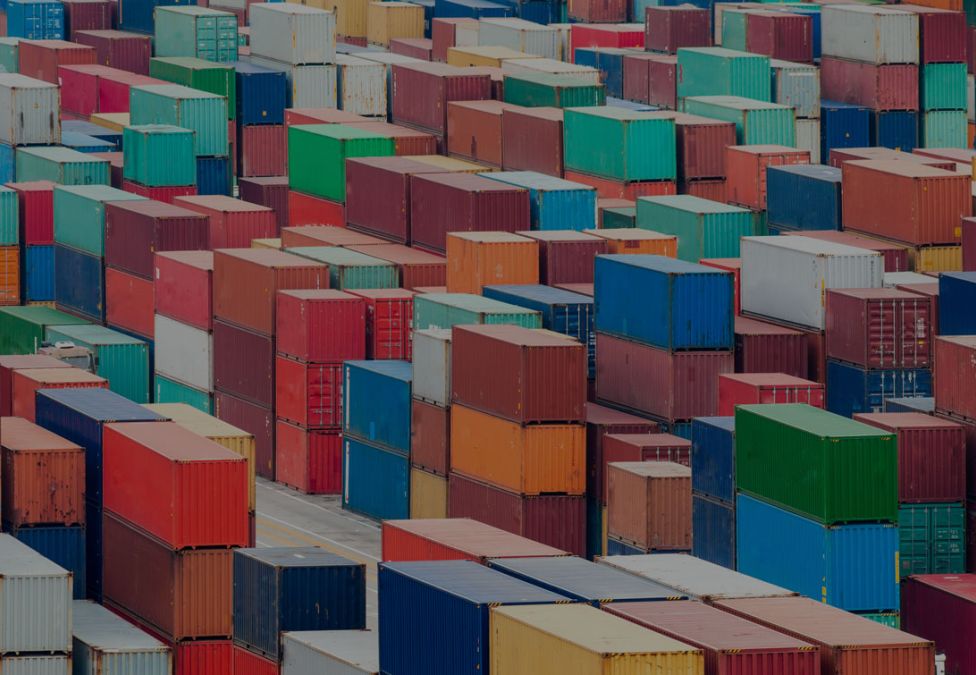
Rewiring Trade and Supply ChainsThe era of frictionless global supply chains is over. Businesses and policy leaders are grappling with how to build supply chain resilience while meeting their sustainability standards and commitments. In this world of supply chain regionalization, participants will have to build new investment corridors and partnerships, including with sovereign investors, and use new financing structures and instruments to keep the world working. GEO focuses on regional solutions to this complex issue, including new frameworks for supply chain resilience, regional economic integration and cooperation, as well facilitating investment in strategic sectors to build pathways to greater economic competitiveness and mobility. -
Bolstering Energy ResilienceIn 2026, energy security has become a defining priority for policymakers and business leaders alike. As countries pursue economic growth and diversification, a reliable, secure and affordable supply of power has become a national imperative in an increasingly uncertain geopolitical environment. The fragility of hydrocarbon supply chains has been exposed. At the same time, the scale of new energy demand — driven in part by the AI revolution — has made upgrading low-carbon generation and transmission infrastructure a matter of national security, not just sustainability. However, in a world where public capital is scarce, there are still multiple barriers to mobilizing the trillions of dollars of private capital into low-carbon energy, both from a financing standpoint and from that of the efficient use of public funds. GEO partners with stakeholders at the local, national, and global levels to remove the barriers that slow private capital deployment into low-carbon energy systems — from project de-risking and blended finance structures to policy frameworks that make clean energy investment commercially attractive. Where energy security and decarbonization align, as they increasingly do, we help investors and governments move faster.
Geo-Economics, Climate Resilience, and AI

Most Recent Content
-

Strengthening the US-Mexico Pharmaceutical Supply Chain
The pharmaceutical supply chain is an intricate, interconnected system that plays a crucial role in ensuring communities and individuals have timely access to medicines.Read Report -


In the Hot Seat: Financing Asia's Heat Resilience
By 2050, nearly 1.2 billion people in Asia are projected to be exposed to lethal heat waves. Without action, heat-related productivity losses alone could reduce regional GDP by 25–30 percent by 2048, threatening competitiveness, food...Read ReportImage

Ella Tan
Associate Director, Asia, Milken Institute InternationalElla Tan is an associate director, Milken Institute International in Singapore. Her current research focuses on vaccination access and delivery, the opportunities and challenges for technology to transform mental health care in Asia, and the role of cloud technology to enhance resilience and advance the Environmental, Social, and Corporate Governance (ESG) goals of the financial sector. -

The New Investor Narrative: Discussion Document
In an era marked by geopolitical volatility, rapid technological change, rising energy demand, and intensifying extreme weather, investor interest in climate resilience remains strong.Read Report -


As COP30 Convenes, New Research Shows Path for Climate Investor Action: Lead with Economic Benefits, Not Crisis
Milken Institute-Harris Poll research of 7,000+ people globally finds investment appetite remains strong but requires reframing around local solutions and economic opportunity Belém, Brazil (November 9, 2025)—A new global study released...Read ArticleBelém, Brazil (November 9, 2025)—A new global study released today ahead of COP30 by the Milken Institute and The Harris Poll reveals that while 95 percent of people worldwide believe climate change...

LR
-
Unintended Consequences: Trade and Supply Chain Leaders Respond to Recent Turmoil
The global economy has entered a new, more volatile era, defined by compounding disruptions in technology, climate resilience, and global trade. In response, the Milken Institute launched the Geo-Economics Initiative in 2024 to help...Read ReportThe global economy has entered a new, more volatile era, defined by compounding disruptions in technology, climate resilience, and global trade.
-

The Impact of Mining on Local Communities
Global mining demand from clean energy technologies is projected to double—or more—by 2040. Meeting this demand through increased mining activity is crucial to addressing climate change, but it will also significantly and disparately impact...Read ReportImage
Brock Smith
Director, ResearchBrock Smith, PhD, is a director on the research team at the Milken Institute. His research has focused on environmental economics and natural resource economics, particularly the economic and social effects of natural resource booms. -

After the Fires, the Fires Still Burn
On January 7, 2025, the Los Angeles metropolitan area experienced something unprecedented in modern American history. Two simultaneous urban fires broke out in Los Angeles County, fueled by a nine-month drought and hurricane-strength winds...Read Article -
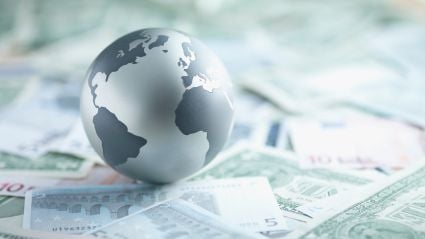
Debt and Climate Change: The New Playbook
By now, we all know the story—the world is going through a disruptive, transitional phase at historical levels. The dislocating effects of globalization have eroded support for the existing multilateral system, while exposing deficiencies...Read ArticleImage
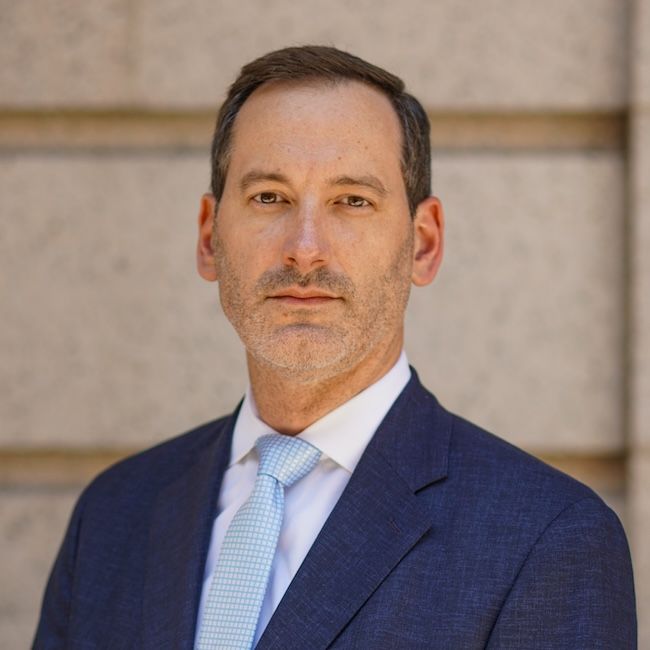
Matthew Aleshire
Director, Geo-EconomicsMatthew Aleshire is director on the Milken Institute’s Geo-Economics Initiative and helps to lead the work around the topics of climate change, the global financial architecture, and international political economy. Aleshire previously focused on global policy and government engagement for the Milken Institute, overseeing efforts to advance policy solutions across the Institute’s research and convenings. -
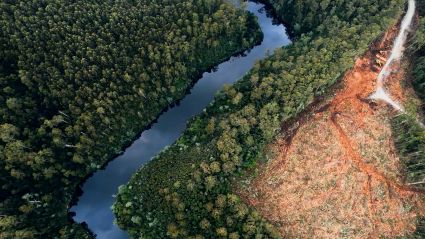
Cross-Sector Collaboration for Global Financing Solution to Address Deforestation
The preservation of the world’s tropical forests is a critical challenge. Globally, deforestation continues to rise, driven by socioeconomic factors and the compounding effects of climate change, driving biodiversity loss and water...Read Essay

Milken Institute Review Article, "Needed: A Mid-Course Correction for the Paris Agreement"
It’s no secret that this year’s COP is struggling to find a path that that balances the needs of developing nations to stay afloat and fosters new pathways to close the global capital deployment gap. Pivoting the Paris Agreement to focus more on resilience and adaptation would catalyze positive momentum and deal more effectively with growing despair that we are falling far short of the mark. This is decidedly not about abandoning the goal of keeping global temperature increases to 1.5 degrees Celsius. It’s all about finding the money to meet the Paris goals in a newly adaptive way.

Our Team
Matthew Aleshire

Victoria Barbary
Dan Carol

Rachel Fox Smothermon
For More Information
For more information, contact Rachel Fox Smothermon at [email protected].