
TRAIN eNews is delivered directly to organizations participating in The Research Acceleration and Innovation Network (TRAIN). TRAIN is an affinity network of foundations interested in taking a more strategic and entrepreneurial approach to their role as funders of medical research. TRAIN convenes dozens of forward-thinking foundations to learn from one another and share their novel solutions with the rest of the medical research system. To learn more about becoming a TRAIN organization, visit the TRAIN application page.
In This Newsletter:
News From FasterCures
Milken Institute Global Conference
In May, the Milken Institute hosted its 29th annual Global Conference in Beverly Hills, CA, convening leaders across sectors to explore solutions to today’s most pressing challenges and identify opportunities to build a more sustainable, equitable, and resilient future.
The health track featured discussions on topics including innovation, investment, care delivery, and policy, with a focus on translating recent advances into real-world impact. All public session recordings are available online. We encourage you to watch “Rewriting the Rules: Scaling Innovation for Rare Diseases,” in which panelists explore how new approaches—such as AI-driven tools, platform-based therapies, and cross-disease models—are helping accelerate progress. The session features LeadersLink mentor Michael Hund, CEO of EB Research Partnership.
The annual Future of Health Summit will return to Washington, DC, November 11–13, 2026. Additional details will be shared in the coming months. View highlights from last year’s program.
FasterCures Welcomes 2026–2027 LeadersLink Cohort
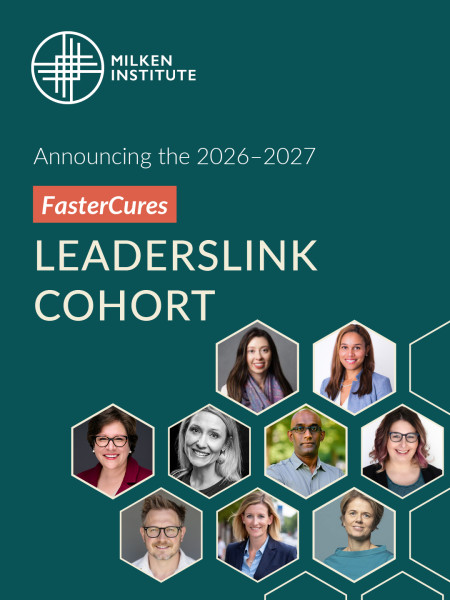
We’re excited to announce the 2026–2027 FasterCures’ LeadersLink cohort. In a record-setting year with the highest application volume in program history, nine patient organization leaders were selected to join the 18-month program, which includes a capstone project and mentorship through FasterCures Changemakers and the Milken Institute network.
Throughout the program, cohort members will strengthen their capacity to build strategic industry partnerships that help accelerate biomedical research. Meet the 2026–2027 LeadersLink cohort:
- Amber Freed, founder and CEO, SLC6A1 Connect
- Catherine Leigh Higgins, senior vice president of science programs, Stand Up To Cancer
- Emily Taylor, CEO, Solve M.E.
- Jason Curry, founder and executive director, SCN2A Foundation
- Laura MacNeill, CEO, CMT Research Foundation
- Lauren Chaby, executive director, Project 8p
- Lauren Harte-Hargrove, executive director, Misophonia Research Fund
- Manuela Battaglia, managing director, INNODIA
- Sudhir Sivakumaran, chief scientific officer, Lewy Body Dementia Association
De-Risking Next-Gen Science: Cross-Disease Platform Approaches
FasterCures kicked off the 2026 TRAIN webinar series with a discussion on how patient organizations can invest earlier in the research process to reduce risk and accelerate therapeutic development. The session focused on cross-disease platform approaches, highlighting how shared research infrastructure, platform trial designs, and collaborative funding models can drive progress across multiple conditions. Speakers from the National Center for Advancing Translational Sciences, Blood Cancer United, and the Friedreich’s Ataxia Research Alliance shared real-world examples of how organizations are working across disease areas to pool data, align research efforts, and maximize limited resources. Watch the recording to learn how these models can be applied across different disease areas and inform your organization’s research strategy.
New Framework to Improve Patient Engagement in Medtech
FasterCures has released Framing the Value of Patient Engagement for Medtech Product Developers, a new framework designed to help medical device, diagnostic, and digital health companies strengthen patient engagement across the total product lifecycle (TPLC).
The framework provides a nonprescriptive menu of options, designed to:
- help companies identify key decision points across the TPLC where patient engagement insights and data can be used to enhance and inform research and development activities;
- identify possible methods, sources, and metrics for conducting patient engagement activities and measuring their impact; and
- support the information and evidence product developers generate for regulators, payers, providers, investors, and other stakeholders.
It also serves as the foundation for a broader suite of FasterCures resources supporting practical, impact-driven patient engagement. Access the framework.
Vital Voices Toolkit Now Available
FasterCures’ Vital Voices Toolkit offers a curated set of resources to help patient organizations better understand the Centers for Medicare & Medicaid Services (CMS) processes and identify where and how patient input can make an impact.
Designed as a step-by-step resource, the toolkit guides organizations from foundational knowledge to actionable strategies, strengthening their ability to contribute meaningful patient perspectives to CMS decision-making. Whether your organization is new to CMS engagement or refining an existing approach, it serves as a concise and accessible starting point.
Access the Vital Voices Toolkit.
Apply the Research Partnership Maturity Model Framework
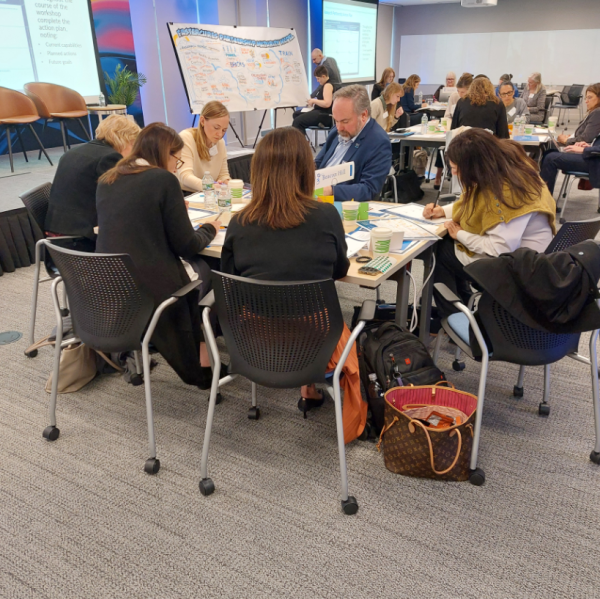
On October 28, 2026, FasterCures staff will facilitate an interactive workshop at the Foundations Conference for patient advocacy organizations to help patient foundations leverage the Research Partnership Maturity Model as a strategic planning tool.
The framework serves as a resource to help patient organizations assess their assets and capabilities as research partners and improve their ability to advance research.
FasterCures Hosts Rare Disease Community Policy Discussion with NSCEB
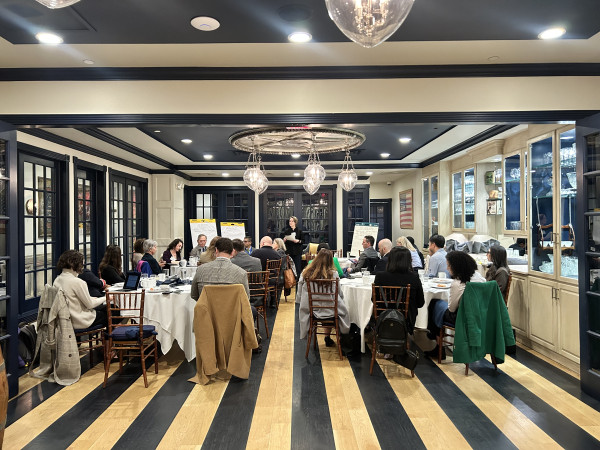
FasterCures, of the Milken Institute, hosted a breakfast convening rare disease community stakeholders to socialize the National Security Commission on Emerging Biotechnology (NSCEB) policy recommendations, collect feedback on areas of overlap between the Milken Institute and NSCEB reports, and gauge appetite for collective advocacy. NSCEB sunsets in December 2026; the commission's goal is to advance as many of its core recommendations as possible before then.
Key themes included:
- misalignment between rare disease needs and existing regulatory and market systems
- gaps in translating research and building necessary infrastructure
- coordination and capacity gaps across patient organizations and the broader ecosystem
Join TRAIN Communities of Practice
TRAIN Communities of Practice (CoP) are peer-led, bimonthly forums designed to foster open dialogue and collaboration across the patient organization community. Sessions provide a dedicated space for members to share real-world experiences, exchange practical tools and proven approaches, and learn from one another’s successes and setbacks. CoP focus areas include expertise, patient-centeredness, funding, and relationship-building to advance research and development. The next session, on June 17, features an engaging discussion on strategic partnerships. To join, please submit the interest form.
TRAIN Organization Updates
TRAIN Welcomes New Organizations
We’re pleased to announce the recent addition of the following organizations to TRAIN:
Undiagnosed Diseases Network Foundation
The Undiagnosed Diseases Network Foundation (UDNF) is a patient-driven nonprofit fostering community, support, innovation, and action for families affected by rare and undiagnosed diseases. UDNF’s mission is to support and improve access to diagnosis, research, and care for all individuals with rare and undiagnosed diseases.
MEPAN Foundation
The MEPAN Foundation works to advance research for MEPAN Syndrome, an ultra-rare neurodegenerative mitochondrial disease with no current treatment. Its mission is to change the course of MEPAN and related diseases and improve the quality of life for those affected and their families.
ASXL Research Symposium and Family Conference
On June 25–28, 2026, Rare Research Endowment (ARRE) Foundation will host its ASXL Research Symposium and Family Conference in Ann Arbor, MI, bringing together researchers, clinicians, and families. The program includes translational and disease-agnostic sessions with insights relevant to a broad range of patient organizations.
Accelerated Cure Project Advances Initiative on Aging and MS Treatment Decisions
The Accelerated Cure Project (ACP) has received funding to lead an initiative focused on treatment decisions for older adults with multiple sclerosis (MS). Building on the DISCO-MS trial, the first large-scale study to evaluate stopping disease-modifying therapies in stable older adults with MS, the project will help interpret findings. ACP will convene patients, caregivers, clinicians, and researchers to translate this evidence into plain-language resources that support more informed, patient-centered care decisions.
Advancing Research Through AD PACE
Through the AD PACE Initiative, UsAgainstAlzheimer’s is continuing efforts to generate insights on treatment outcomes that matter most to patients and caregivers, helping inform research, regulatory, and care decisions.
News You Can Use
First CDRH-Developed Course on Patient Engagement in Medical Device Studies
The US Food and Drug Administration (FDA), Center for Devices and Radiological Health (CDRH), has developed a patient education course for patients, caregivers, patient organizations, industry, and health care stakeholders. The course, “Patients as Advisors in Medical Device Clinical Studies,” is part of a series on medical devices and the role of patient advisors throughout the medical device life cycle and is intended for those interested in learning how to more effectively engage with the FDA and medical device developers. Access the course.
HHS Has a Potential Solution for Cancers That Keep Coming Back: Vaccines
In a recent update, the National Cancer Institute has proposed a $200 million public-private partnership to support clinical trials of therapeutic cancer vaccines designed to help prevent recurrence in high-risk patients. The effort aims to scale up larger studies, including mRNA-based and personalized vaccines.
Cures Within Reach Opens 2026 AI Validation RFP
Cures Within Reach is accepting proposals for its 2026 funding opportunity focused on validating AI-driven drug repurposing in Phase I/IIA clinical trials. The Request for Proposal (RFP) supports investigator-initiated studies across disease areas by validating AI-driven opportunities and requiring AI model data as part of the preclinical support. Letters of intent are due June 26, 2026. Find more information on how to start a submission.
Patient Advocacy Voices Shares New Resources for Advocacy Leaders
Patient Advocacy Voices, a podcast and resource series hosted by Sanofi US Head of Public Affairs and Patient Advocacy Eric Racine and cohosts, shares insights from patient advocacy leaders on topics shaping access and care. The episode, “Why Innovation Isn’t Enough: Esther Krofah and Adam Gluck on Patient Access,” features Milken Institute Health Executive Vice President Esther Krofah in a conversation on bridging innovation, policy, and patient access to ensure breakthroughs reach patients faster.
MDIC Launches Patient Engagement Estimation Tool
The Medical Device Innovation Consortium (MDIC) has released the first version of its Patient Engagement Estimation Tool and User Guide, designed to help developers plan, assess, and strengthen patient engagement throughout the medical product life cycle. MDIC is actively seeking stakeholder feedback to refine and improve the tool. A dedicated working group is currently convening and welcomes additional participants from across the patient organization community and beyond. For more information, contact Jonah Golder ([email protected]) or Eileen Mihas ([email protected]).
Global Gene Rare Drug Development Symposium
Global Genes, in partnership with Boston Children’s Hospital and the Termeer Institute, will host the RARE Drug Development Symposium on September 9–11, 2026, in Boston, MA, bringing together advocates, researchers, and industry leaders. The program features main stage sessions, breakout discussions, and hands-on workshops to support early-stage research and drug development.
TRAIN in the Community
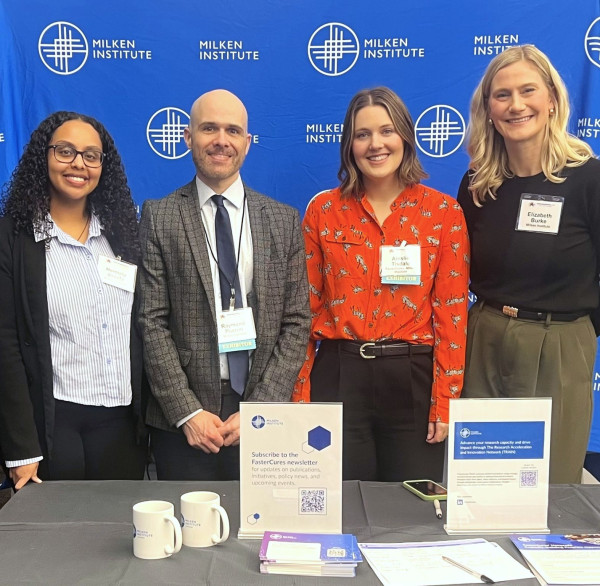
During Rare Disease Week, FasterCures and TRAIN staff participated in events that elevated patient voices and highlighted gaps in diagnosis, treatment, and access. Advocates shared firsthand experiences to underscore the need for continued investment in research and policy.
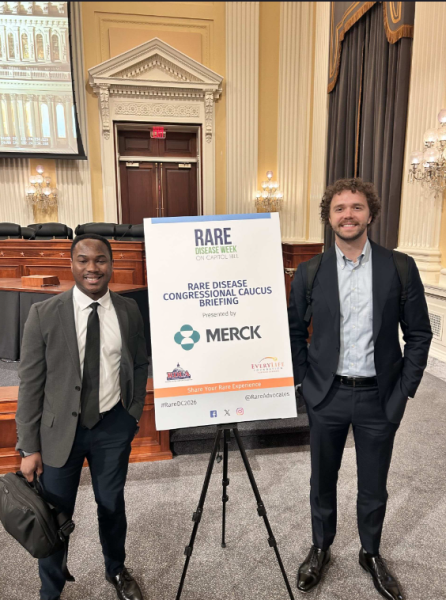
At the FDA Rare Disease Day event, leaders emphasized the need for faster, more flexible regulatory approaches. The National Institutes of Health highlighted advances in genomics, AI-enabled discovery, and data integration, reinforcing the broader impact of rare disease research. Across events, a clear message emerged: Patients are driving discovery, and collaboration is key to translating progress into treatments.
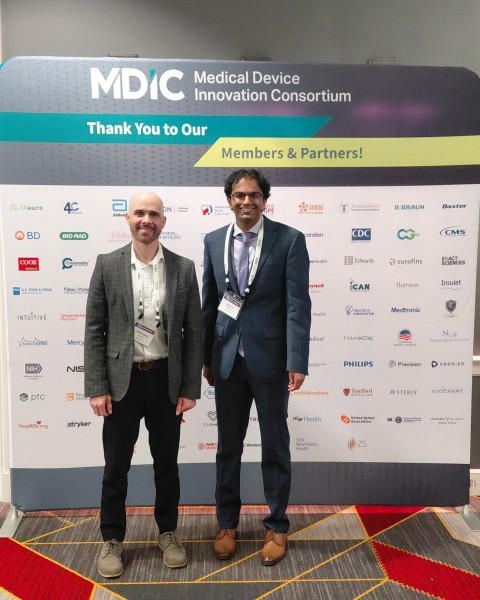
Raymond Puerini, director, FasterCures, and Manvit Adusumilli, associate, attended the Medical Device Innovation Consortium Innovations in Evidence Summit. The event featured FDA/CMS leaders discussing evidence strategy across the device lifecycle.
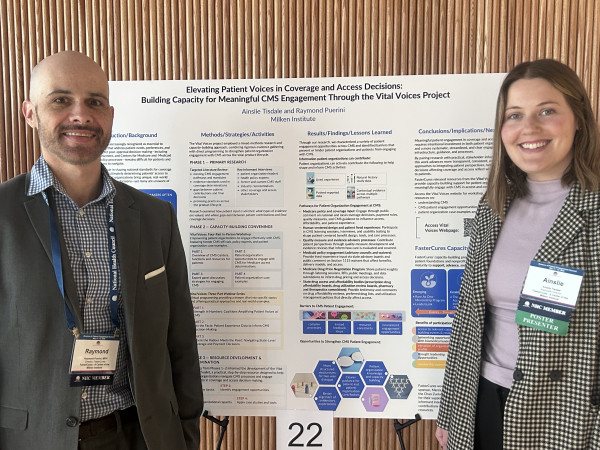
Puerini and Ainslie Tisdale, associate director, presented a poster at the National Health Council’s 2026 Science of Patient Engagement Summit on FasterCures’ Vital Voices. Vital Voices focuses on strengthening patient engagement in CMS coverage and access decision-making.
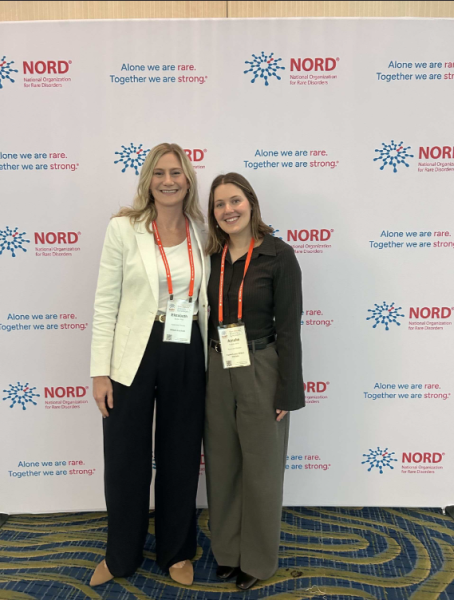
Tisdale and Elizabeth Burke, associate director, Strategic Philanthropy, attended the National Organization for Rare Disorders Rare Disease Scientific Symposium in Arlington, VA, on April 14–15, 2026.