Webinar
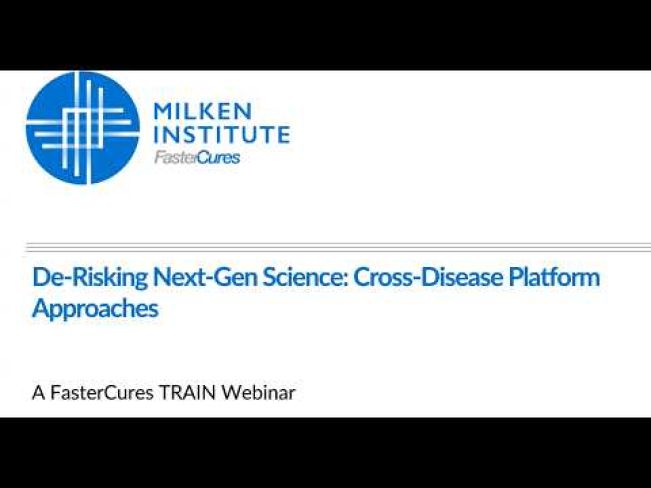
Cross-Disease Platform Approaches: How Shared Infrastructure and Collaborative Models Can De-Risk Next Gen Science for Patients
SHARE


As scientific innovation accelerates, patient organizations face a growing challenge: how to invest upstream in ways that meaningfully de-risk and accelerate the therapeutic pipeline. Increasingly, cross‑disease platforms (i.e., shared research infrastructure, platform trial designs, and collaborative funding models) are emerging as some of the most powerful tools to speed progress not just for one condition but also across entire categories of disease. These approaches can offer solutions in areas where patient populations and resources may be limited. In this one‑hour TRAIN webinar, part of our Derisking Next‑Gen Science series, we explore how patient organizations can harness multi-disease strategies to maximize impact, reduce duplication, and drive faster translation to patients.
FA Global Clinical Consortium: FARA’s international clinical research network and natural history study infrastructure
Friedreich’s Ataxia Integrated Clinical Database: C-Path data-sharing platform hosting FARA natural history and trial data
Bespoke Gene Therapy Consortium (BGTC): NCATS-led public-private partnership developing AAV gene therapies across rare diseases
BGTC at the Foundation for the NIH: AMP program page with regulatory playbook and partner information
NIH Somatic Cell Genome Editing Program: NIH Common Fund program funding multi-disease genome editing clinical development, including the Baby KJ urea cycle disorder work
"How to Create Personalized Gene Editing Platforms" (AJHG, 2025): Ahrens-Nicklas and Musunuru's paper on the umbrella trial framework for urea cycle disorders
PedAL Master Clinical Trial: Blood Cancer United's first-of-its-kind global pediatric acute leukemia master trial
This webinar was made available to patient organizations that participate in The Research Acceleration and Innovation Network (TRAIN), which comprises nearly 200 foundations interested in taking a strategic and entrepreneurial approach to funding medical research. TRAIN convenes forward-thinking groups to learn from each other and share their novel solutions with the rest of the medical research system. FasterCures accepts new organizations to TRAIN on an ongoing basis. There is no fee for the application or for membership.
To learn more and apply, visit the TRAIN application. Please contact [email protected] for more information about TRAIN.