


Newsletter

SHARE
SHARE
The 2026–2027 FasterCures’ LeadersLink program cohort has been carefully selected from a highly competitive pool of candidates. We chose nine exceptional individuals to participate in this year’s program. Through a capstone project, mentorship, in-person meetings, and virtual collaboration, participants will improve their organization’s ability to advance research through strategic industry partnerships, which is this year’s theme. Paired with mentors from FasterCures Changemakers and other leaders in our network, participants gain access to extensive networks of FasterCures and the Milken Institute for guidance and support as they navigate their leadership journeys. FasterCures and the Milken Institute express gratitude to mentors and experts for their dedication and eagerly anticipate the achievements of the LeadersLink participants.
Below are the nine candidates we are excited to welcome into the program:
Amber Freed, Founder and CEO, SLC6A1 Connect
Catherine Leigh Higgins, Senior Vice President of Science Programs, Stand Up To Cancer (SU2C)
Emily Taylor, CEO, Solve M.E.
Jason Curry, Founder and Executive Director, SCN2A Foundation
Laura MacNeill, CEO, CMT Research Foundation
Lauren Chaby, Executive Director, Project 8p
Lauren Harte-Hargrove, Executive Director, Misophonia Research Fund
Manuela Battaglia, Managing Director, INNODIA
Sudhir Sivakumaran, Chief Scientific Officer, Lewy Body Dementia Association

Amber Freed serves as the founder and CEO of SLC6A1 Connect. Her son, Maxwell, was just 18 months old when she received his devastating diagnosis of SLC6A1, a rare neurological disease. Freed left her career in equity research analysis the day of his diagnosis and dedicated her life to finding a cure. She founded a large patient organization and helped Maxwell receive the first-in-human gene therapy when he was eight years old.
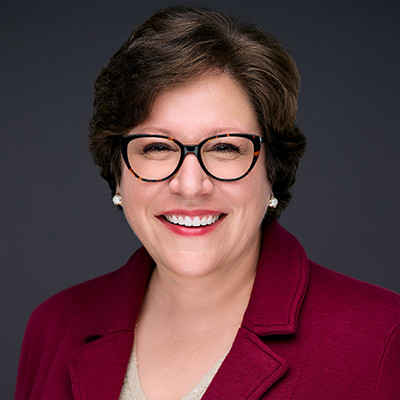
Catherine Leigh Higgins, PhD, is a dedicated scientific executive with more than two decades of experience leading clinical research operations, developing scientific strategies, and making transformative progress in both oncology and translational medicine. She currently serves as the senior vice president of Science Programs at Stand Up To Cancer (SU2C), where she has held various leadership roles since 2016.
During her tenure, Higgins has overseen a $1.5 billion research portfolio spanning 16 countries, supporting more than 280 clinical trials, and helping advance over 11 scientific breakthroughs in cancer detection, prevention, and treatment.
Before joining SU2C, Higgins directed the Human Research Protection Program at Texas A&MUniversity and served as an adjunct faculty member in public health, where she instructed graduate-level courses in clinical research methodology. Her prior role was with the Gulf Coast Consortia and focused on the development of collaborative research in the quantitative biomedical sciences across Houston’s Texas Medical Center.
Higgins earned her PhD in biophysical chemistry from Tulane University and completed a National Institutes of Health Postdoctoral Fellowship in atherosclerosis research at Baylor College of Medicine.

Emily Taylor brings more than two decades of unwavering commitment and expertise to her role as CEO of Solve M.E. With a career deeply rooted in health policy, grassroots advocacy, and community empowerment, Taylor has dedicated herself to advancing medical research and patient voices in the realm of myalgic encephalomyelitis/chronic fatigue syndrome (ME/CFS), Long COVID, and other infection-associated chronic conditions.
A key member of Solve’s leadership team since 2016, most recently as vice president of advocacy and engagement, Taylor has been instrumental in driving impactful change. Her achievements include the publication of pivotal white papers, advocating for increased National Institutes of Health research funding, and successfully securing $1.25 billion for Long COVID research. She serves as a policy and advocacy advisor, fostering critical partnerships with members of Congress and federal agencies to amplify the voice of those with ME/CFS, Long COVID, and infection-associated chronic conditions on Capitol Hill.
Taylor’s signature programs include “Solve Advocacy Week,” a nationally recognized campaign that has evolved into a cornerstone event in the field; “EmPOWER M.E.”; and the Long COVID Patient Leadership Advancement Network. She has also spearheaded legislative efforts, including the introduction of H.R. 7057, the Understanding COVID-19 Subsets and ME/CFS Act, the first-ever legislation to fund ME/CFS research.
Prior to her tenure at Solve, Taylor served as director of policy and advocacy for an award-winning autism organization, where she achieved remarkable success in overhauling disability, early intervention, and education policies. Throughout her career, Taylor has been a catalyst for change, driving legislative victories, securing millions in grant funding, and building a groundswell to address the most pressing challenges facing communities.
Beyond her professional endeavors, Taylor is deeply connected to Solve’s mission through her lived experience as a caregiver, inspired by her mother’s courageous battle with ME/CFS and chronic autoimmune conditions. She received a BA with honors in politics and international relations from Scripps College in Claremont and earned her MA in American politics from Claremont Graduate University.

Jason Curry is the founder and executive director of the SCN2A Foundation, a patient-driven nonprofit accelerating therapeutic development for SCN2A-related disorders. Since founding the organization in 2023, he has led strategic collaborations supporting investigational new drug application advancement, advised Praxis Precision Medicines on clinical trial redesign that achieved full enrollment, and established a drug discovery partnership with Unravel Biosciences. He also developed the first domain-tuned AI large language model in rare disease research.
Curry brings deep commercial and technology expertise to this work, with a career spanning executive marketing and product strategy roles at Vaimo, Mutual Mobile, and Centric Digital, as well as advisory work across genomics organizations, including Invitae, Exact Sciences, and Citizen Health. He holds an MS from The New School in design management and certificates from Massachusetts Institute of Technology in strategic drug development and AI in pharma and biotech.
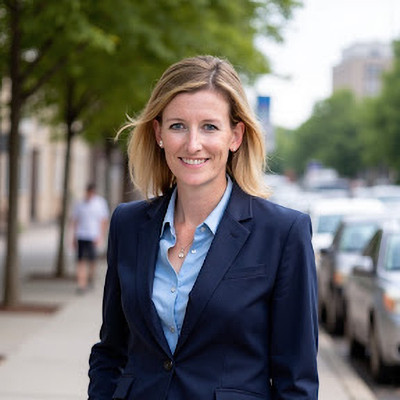
Laura MacNeill is the chief executive officer of the CMT Research Foundation (CMTRF), a patient-led nonprofit dedicated to delivering treatments and cures for Charcot-Marie-Tooth (CMT) disease—the most common inherited peripheral neuropathy, affecting an estimated 3 million people worldwide. MacNeill's commitment to this mission is personal: CMT runs in her family and has affected multiple generations, including her father, giving her a deep, lived understanding of the urgency facing the CMT community.
Since joining CMTRF in 2024, MacNeill has advanced a growing portfolio of research investments across multiple CMT subtypes, including a landmark investment in gene therapy manufacturing for CMT4J. Her current focus is on building strategic industry partnerships—with biotech, pharma, and investor communities—needed to move the most promising science from bench to clinic. She brings more than 15 years of senior nonprofit leadership experience, including prior CEO roles at the Global Lyme Alliance and executive leadership at the Leukemia & Lymphoma Society.

Lauren Chaby, PhD, has applied her expertise in optimizing clinical outcomes in the biotech, nonprofit, pharmaceutical, and research sectors, focusing on conditions affecting the brain. She has led preclinical and clinical programs, including phases I–III clinical trials across a range of therapeutic areas, as well as diagnostic development and implementation, and has launched a multi-cohort repository for biospecimens and clinical datasets.
Serving as executive director at Project 8p is deeply meaningful to her, as a chromosomal translocation within her family has profoundly influenced the lifelong journeys of her and her loved ones. Her commitment to improving lives today while pioneering treatments for tomorrow reflects her dedication to advancing the field of chromosomal disorders.
Prior to joining Project 8p, Chaby was executive director of biomarkers and scientific operations at ALZpath, where she developed and led strategic scientific and communications initiatives to support the implementation of solutions for neurodegenerative diseases that currently serve patients across the US and Canada. At Moderna, she spearheaded an interdisciplinary initiative to maximize sample and data quality and developed systems to support a portfolio of more than 20 clinical trials. Prior to this, she directed and managed scientific, strategic, and programmatic activities to accelerate the discovery and development of biomarkers and diagnostics for trauma-related brain disorders at a nonprofit, Cohen Veterans Bioscience.
Throughout her career, Chaby has been an advocate for scientific communication, delivering two TEDx talks, over 100 scientific presentations, and more than 30 peer-reviewed publications.
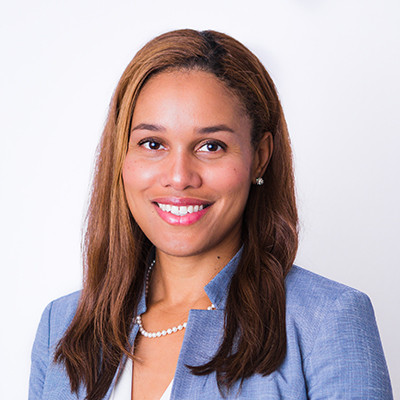
Lauren Harte-Hargrove is executive director of the Misophonia Research Fund, where she leads strategy, research funding, and cross-sector partnerships to advance the understanding and treatment of misophonia. She oversees a growing research portfolio and works to build the scientific and clinical infrastructure needed to support progress in a rapidly emerging field.
With more than 15 years of experience spanning neuroscience research and nonprofit leadership, Harte-Hargrove focuses on fostering collaboration across researchers, clinicians, and stakeholders to accelerate translation from foundational science to real-world impact. Her work emphasizes expanding research capacity, strengthening partnerships, and advancing practical outcomes for patients.
She holds a PhD in behavioral neuroscience from SUNY Downstate Health Sciences University and a bachelor’s degree in psychology and neuroscience from Washington University in St. Louis.
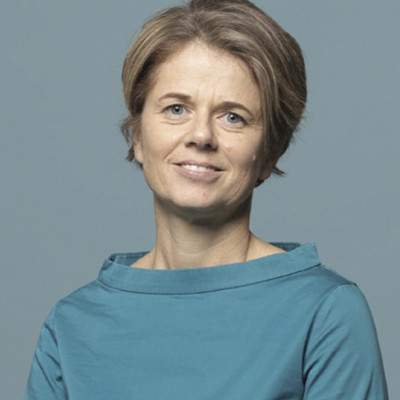
Manuela Battaglia is a leading figure in the Type 1 Diabetes (T1D) landscape and managing director of INNODIA. With more than 20 years of experience as an immunologist, she has transitioned from a distinguished academic career to social entrepreneurship, driven by a single mission: dismantling the "bench-to-bedside" silos that slow the delivery of curative therapies to patients.
Her path took her from the Diabetes Research Institute in Milan—one of the world's premier T1D research centers—to Fondazione Telethon, the first organization globally to bring a gene therapy for a rare disease to market. There, she mastered the complexities of drug development and regulatory pathways.
In late 2022, Battaglia was entrusted with the leadership of INNODIA, a nonprofit organization born from a European public-private partnership. Starting from a mission statement alone, she built a robust organization from the ground up. In just three years, INNODIA has grown into a high-performing team, established a pan-European network of clinical and research centers, pioneered a “Trained Patient” program that certifies patients and caregivers as active service providers in the drug development process, and developed a diversified, industry-facing revenue model.
Looking ahead, Battaglia's ambition is to take what has been built with INNODIA in Europe and test whether it can work elsewhere—across geographies and, one day, across diseases. Her goal is to prove that a patient-centered, service-driven model can be a more effective engine for medical innovation.

Sudhir Sivakumaran, PhD, is chief scientific officer at the Lewy Body Dementia Association (LBDA), where he leads scientific strategy, translational research initiatives, and cross-sector partnerships to accelerate therapeutic development and improve outcomes for individuals living with Lewy body dementia. He brings more than two decades of experience spanning academia, biotechnology, and nonprofit leadership, with deep expertise in translational neuroscience, biomarker development, and regulatory science.
Prior to LBDA, Sivakumaran served as executive director of the Critical Path for Alzheimer’s Disease Consortium at the Critical Path Institute, where he led global public-private partnerships involving regulators, industry, academia, and patient advocacy organizations to advance data-driven drug development and regulatory innovation across neurodegenerative diseases. He has also held leadership roles at Beacon Biosignals, Pfizer, and Aptinyx, driving translational strategy, external partnerships, and early-stage clinical development.
Sivakumaran is recognized for his ability to align diverse stakeholders around shared scientific and strategic priorities and for advancing patient-focused drug development by integrating patient and caregiver perspectives into research and clinical trial design. His work emphasizes data aggregation, biomarker validation, trial readiness, and the development of clinically meaningful outcome measures to de-risk and accelerate therapeutic innovation.
He serves on multiple advisory boards and scientific committees—including Women in Neuroscience and the International Neurodegenerative Disorders Research Center—and is an active mentor to students, early-career professionals, and emerging leaders. He remains deeply committed to advancing collaborative models that bridge science, industry, and patient communities. Sivakumaran holds a PhD in neuroscience and has authored numerous peer-reviewed publications.
SHARE
Related Content
-

The 2024-2025 LeadersLink Cohort
The 2024–2025 FasterCures’ LeadersLink program cohort has been carefully selected from a highly competitive pool of candidates. We chose nine exceptional individuals to participate in this year’s program. Through a capstone project...Read ArticleThe 2024–2025 FasterCures’ LeadersLink program cohort has been carefully selected from a highly competitive pool of candidates.
-
Legislative Discussion Draft of the Next-Generation US Clinical Development to Accelerate Cures
On behalf of the FasterCures team at the Milken Institute, thank you for your leadership on clinical trial modernization and for the opportunity to comment on the discussion draft of the Next-Generation US Clinical Development to Accelerate...Read LetterImage
Esther Krofah
Executive Vice President, Milken Institute HealthEsther Krofah is the executive vice president of Health at the Milken Institute, leading FasterCures, Public Health, the Future of Aging, and Feeding Change. A recognized expert in health policy, biomedical innovation, and clinical research, Krofah has extensive experience shaping health initiatives that unite diverse stakeholders, foster collaboration, and motivate action toward shared goals.