Thank You for Downloading
Your download is complete—head to your Downloads folder to explore the insights.







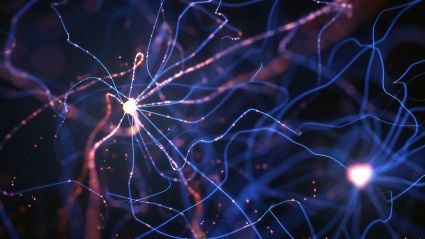
We spend 90 percent of our time indoors, and those surroundings shape how we think, feel, and behave. We have all spent time in spaces whose designs made us feel calmer or more focused and in others that made us feel unwell, anxious, or even tired. The reasons for these experiences have become clearer as neuroscience and health research have uncovered how specific features of the built environment affect the brain and body. These findings can help create buildings and spaces designed to support health and well-being.
Neurospatial design, an emerging ecosystem that encompasses neuroscience, health, design, and related disciplines, combines research with practical application to create spaces that support healthier individuals, stronger communities, and more resilient economies. In practice, neurospatial design can inform the design of workplaces, hospitals, schools, residences, and other spaces that support health and well-being, and it can also help address several mounting societal challenges, such as brain disorders, chronic disease, urban density, and the loneliness epidemic.
Harnessing neurospatial design’s potential to reshape work, health care, education, and more will require close collaboration across academia, industry, nonprofits, government, and philanthropy. However, engaging these sectors to align their efforts has proven challenging.
The Milken Institute Science Philanthropy Accelerator for Research and Collaboration and The Pedersen Foundation have partnered to examine how to bring neurospatial design’s promise to life. The resulting report, Bridging Neuroscience, Health, and the Built Environment: A Giving Smarter Guide, presents four interconnected philanthropic priorities as critical areas where investment can advance neurospatial design and improve human health:
Read this Giving Smarter Guide to learn more about neurospatial design and how leaders in philanthropy and beyond can drive the development of healthier spaces.















 EH
EH