Power of Ideas
SHARE

SHARE
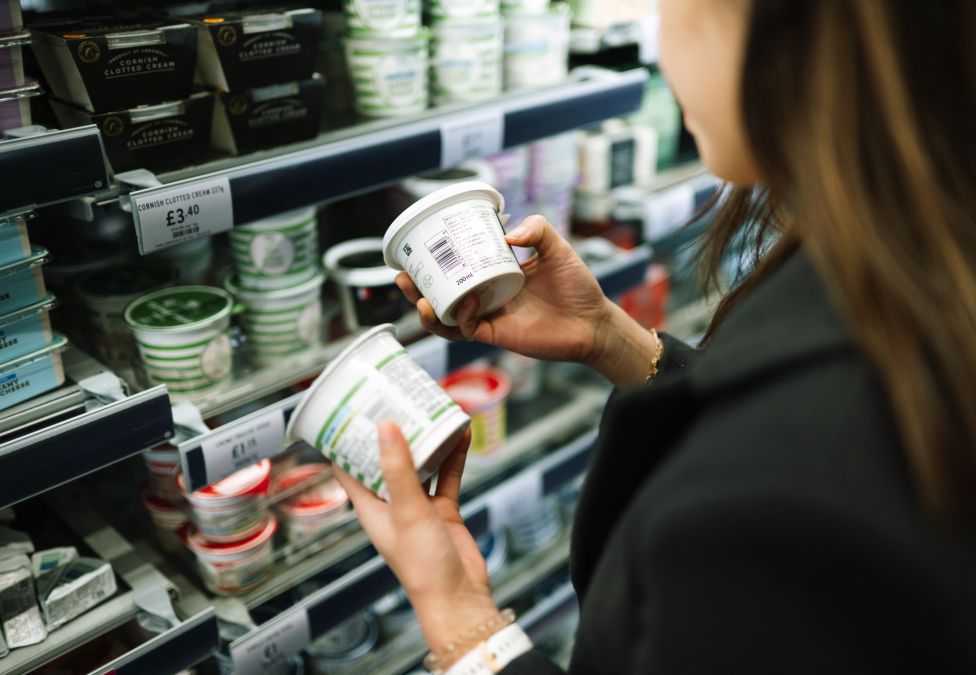
During your weekly grocery trip, you witness three people reaching for the same branded box of granola bars. Is there some big promotional discount to check out?
The first shopper is a 58-year-old middle school teacher. For years, her doctor has delivered the same warning at every annual physical: Her numbers are creeping toward a diabetes diagnosis and a daily prescription. Earlier today, he told her she was out of time. The second is a warehouse worker trying to feed a household of three teenage boys on a tight budget, where “healthy” competes with “filling” and “cheap.” The third is a software manager with a gym membership, eyeing a nutrition app in his free hand.
As it pertains to food, America’s biggest hurdle isn’t a willpower problem; it’s a signal problem.
All three have been counseled to eat healthier. All three turn the box over for help. The front says “healthy.” The shelf tag gives it one star. The app flags it as ultra-processed. Three shoppers, one product, three different answers.
This is not a problem for a niche subset of the population. The Centers for Disease Control and Prevention’s latest figures show 40 million Americans have diabetes, and another 115 million adults have prediabetes. That’s nearly half the country, across income, age, and zip code. Diabetes costs the nation $413 billion a year, and people living with it account for one out of every four health-care dollars. There’s no health plan, employer, or public program that reaches them all. But their grocers do.
I’ve spent more than 35 years in health care, most recently building technology that administers federal and state benefits (including Supplemental Nutrition Assistance Program (SNAP)/Electronic Benefits Transfer and healthy food programs). Along the way, I’ve witnessed nutrition advice swing from fat-free to low-carb to “eat real food.” Most people don’t need convincing that food matters—or even that food is medicine. However, they do need help knowing what to buy. As it pertains to food, America’s biggest hurdle isn’t a willpower problem; it’s a signal problem.
Eight in ten Americans now say they don’t know what to believe because nutrition information keeps changing, up from seven in ten in 2022. The Food and Drug Administration’s (FDA) updated “healthy” label, which took effect in April 2025, favors low-fat dairy. Then, on January 7, 2026, the US Department of Agriculture and Health and Human Services released new Dietary Guidelines for Americans that encourage full-fat dairy. A proposed front-of-package labeling rule and a federal definition of ultra-processed food both remain unfinished.
Into that vacuum, highly respected retailers, published researchers, and app developers have built scoring systems to help shoppers know what to buy. I’ve counted at least 15, each with science in hand to substantiate its methodology. Even public benefits diverge: Under one state’s SNAP waiver, meant to steer benefit purchases toward healthier foods, Kit Kats qualify because they contain flour. Whatever one thinks of such restrictions, definitions change at the state line.
We know clarity works. The Special Supplemental Nutrition Program for Women, Infants, and Children (WIC) runs one of the nation’s most precise nutrition standards, defined product by product and enforced at checkout. After its food package was updated in 2009, obesity among toddlers receiving WIC declined from 15.9 percent in 2010 to 13.9 percent in 2016.
When a definition is clear, consistent, and present at checkout, the quality of food in the basket improves. For the private sector, that means first rallying around categories where nutritional value is rarely debated (donuts, anyone?). For policymakers, that means three steps.
First, converge on one definition. FDA labels, the Dietary Guidelines, front-of-package standards, and ultra-processed food definitions should tell one story and evolve with the evidence.
Second, deliver it where decisions happen. A definition that lives in the Federal Register does little for a shopper in aisle seven. Nutrition facts must be made available for all foods sold in the US as open, product-level data, so that shelf tags, apps, and food-scoring systems all reference a standardized dataset.
Third, use public dollars as the proving ground. WIC, school meals, SNAP, and growing food benefits in Medicaid and Medicare touch tens of millions of households. Aligning them to one standard would reward reformulation and build the evidence for continued improvements.
None of this asks those three shoppers to try harder. It asks the rest of us to agree, then provide the same answer in every aisle. Better health becomes accessible to more people not through more advice, but through one honest answer.
SHARE
Related Content
-
Health and Hunger Are Connected—Our Safety Net Should Be, Too
For Ashleigh Ligon, a connected network of support was essential to her family’s health. While pregnant, Ashleigh enrolled in Medicaid after her husband was injured at work.Read Essay -

Activating the Food Is Medicine Ecosystem: A Framework for Stakeholder Partnerships
Food Is Medicine (FIM) has reached a critical inflection point. What began as a community-rooted response to unmet nutrition needs has evolved into a nationally recognized strategy for preventing and treating diet-related chronic disease...Read Report CS

-

What I’ve Learned from Berries—and the People Behind Them
When I think about the future of food, I don’t start with technology or capital markets. I start in the field, with farmers I’ve spent time with, as people who wake up before sunrise to make decisions that carry real risk. I think about...Read Essay -

What We Heard at the Future of Health in Asia
The 12th annual Milken Institute Asia Summit in Singapore convened global leaders transforming business, finance, government, health care, technology, and philanthropy to discuss critical topics of importance within the Asia-Pacific region...Read ArticleThe 12th annual Milken Institute Asia Summit in Singapore convened global leaders transforming business, finance, government, health care, technology, and philanthropy to discuss critical topics of...
Image Brenda HuneycuttFormerly Milken Institute
-

A Blueprint for Employer-Led Food as Health Strategies
Employers are increasingly recognizing how food can promote whole-person health by addressing physical well-being, resilience, disease prevention, and mental health.Read Report

-

How Health Care Can Lead the Food Is Medicine Movement
Food and nutrition insecurity is a health issue far too big to ignore. Diet-related diseases are the leading cause of death in the US for adults. When people and communities lack access to affordable, healthy food, we see the impact in our...Read Essay -

How Philanthropy Can Build Resilient Food Supply Chains
From the COVID-19 pandemic to geopolitical conflicts, and catastrophic steering failures on cargo ships, as reported by NPR and The New York Times, the world has seen how a weak link in a supply chain can have far-reaching consequences for...Read Article IM
-

Key Trends in Health at Milken Institute Global Conference 2024
This brief summarizes the key trends, ideas, and solutions discussed at the Milken Institute Global Conference 2024 to increase access to innovation and improve health outcomes.Read Report -

Catalyzing Action for Pharmacist-Provided Food Is Medicine Care
"Catalyzing Action for Pharmacist-Provided Food Is Medicine Care" provides background, insights, and actionable recommendations for pharmacies and key partners, including health-care payers and policymakers, to scale FIM interventions in...Read Report
IM