Power of Ideas
SHARE

SHARE
For Ashleigh Ligon, a connected network of support was essential to her family’s health. While pregnant, Ashleigh enrolled in Medicaid after her husband was injured at work. This coverage made her eligible for the Special Supplemental Nutrition Program for Women, Infants, and Children (WIC), which connected her to lactation support and a home nurse program for her premature twins. That nurse connected Ashleigh to the Supplemental Nutrition Assistance Program (SNAP), which ensured she had access to nutritious food and, through its Employment and Training program, helped her earn a college degree. She recalled, “My health-care team actually saw me. I wasn’t a patient—I was a whole person.”
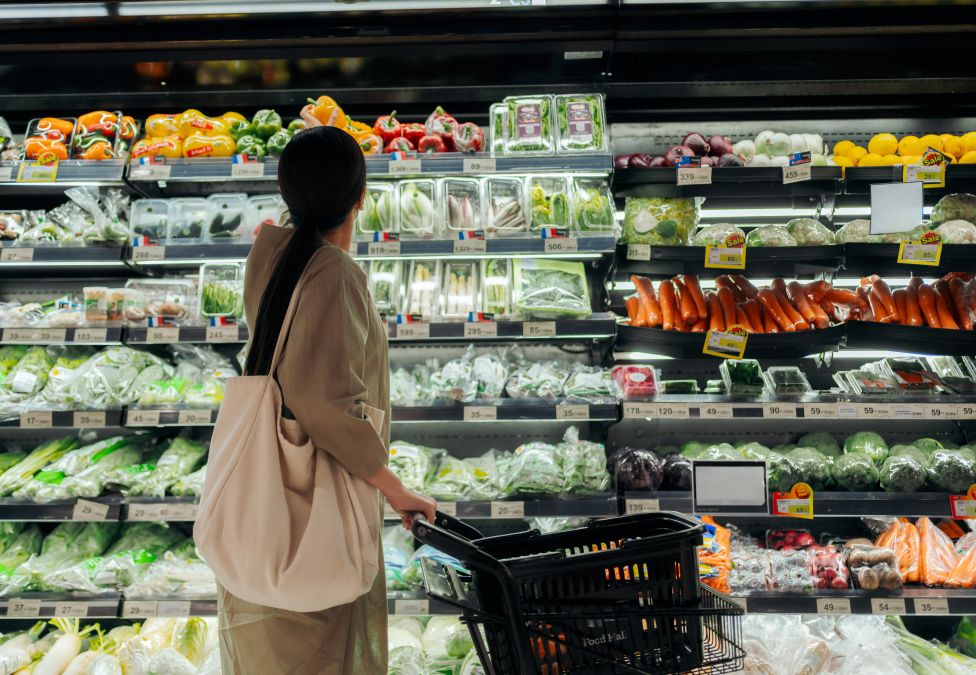
Too few families get that experience, and it’s about to get harder. America’s social safety net is unraveling, and families most in need are falling through the cracks. Federal cuts to Medicaid and SNAP—the largest either program has ever seen—are leaving millions without the health care or nutrition they need, and shifting billions in costs to state and local budgets that are already stretched thin. At the same time, an affordability crisis is forcing parents to make trade-offs between paying for prescriptions or buying groceries.
The burden of connecting these systems shouldn’t fall on the families who need them.
This moment requires us to take a hard look at our fragmented social services landscape and reimagine how the benefits programs millions of Americans rely on to stay healthy work together. As new eligibility rules take effect, integration is no longer a nice-to-have; it’s how we keep eligible families from losing help they qualify for.
That starts by breaking down the walls between systems, including those around food security and health care. While these programs are primarily government-funded, private systems still have a key role to play.
We know that improving a person’s health takes more than a visit to a doctor. An estimated 80 percent of health outcomes are influenced by factors like nutrition, housing, and income. Food insecurity alone drives up rates of chronic illness, emergency room visits, and hospital stays.
Yet health care and nutrition assistance still sit in silos, run by agencies that often don’t share data or paperwork. That means a family receiving benefits through SNAP, WIC, Medicaid, and even school meals has to clear separate hurdles for each one, making a missed notice or deadline enough to cost them the support they qualify for.
As one example, a growing, cross-sector effort led by Share Our Strength and other groups is working to close that gap. The Medicaid Food Security Network brings together health-care providers, state Medicaid agencies, managed care organizations, and anti-hunger groups to weave nutrition and food security into the way Medicaid operates.
Improved data use is also essential. States should start by building annual hunger screening into standard Medicaid practice and connect anyone who screens positive to SNAP, WIC, or a local food bank.
States can also modernize how people sign up for benefits by streamlining data sharing across Medicaid and SNAP. The stakes just went up: New Medicaid work requirements and six-month eligibility checks mean more eligible people losing coverage just because they missed a form. Connected data are the best defense, as people who meet SNAP’s work requirements also meet Medicaid’s.
Lastly, states can draw on existing Medicaid and Medicare tools, including federal guidance and waiver programs and “in lieu of services” flexibilities. These let Medicaid managed care organizations invest in Food Is Medicine, which offers medically tailored meals, produce prescriptions, and nutrition counseling, among other resources. Over 20 states have done so, and one national analysis found that covering medically tailored meals through Medicaid and Medicare could prevent about 1.6 million hospitalizations and save $13.6 billion annually in health-care costs.
States can’t do this alone. Health systems and health plans should screen patients and connect them to benefits as part of their care, and build nutrition into payment models that reward better health outcomes. Health-care leaders, investors, and philanthropists must also join us in this movement, advocating for a connected and integrated health-care system that treats food as part of the cure.
Helping families like Ashleigh’s stay healthy requires a health-care system that is interconnected, dignified, and functional. Everyone with a stake in America’s health has a role to play. The burden of connecting these systems shouldn’t fall on the families who need them.
SHARE
Related Content
-

Activating the Food Is Medicine Ecosystem: A Framework for Stakeholder Partnerships
Food Is Medicine (FIM) has reached a critical inflection point. What began as a community-rooted response to unmet nutrition needs has evolved into a nationally recognized strategy for preventing and treating diet-related chronic disease...Read Report CS
-

What I’ve Learned from Berries—and the People Behind Them
When I think about the future of food, I don’t start with technology or capital markets. I start in the field, with farmers I’ve spent time with, as people who wake up before sunrise to make decisions that carry real risk. I think about...Read Essay -
What We Heard at the Future of Health in Asia
The 12th annual Milken Institute Asia Summit in Singapore convened global leaders transforming business, finance, government, health care, technology, and philanthropy to discuss critical topics of importance within the Asia-Pacific region...Read ArticleThe 12th annual Milken Institute Asia Summit in Singapore convened global leaders transforming business, finance, government, health care, technology, and philanthropy to discuss critical topics of...
Image Brenda HuneycuttFormerly Milken Institute
-

A Blueprint for Employer-Led Food as Health Strategies
Employers are increasingly recognizing how food can promote whole-person health by addressing physical well-being, resilience, disease prevention, and mental health.Read Report

-

How Health Care Can Lead the Food Is Medicine Movement
Food and nutrition insecurity is a health issue far too big to ignore. Diet-related diseases are the leading cause of death in the US for adults. When people and communities lack access to affordable, healthy food, we see the impact in our...Read Essay -

How Workplaces Play an Important Role in Women's Health
In 2015, I decided to freeze my eggs. As a healthy 30-something woman, I thought I was taking a proactive step while I figured out my future. However, during my first consultation for the procedure, I received news I wasn’t prepared for: I...Read Essay -

How Philanthropy Can Build Resilient Food Supply Chains
From the COVID-19 pandemic to geopolitical conflicts, and catastrophic steering failures on cargo ships, as reported by NPR and The New York Times, the world has seen how a weak link in a supply chain can have far-reaching consequences for...Read Article IM
-

Key Trends in Health at Milken Institute Global Conference 2024
This brief summarizes the key trends, ideas, and solutions discussed at the Milken Institute Global Conference 2024 to increase access to innovation and improve health outcomes.Read Report -

Catalyzing Action for Pharmacist-Provided Food Is Medicine Care
"Catalyzing Action for Pharmacist-Provided Food Is Medicine Care" provides background, insights, and actionable recommendations for pharmacies and key partners, including health-care payers and policymakers, to scale FIM interventions in...Read Report
IM