


Power of Ideas
SHARE

SHARE
When I think about the future of food, I don’t start with technology or capital markets. I start in the field, with farmers I’ve spent time with, as people who wake up before sunrise to make decisions that carry real risk. I think about what they plant, how much they invest, and whether the economics will still work a few years from now.
When we talk about leadership in the next era of food, we need to be honest about something—we are operating in a moment of unprecedented policy disruption, and farmers are often asked to absorb the consequences with little voice in shaping them and little appreciation for the magnitude and time required to adjust.
The future of food will be built by investing in systems that allow farmers to succeed.
Farmers are at the center of nearly every major policy conversation shaping the global food system in this moment of disruption. They are central to a long overdue shift in health policy, where nutrient-dense foods are increasingly tied to preventive health. They are deeply affected by environmental and sustainability policy, given their sensitivity to climate, water, and soil. And they are exposed to trade and economic policy, as tariffs raise input costs and retaliatory actions limit export opportunities.
And because berries remain extremely manual to grow and harvest, I see it in immigration policies that further constrain an already challenged labor supply.
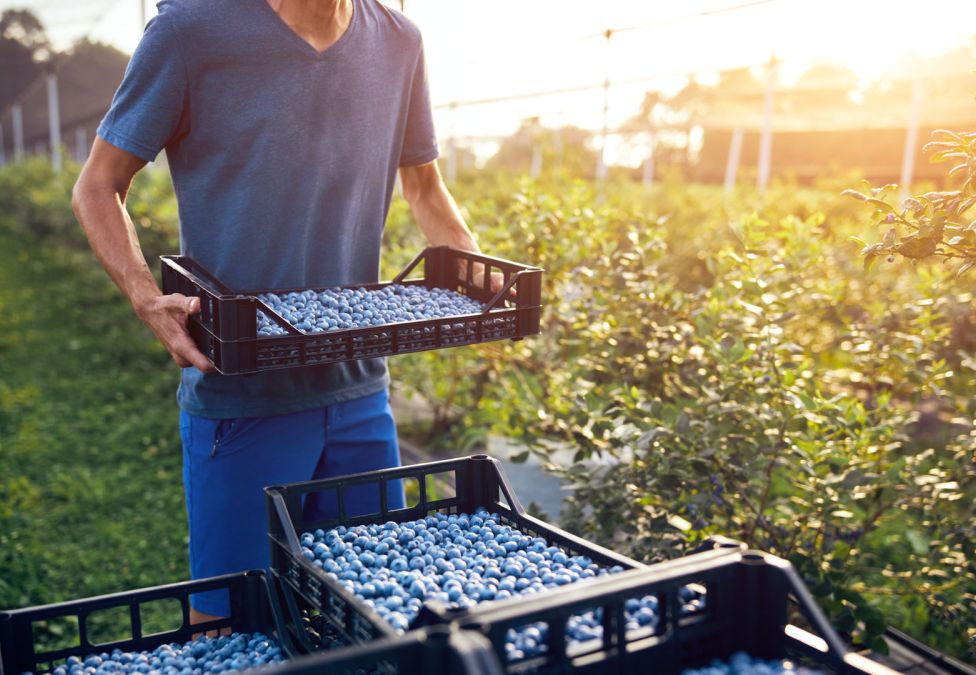
I see this clearly when I spend time with growers. Berries cannot be fully mechanized without sacrificing quality. They must be picked by hand, at exactly the right moment, by specialized workers who know the fruit, who are largely migrant or immigrant, and essential to the system.
Without policies that support a stable, legitimate agricultural workforce, farmers cannot remain economically viable, and berries cannot remain affordable.
When immigration systems are uncertain or disconnected from agricultural reality, the consequences are immediate. Fruit goes unharvested, costs rise, farmers lose income, and consumers see higher prices. The very foods we want people to eat more of, including fresh, healthy foods, become harder to access.
I’ve seen farmers do everything right, investing in better varieties, adopting more sustainable practices, planning for the long term, only to be undone by labor shortages and rising costs they cannot control. That is not a failure of farming. It is a failure of systems to acknowledge how food is produced and how long it takes to adapt to new policy realities.
We are pursuing important long-term goals, focusing on a healthier population, a more stable workforce, and more resilient supply chains but often as if they are separate issues. In reality, they are deeply interconnected, and those connections show up most clearly at the farm level.
Farmers are being asked to produce healthier food, navigate tightening labor constraints, and absorb higher costs from trade disruptions all at once, and often without the tools to manage that transition. The response is frequently reactive with temporary relief or one-time compensation.
These actions can help farmers survive a bad year. But they rarely change the underlying economics. They don’t create durable markets or consistently reward nutrition, quality, or sustainability, and they don’t give farmers confidence to invest in the future.
From where I sit, policy too often works above farmers instead of with them. This is why I believe berries are such a powerful lens for leadership in the next era of food.
Because berries are perishable and quality-sensitive, they require coordination across the entire value chain from breeding and growing to labor, logistics, and retail. Those investments only happen when farmers see stable markets, reliable labor, and policies that support long-term value creation.
Leadership, in my view, is about connecting these dots and translating disruption into practical solutions. It means aligning agricultural policy with our nutrition goals, so that risk management and safety nets extend to fresh foods like produce. It means advancing immigration and labor policy that recognizes a fundamental reality that agriculture depends on human labor, and meaningful mechanization is still far off. And it means shaping trade policy around competitiveness and affordability, ensuring farmers can access inputs and markets, rather than relying primarily on restrictions and compensation after the fact. It also means greater investment and partnership across the public and private sectors to navigate this transition.
To me, fresh berries bring the full system into focus, revealing where health, trade, labor, and sustainability either reinforce one another or collide.
The future of food will be built by leading with farmers and investing in the systems that allow them to succeed.
That is the leadership this moment demands.
SHARE
Related Content
-
Activating the Food Is Medicine Ecosystem: A Framework for Stakeholder Partnerships
Food Is Medicine (FIM) has reached a critical inflection point. What began as a community-rooted response to unmet nutrition needs has evolved into a nationally recognized strategy for preventing and treating diet-related chronic disease...Read Report CS
CS

-

A Blueprint for Employer-Led Food as Health Strategies
Employers are increasingly recognizing how food can promote whole-person health by addressing physical well-being, resilience, disease prevention, and mental health.Read Report

-
How Philanthropy Can Build Resilient Food Supply Chains
From the COVID-19 pandemic to geopolitical conflicts, and catastrophic steering failures on cargo ships, as reported by NPR and The New York Times, the world has seen how a weak link in a supply chain can have far-reaching consequences for...Read Article IM
IM
-

Key Trends in Health at Milken Institute Global Conference 2024
This brief summarizes the key trends, ideas, and solutions discussed at the Milken Institute Global Conference 2024 to increase access to innovation and improve health outcomes.Read Report -

Catalyzing Action for Pharmacist-Provided Food Is Medicine Care
"Catalyzing Action for Pharmacist-Provided Food Is Medicine Care" provides background, insights, and actionable recommendations for pharmacies and key partners, including health-care payers and policymakers, to scale FIM interventions in...Read Report
IM
-
What We Heard at the Future of Health in Asia
The 12th annual Milken Institute Asia Summit in Singapore convened global leaders transforming business, finance, government, health care, technology, and philanthropy to discuss critical topics of importance within the Asia-Pacific region...Read ArticleThe 12th annual Milken Institute Asia Summit in Singapore convened global leaders transforming business, finance, government, health care, technology, and philanthropy to discuss critical topics of...
Image Brenda HuneycuttFormerly Milken Institute
 -

Advancing Health Through Expanded Access to Pharmacy-Based Care
As the health system evolves to meet rising demand while grappling with workforce shortages, pharmacies are well-positioned to play a greater role in delivering high-quality, community-based care.Read Report


-
Perspectives on a Natural Capital Approach to Financing Food Systems Transformation
In September 2024, the Milken Institute released Insights on Investments in Food Systems Transformation: Pathways to COP30, which explored the state of food systems investing, the risks and benefits, and the challenges and opportunities.Read Report
IM
-
How Health Care Can Lead the Food Is Medicine Movement
Food and nutrition insecurity is a health issue far too big to ignore. Diet-related diseases are the leading cause of death in the US for adults. When people and communities lack access to affordable, healthy food, we see the impact in our...Read Essay