Milken Institute Strategic Philanthropy Spring Newsletter: Philanthropy’s Renewed Momentum – June 2026

In This Issue:
- Philanthropy Learnings and Insights from the 2026 Global Conference
- Forward Together: How Philanthropic Families Can Create Impact Across Generations
- Latest Reports and Insights
Philanthropy Learnings and Insights from the 2026 Global Conference

Building Community for Collective Impact
While every funder faces unique challenges, thoughtfully curated spaces to learn from other funders can offer new ideas and fresh perspectives focused on solutions. At this year’s Philanthropic Investors Forum (PIF), we heard how leaders are navigating philanthropy at an inflection point, highlighting new partnership models beyond traditional grantmaking and reflecting candidly on big bets. The forum served as a key focal point for our Philanthropy Leadership Collective, where members engage with peers throughout the year and attend PIF sessions exploring philanthropy in action. Learn more about our active peer learning communities.
Session Highlight—Investing in Hope: Philanthropy for What’s Next
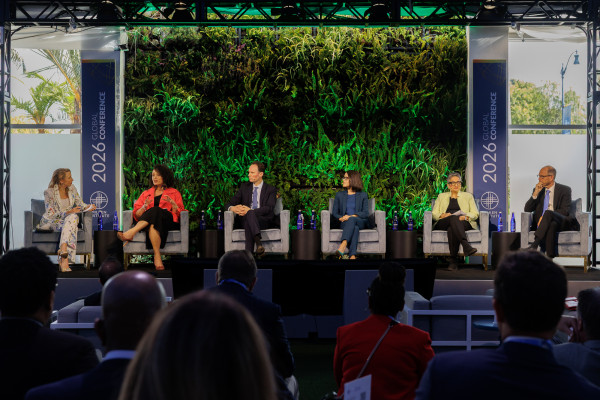
When the need for philanthropy and impact capital seems endless, holding onto hope can feel challenging—but there is progress, and philanthropy’s growth and evolution can pave the way to action. Melissa Stevens, executive vice president, Milken Institute Strategic Philanthropy, hosted a panel discussion with leaders from corporate foundations, institutional philanthropy, and more who are working through this evolution in real time to discuss what’s needed to move more capital off the sidelines and toward progress and new hope. Watch the session to capture insights from the discussion.
In Conversation—Advancing Science Research that Changes Lives
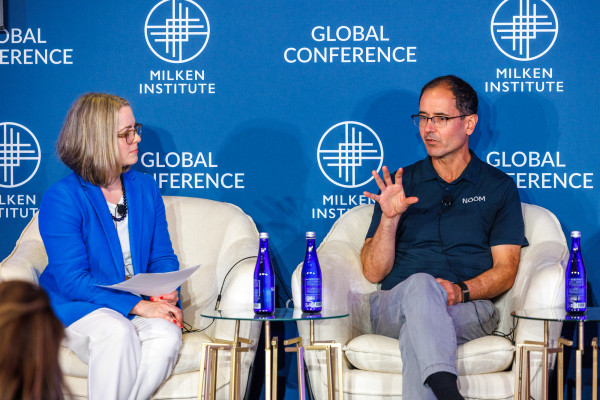
From neuroscience and brain care to rare disease and pediatric health, this year’s conference featured timely conversations on the current funding landscape, barriers to research, and where strategic investment is most urgently needed in science and health. Rewatch the following sessions to understand how today’s leaders see the path forward to accelerate research and innovation across the scientific ecosystem.
- Mind Over Matter: How Neuroscience Is Redesigning the World Around Us
- From the Cell to the Cosmos: Funding the Next Era of Discovery
- Pediatric Health: The Most Effective Long-Term Investment We Can Make
- Rebuilding Mental Health Care: From Fragmentation to Coordination
- Rewriting the Rules: Scaling Innovation for Rare Diseases
- The Economic Case for Health Equity
Leveraging AI for Global Progress—Winning Companies from the Milken-Motsepe Innovation Prize
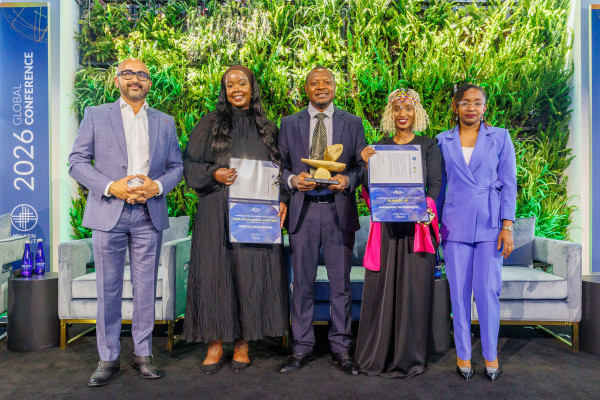
On the final day of Global Conference, the Milken Institute and the Motsepe Foundation announced the $1 million grand prize winner of the Milken-Motsepe Prize in AI and Manufacturing, designed to recognize established companies driving innovation in Africa’s manufacturing sector with the potential to scale, create jobs, and expand the adoption of these technologies across the world. BleagLee, a Cameroon-based AI-powered waste recycling company, was awarded top honors for leveraging AI-powered waste collection to convert plastic, agricultural, and e-waste into premium recycled products. Learn more about the winners and help raise awareness of our newest prize, the Milken-Motsepe Prize in Circular Economy, focused on scalable companies using technology to advance circular economy practices. Applications are now open at MilkenMotsepePrize.org.
Forward Together: How Philanthropic Families Can Create Impact Across Generations
In the coming decades, the rising generation will inherit significant wealth, creating an opportunity to reshape philanthropy and reimagine not only how giving works but also what it is meant to achieve. At the same time, philanthropy is operating in a more complex environment, with capital increasingly being asked to do more—to help shape systems, build resilience, and restore confidence in the future.
A new report from the Milken Institute, Forward Together: How Philanthropic Families Can Create Impact Across Generations, offers practical recommendations and tools for anyone in a family seeking to navigate the challenges—and maximize the impact—of multigenerational philanthropy. Download the report for a deeper dive on insights gathered from 34 deep-dive interviews with rising-generation philanthropists and philanthropic advisors.
Latest Reports and Insights
Next-Gen Industry: A Prize in Scalable AI and Manufacturing Innovation
The Milken-Motsepe Prize in AI and Manufacturing addresses a key challenge: connecting manufacturers ready to adopt AI with innovators ready to deploy it. Designed for established, growth-stage businesses, the prize aligns incentives across the ecosystem, channels capital, validates real-world performance, and accelerates adoption at scale. The prize awards a total of $2 million, including $1 million to the grand prize winner. Finalists and semifinalists receive unrestricted funding, mentorship, and opportunities to connect with investors and industry leaders. Download the report to learn more about the prize design process, the potential of AI in manufacturing, and how African companies are leading the way.
Anxiety: A Giving Smarter Guide

Anxiety disorders affect one in five adults and arise from a complex mix of biological, psychological, social, and environmental factors, yet research and treatment remain fragmented and underfunded. To support scientific progress in anxiety, the Dauten Family Foundation has partnered with Milken Institute Strategic Philanthropy’s Science Philanthropy Accelerator for Research and Collaboration (SPARC). Based on SPARC’s extensive review of scientific literature, analysis of public and private funding for anxiety, conversations with more than 70 stakeholders, and an in-person convening of relevant experts, this Giving Smarter Guide presents five areas of opportunity that philanthropic funders are well suited to improve. Download the report to learn more about the areas of opportunity and in-depth research from the field.
Financing Cancer Care: Investing in Prevention, Early Detection, and Diagnosis
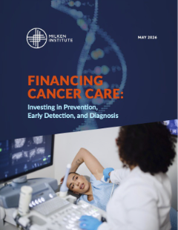
Globally, cancer claims nearly 10 million lives each year, inflicting immeasurable pain and loss across families, workplaces, and communities. Estimates suggest that at least 40 percent of US cancer cases are linked to modifiable risk factors, and nearly half of cancer deaths are preventable. So why are we not investing more in prevention, early detection, and diagnosis? While these interventions are often perceived as public goods essential to society, the benefits of early cancer detection and accurate diagnosis do not easily or directly translate into near-term profits. As a result, resources tend to concentrate on treatments with clearer pathways to scale and sustainability. Download the report and explore strategies to coordinate resources and financing to advance more equitable, cost-effective, and sustainable approaches to cancer care.
In Case You Missed It: Power of Ideas
Check out two compelling quotes from essays on philanthropy in this year’s Milken Institute Power of Ideas series, where corporate philanthropy leaders share how leadership is showing up in the field:
“Resilience isn’t built in moments—it’s built through sustained, responsive investment."—Investing in Resilience: Supporting Partners in a Changing World —Allison Goldberg, president, Merck Foundation
“Philanthropy is not separate from institutional strategy; it helps inform and strengthen it.” —From What Works to What Lasts —Roma Kaundal, managing director and head, US Philanthropy, JPMorganChase