

In This Edition:
- Spotlight: New Publications
- Events Recap
- Thought Leadership
- Select Project Updates
- From our Advisory Board
Spotlight: New Publications
Our newest brief, Financial Longevity: Redesigning Economic Architecture for Longer Lives, was released in May 2026.
Financial Longevity: Redesigning Economic Architecture for Longer Lives
Authored by Director of Financial Longevity Dawn M. Carpenter, DLS, Financial Longevity: Redesigning Economic Architecture for Longer Lives argues that economic systems built for shorter lives are now misaligned with longer, more complex life courses—leaving households to absorb longevity-related risks that today’s institutions are not designed to manage. The brief examines how rising life expectancy, uneven gains in healthy life expectancy across income, education, and geography, and declining fertility rates are accelerating the transition to older societies, even as capital, labor, and health-financing systems remain anchored to mid-20th-century assumptions.
Carpenter offers a framework for aligning capital, labor, and governance with extended time horizons, illustrating how redesigning these systems can support sustained workforce contribution, institutional trust, and long-term economic resilience. Read the full brief to explore how a financial longevity framework can chart a path toward a more durable future.
Events Recap
2026 Milken Institute Global Conference
The 29th annual Milken Institute Global Conference convened more than 1,000 speakers and 4,000 participants across health, finance, business, government, technology, philanthropy, and culture in Los Angeles, CA, from May 3–6, 2026, under the theme Leading in a New Era. Among the conference’s approximately 200 sessions, the Milken Institute Future of Aging contributed to programming advancing healthy longevity, including the session highlighted below.
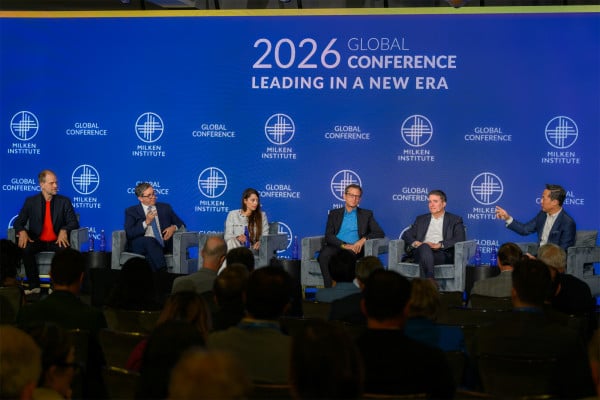
Breakthroughs Reshaping Aging and Longevity
This session brought together leading scientists, clinicians, and industry leaders to examine the breakthroughs reshaping how we understand and extend healthy longevity—from advances in the biology of aging to AI-enabled detection and a maturing pipeline of therapeutics, along with a call to focus on risk reduction and prevention. Panelists explored how emerging science and technology can translate into longer healthspans and what it will take to ensure these advances reach people across the lifespan and income spectrum.
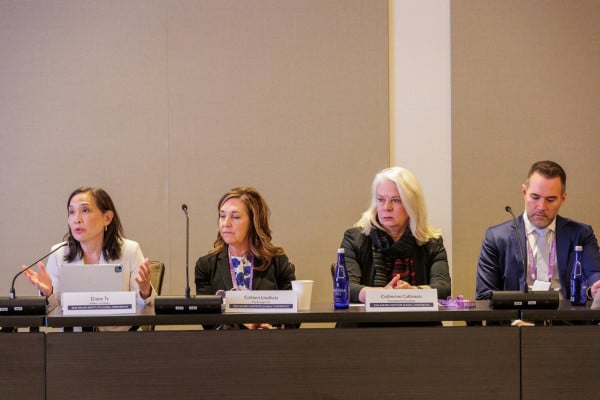
Future of Aging Advisory Board: What Longevity Means for Work, Labor, and Economic Growth
As fertility rates fall and longevity rises, the population pyramid is taking on a new shape. More than a demographic shift, this is a structural turning point that requires rethinking foundational systems: education, work, and community life. This private conversation at the Global Conference explored how institutions must evolve so longevity can become a vehicle for prosperity and economic growth.
Power of Ideas Essay
The Power of Ideas is a thought-provoking essay collection that invites select speakers to respond to the theme of the Milken Institute Global Conference. For this year’s conference, Richard Isaacson authored an essay titled “Alzheimer’s Prevention and Preventive Neurology: Trust but Verify.” The essay emphasizes the importance of trust in medicine in an era when scientific progress and public understanding advance at different paces.
New Team Member
Please join us in welcoming Ama Germain to the Future of Aging team as a senior associate. Germain will be supporting the team's financial longevity and events work.
Germain is a recent graduate of the École des Hautes Études Commerciales Business School in France, where she pursued her master's in creative business and social innovation. She hails from Pittsburgh, where she worked across nonprofits spanning international and community development. She also holds a background in Africana studies from the University of Pittsburgh and a passion for social impact.
Thought Leadership
This section showcases articles, media highlights, and more featuring Milken Institute Future of Aging leaders as speakers, authors, or expert interviewees.
Articles and Op-Eds
February 18: Diane Ty authored “Caregiving in the Spotlight” in Dialogue, arguing that “caregiving can no longer be treated as a private issue happening outside the workplace” and that supporting employee caregivers is a competitive imperative.
April 12: Ty coauthored with Aimee DeCamillo, head of global retirement and wealth at Manulife, a Fortune piece titled, “America Is Not Ready for Its Own Longevity Crisis—and 2026 Is the Wake-Up Call,” urging leaders to prepare systems for longer lives.
May 29: Carpenter authored an op-ed in Aging in America News, “The Care Economy Was Never Peripheral,” making the case that care work is central to—not separate from—the broader economy.
External Events
February 18: Dawn Carpenter spoke on the Longevity Equation with the University of Chicago Graham School Leadership and Society Initiative.
April 14: Jennifer Rossano gave the keynote presentation at the 2026 TSLCA Summit on “The Future of Aging Is Longevity Ready,” highlighting a systems-based approach to aging well.
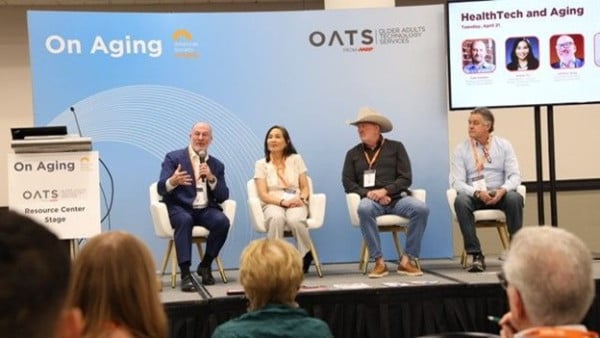
April 21: Ty spoke on the “Healthtech and Aging” and “How Age-Tech Innovators Are Transforming the Early Detection of Alzheimer’s” panels and shared her story at the session “Real Talk with Leaders on Personal Loss in an Age of Longevity” at the American Society on Aging’s On Aging 2026 conference in Atlanta.

April 23: Ty moderated a session titled “The Future of Longevity” at the 2026 Ascension Mind-Body Summit in Washington, DC, focused on women’s health and longevity.
May 19: Paul Irving spoke on a panel titled “America’s Next Great Workplace Revolution,” presented by CWI Works. The conversation explored the impact of AI and emerging technologies on experienced talent, as well as creating workplaces where employees across generations can thrive.
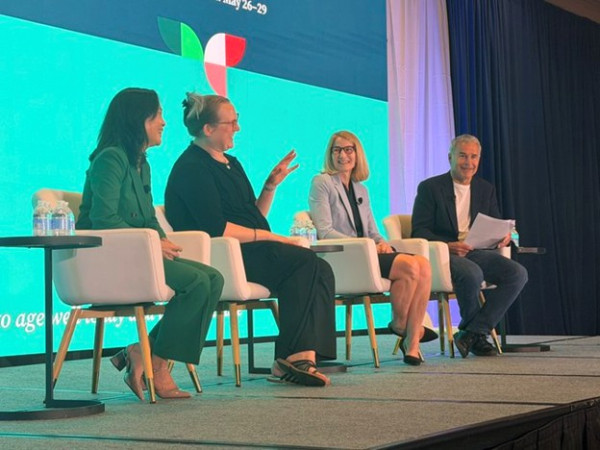
May 29: Ty spoke on the “Exploring the Potential of AI” panel at the National Council on Aging AgeAction 2026 conference.
June 8: Rossano spoke at the 2026 Age Strong Vermont Summit to share findings from our Future of Aging report, Longevity Ready: A Systems Approach to Aging Well at Home .
June 12: Carpenter and Ty attended the TIAA Health and Wealth symposium in New York, where Carpenter presented her Milken Institute Longevity Equation report.
June 17: Carpenter spoke at the Worth Presents Living Well 2026 conference in New York in a fireside chat titled “Financial Longevity: Closing the Healthspan-Wealthspan Gap.” This invitation-only afternoon convened 100+ senior leaders across health care, capital, hospitality, and the C-suite for candid conversations on the science, strategy, and capital shaping the future of healthspan and human performance.
Media Highlights
February 11: Carpenter was featured in Risking Old Age in America’s “Dignity in Aging Depends on Financial Longevity,” pairing interview excerpts and topic-oriented timestamps with a full audio conversation on financial longevity.
February 12: Lauren Dunning’s fall-prevention research was featured in McKnight’s Senior Living’s “Bundling Digital Falls Prevention Technologies Offers Best Opportunity for Full Benefits: Report,” which reported on the Institute’s case for testing bundled digital technologies rather than fragmented point solutions.
February 25: Ty was quoted in Men’s Health’s “How New Longevity Tech Could Help You Reach 100,” on emerging technologies that may help extend healthy life.
March 25: Paul Irving was featured in The Washington Post’s “Despite Stereotypes, People Can Get Better With Age. Positivity Is Key,” on the role of a positive outlook in healthy aging.
March 25: Carpenter appeared in a Welt segment, “Closing the Death Gap: Health, Wealth, and the West Side of Chicago,” examining the link between wealth and life expectancy.
April 16: Ty was quoted in U.S. News & World Report’s “What Is Respite Care? Types, Costs and How to Find Caregivers Near You,” noting that “everyone deserves the dignity of aging well in the place they call home.”
April 22: Carpenter was quoted in PlanSponsor, “Employers Can ‘Bend or Lose’ on Flexible Work Arrangements,” on hybrid work, benefits as drivers of organizational trust, and the role of phased retirement in preserving institutional knowledge.
April 28: Carpenter was featured in Super Age’s “This Longevity Equation Sheds New Light on Wealthspan,” exploring how healthspan and wealthspan intersect across the life course.
May 12: Carpenter’s new brief was covered in McKnight’s Senior Living’s “New ‘Economic Architecture’ Needed for Aging Population, Report Says,” summarizing the case for redesigning economic systems for longer lives.
May 12: Carpenter was featured in a Worth video, “The Longevity Equation: Why Living Longer Could Break the Financial System,” on the financial pressures created by longer lives.
May 21: Michael Brown and the Alliance were highlighted by Ashbury Communities in “The Future of Aging is Brain Health: Reflections from a Conversation with the Milken Institute” for Alzheimer’s and Brain Health Awareness Month.
June 2: Carpenter’s Milken Institute Insights article "The Wealth-Health Connection: How Economic Status Shapes Well-Being,” published in March 2025, was referenced in an article from The Independent titled “The science of wealth: How making more money impacts your health.” The article examines the relationship between financial security and physical and mental health outcomes.
June 15: Ty was quoted in an article from Business Insider titled "The Modern American Retirement is Online," providing context on family caregiving and elder care as more Americans are relying on tech and AI to shape retirement and caregiving.
Podcast Interviews
April 28: Ty appeared on The Care Economy podcast for the episode “Supporting Family Caregivers at Work: Employer Strategies That Actually Work,” sharing practical approaches employers can take to support working caregivers.
Select Project Updates
Longevity Ready
The Future of Aging published two Milken Institute Stories from the Field articles examining what the public sector is doing to help constituents prepare for longer lifespans.
The first interview with California Department of Aging Director Susan DeMarois details California’s “Flipping the Script on Aging” public health campaign, aimed at reframing conversations about ageism and drawing attention to the strengths and contributions of older Americans. DeMarois covers how the state is implementing strategies highlighted in our Milken Institute report Longevity Ready: A Systems Approach to Aging Well at Home.
The second interview with Maryland Department of Aging Secretary Carmel Roques examined how the state is helping Marylanders become “longevity ready” through policy, including the “Longevity Ready Maryland Act,” which may serve as a model for other states.
Alliance to Improve Dementia Care
June is brain health awareness month! With over seven million Americans living with Alzheimer's or dementia, this is a time to raise awareness for all those affected by a diagnosis.
So far in 2026, the Alliance has hosted all-member meetings on a number of issues and breakthroughs in dementia care, including positive clinical trial results in Lewy body dementia, new research platforms for speech-based diagnostics, and approaches to person-centered dementia care and caregiving programs.
The Alliance welcomed Cassandra Riccie, senior manager, Alliance Development, Roche Diagnostics, as the newest member of its steering committee and completed the first phase of a project to advance implementation of blood-based biomarkers for early Alzheimer’s disease.
Interested in joining the Alliance? To learn more, contact Mike Brown at [email protected].
News from our Alliance Steering Committee Members:
- AARP research revealed growing momentum and lingering gaps in how US adults 50 and over understand and address different issues surrounding brain health. Based on national surveys conducted across March and April 2026, findings indicate that while many adults remain unaware that they can mitigate future brain health risks, exposure to resources and new information increases their willingness to act.
- Alzheimer’s Association announced the launch of “(re)think your brain,” a new initiative designed to encourage people to take action on brain health. The initiative expands how people care for their brains and introduces a step-by-step guide to support brain health and cognitive function.
- Alzheimer’s Drug Discover Foundation (ADDF) announced Isobel Coleman as its new CEO, leading ADDF through the next era of Alzheimer’s breakthroughs.
- Biogen announced topline results from its Phase 2 CELIA study of diranersen, an investigational antisense oligonucleotide therapy targeting tau in individuals with early Alzheimer’s disease. It is the first study to show a reduction in tau pathology and cognitive benefit in patients. Biogen plans to advance diranersen into registrational development.
- BrightFocus Foundation announced $8.5 million in new research grants for Alzheimer’s
disease research as part of a larger $15.2 million investment supporting 62 scientists across multiple areas, including AI-driven approaches to improve earlier detection and treatment. - CaringKind recently launched a revamped website to support all who are impacted by a dementia diagnosis. Find the new site.
- Eisai noted the US Food and Drug Administration priority review date for LEQEMBI ® IQLIK™, a once-weekly subcutaneous injection as a starting dose for the treatment of early Alzheimer’s disease will be August 24, 2026.
- Genentech’s pioneering use of AI in biosciences was profiled in Forbes, highlighting the company’s efforts to lead the next frontier of human health.
- The John A. Hartford Foundation awarded a grant to FAIR Health to expand price-informed shared decision-making tools and resources across 10 Age-Friendly clinical institutions.
- Lilly announced the launch of donanemab, branded Lormazli in India, which is expected to become commercially available later in May.
- Lundbeck shared new data at the AD/PD conference on a Phase 1b proof-of-mechanism trial exploring the safety, tolerability, and clinical activity in people with advanced Parkinsons disease.
- Roche received the CE mark for its Alzheimer’s blood test, Elecsys pTau217, an assay designed to help clinicians detect amyloid pathology in patients experiencing cognitive decline. The test was developed in collaboration with Lilly.
- West Health joined “Metis,” the Houston-region holistic initiative focused on lifelong brain health to enhance human flourishing and economic group.
From our Advisory Board
Elizabeth Blackburn, Nobel laureate and professor emerita at the University of California, San Francisco, was quoted in an article in a Diario SA article titled “Elizabeth Blackburn, Nobel Laureate in Medicine, Outlines Which Factors Can Control Aging,” on how stress and lifestyle can accelerate DNA degradation.
Vince Bodnar, new advisory board member and president, Lumos Insurance, spoke with ThinkAdvisor for an article titled “The Long-Term Care Crisis Annuity Market Rumbles,” exploring the long-term care (LTC) crisis and the challenges facing families shopping for LTC services.
Ray Braun, president and CEO of the National Investment Center for Seniors Housing & Care (NIC), spoke with McKnight’s Senior Living for the article, “Senior Living Enters 2026 at a Critical Juncture,’” predicting that senior housing occupancy could surpass the 90 percent threshold in 2026 and emphasizing solutions for the middle-market senior.
Dan Buettner, founder of Blue Zones, LLC, joined Eric Topol’s Ground Truth’s substack for a video interview on “A Look Into the Blue Zones.” The interview covered the lifestyle and environmental factors that help promote lifespan.
Laura Carstensen, director of the Stanford Center on Longevity, was a featured voice at the Center’s Century Summit VI (February 17–18), cohosted with The Longevity Project, which explored lifelong learning and the future of work across longer lives.
Alberto “Beto” Casellas, executive vice president and CEO of health and wellness, Synchrony, authored an article for Fast Company titled “The Healthcare Paradox of More Options, Less Access,” examining how technology can expand access to care and promote healthier living.
Pinchas “Hassy” Cohen, dean of the University of Southern California Leonard Davis School of Gerontology, gave opening remarks at the 2026 USC Age Tech Symposium, where presenters discussed how advances in technology—including new artificial intelligence models and biomedical innovation—can transform aging research, care delivery, and health systems.
Catherine Collinson, CEO and president of Transamerica Institute, released the 26th Annual Transamerica Retirement Survey, “Life and Money: Retirement Security in the USA,” on April 16, providing a five-year trend analysis of Americans’ retirement preparedness.
Joseph Coughlin, founder and director, MIT AgeLab, and Wayne Park, CEO of Manulife John Hancock Retirement, spoke with Investment News about the John Hancock–MIT AgeLab Longevity Preparedness Index, a tool designed to identify gaps in retirement planning for Americans.
Ken Dychtwald, founder and CEO of Age Wave, authored an April 23 Fortune commentary, “The Longevity Revolution Is Here. Our Systems Still Think We Die at 65,” arguing that institutions must be redesigned for lives that now stretch into people’s 80s, 90s, and beyond.
Teresa Ghilarducci, director of the Schwartz Center for Economic Policy Analysis at The New School, authored an article for the Los Angeles Times titled “However You Feel About Their Creator, TrumpIRAs Are Sorely Needed,” voicing support for a universal retirement system to complement Social Security.
Michael Hodin, CEO, Global Coalition on Aging, authored an article for The Well News titled “The Medicare Rule Costing Heart Patients Their Lives.” The article examines the need for approval of preventative procedures for patients with cardiovascular disease in an aging society.
Peter Kaldes, president and CEO, Next50, launched a podcast titled The Future is Old, a series featuring leaders, disruptors, and creators who are redefining what it means to be “old.”
Cinny Kennard, president, Wallis Annenberg Legacy Foundation, spoke on a private panel at the 29th annual Milken Institute Global Conference titled “Los Angeles Wildfires Civic Leaders Council.” The roundtable reconvened to reflect on the second year of recovery following the Eaton and Palisades fires in Los Angeles in 2025.
Surya Kolluri, head of the TIAA Institute, was featured in a Yahoo Finance article titled “Americans Are Underestimating Their Life Spans—and Undersaving,” drawing on the TIAA Institute’s report on longevity expectations and retirement readiness.
Bob Kramer, founder of Nexus Insights and cofounder and strategic advisor to the NIC, authored a blog for Nexus titled “What ‘AgeTech’ Can—and Can’t—Do.” The article explores the potential benefits of AgeTech devices and wearables but cautions that quality-of-life tools work best when community and social connection are also taken into account.
Abby Levy, managing partner and founder, Primetime Partners, was interviewed by Barron’s in an article examining the latest innovations and health advancements in longevity medicine. In the article, titled “Live Longer and Better. Does ’Biohacking’ Really Work?”, Levy speaks about her data-driven approach to investing into longevity start-ups, as well as her approach into monitoring her own health.
Becca Levy, professor of epidemiology at the Yale School of Public Health, published a new study in Geriatrics titled “Aging Redefined: Cognitive and Physical Improvement with Positive Age Beliefs,” finding that older adults who held more positive age beliefs were more likely to show cognitive and physical improvement.
Myechia Minter-Jordan, CEO, AARP, was profiled in Black Enterprise about her mission leading AARP and how her background in clinical medicine prepared her for her role advocating for America’s aging population.
Sarita Mohanty, president, The SCAN Foundation, authored an insightful article for The SCAN Foundation titled “Caregiving Crisis: Is Long-Term Care Financing Reform the Solution?” The article examines the inflection point we are at in caregiving, and it is imperative that our country begin addressing the root causes of the caregiving crisis.
Jennifer Molinsky, director of the Housing and Aging Society Program at the Joint Center for Housing Studies of Harvard University, was quoted in an Axios article titled “Suburban poverty traps America’s senior citizens,” examining the older adults who are “stuck in place” in the suburbs rather than aging in place by choice.
New advisory member Corebridge Financial, represented by Joanne Moore, vice president, thought leadership and content, published new research findings that only 28 percent of pre-retirees and retirees are comfortable drawing down savings, and that those who have a plan for retirement are far more optimistic about their future.
Eunice Lin Nichols, co-CEO of CoGenerate, authored a piece for the American Society on Aging’s Generations Today spring issue. The essay, titled “An Intergenerational Life,” examines the potential benefits of embracing intergenerational connections and lifestyles.
Hon Pak, senior vice president and head of the digital health team, Mobile eXperience, at Samsung Electronics, was quoted in a March 10 announcement of Samsung’s collaboration with be well aligned with the federal “Kill the Clipboard” initiative to give patients direct control of their medical records.
Penny Pennington, managing director of Edward Jones, was featured in St. Louis Magazine’s “Business 500” Q&A, reflecting on leadership and the firm’s client-focused, relationship-first approach.
Andrew Scott, professor of economics at London Business School, hosted a Centre for Economic Policy Research webinar titled “Baby Busts and Growth Booms: Demographic Change and the Macroeconomy,” featuring Daron Acemoglu. The webinar examines historical evidence about the impact of demographic change and how we can prepare for our aging population.
Trent Stamp, CEO of The Eisner Foundation, spoke to Inside Philanthropy about how intergenerational relationships provide benefits to both the old and the young. The article, titled “Meet the Entertainment Philanthropy Older Than the First Talkies,” explores the “Passing the Torch” initiative from the Motion Picture and Television Fund, a two-year program that supports working and retired members in the entertainment industry.
Fernando Torres-Gil, professor emeritus of social welfare and public policy and director of the Center for Policy Research on Aging at the University of California, Los Angeles (UCLA), led a March 11 UCLA conversation, “The Myths and Realities of Entitlement Programs in Our Aging Nation,” on the future of Social Security and Medicare in an aging nation.
Kai Walker, managing director, workplace benefits research and inclusion transformation, Bank of America, moderated a session at the Bank of America Workplace Benefits Client Conference titled “From Readiness to Reality: Individuals’ Retirement Expectations vs. Lived Experience.”