

Stories from the Field

SHARE
SHARE
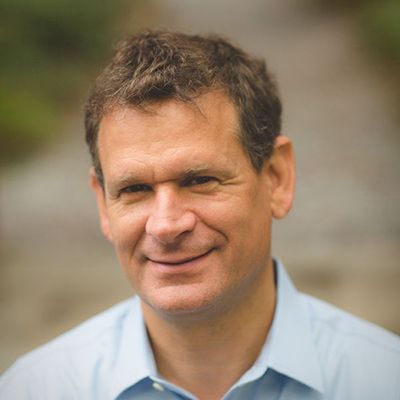
You started Clarion Call Capital three years ago after over two decades at a large investment management and research firm, where you developed a successful municipal impact investing strategy. How does the work you are doing now more directly serve the needs of underserved communities?
Clarion Call Capital makes investments to reduce disparity in infrastructure focused on communities that are under-resourced and excluded. We provide greater agency and autonomy to engage more deeply and creatively about environmental and social issues that influence people and place.
Clarion Call Capital is also working to disrupt the staid municipal bond market by creating a replicable, non-extractive direct-lending facility for municipalities, driven by frontline communities. Our goal is to create a scalable, deep place-based investing model for poor communities.
Walk us through your analysis. How do you decide which issuers qualify, and how does your ESG review shape what you invest in?
Our initial analysis identifies underserved and excluded communities. For example, we invest in health care systems that have more than 20 percent of their gross payer mix coming from Medicaid or charity care. We invest in colleges and universities where at least 40 percent of full-time, first-time students receive Pell Grants. For those entities that meet the socioeconomic criteria, we evaluate environmental, social, and governance (ESG) factors through an inquiry that we present to the individual issuer.
Why do you see fixed income and municipal bonds as a more powerful and overlooked tool for impact than public equities and private markets?
Historically, the municipal tax-exempt bond market has been foundational to high-net-worth investors seeking tax-free income at the federal and state levels. If shifted to incorporate impact, the municipal market becomes the original impact investment.
Clarion Call Capital believes a municipality’s overarching purpose is to defend and uplift the well-being, dignity, and opportunity of its citizens. Through the municipal bond market, we are able to center the human right to affordable housing, health care, clean water and sanitation, mass mobility, and education in state-of-the-art facilities for communities that have been excluded and discriminated against. There are very few investments one can make where they look out the window and point to a school or a hospital and say, “I helped build that. I contributed to the transformation of this community.”
You participated in the Milken Institute's Financial Innovations Lab® roundtables on investing in cancer prevention, early detection, and diagnosis. Cancer is not typically the first issue people associate with impact investing. What drew you to this work, and why do you think it belongs in that conversation?
I attended Milken’s Financial Innovations Lab on cancer prevention given my role as a board member of the 90-10 Institute. The nonprofit is working to establish a public benefit biotech and life sciences ecosystem that prioritizes patient well-being over profit maximization and financial engineering.
Beyond the 90-10 Institute, I believe in the importance of municipal impact investments as a financial tool for good that can help mitigate structural inequalities in health care, including cancer disparities. This means evaluating the efficacy of health-care investments through the lens of racial and social justice and community well-being.
What was one insight you took away from the Financial Innovations Lab conversations that has influenced how you think about social investing instruments—including, perhaps, the potential for cancer-related bonds?
In many instances, we’ve been led to believe the only way to finance complex and gnarly problems is through convoluted Rube Goldberg-like financial solutions. The municipal bond market is an efficient and, dare I say, elegant asset class that can raise large amounts of scalable, low-cost capital to address social, health, and environmental issues of the day, including efforts to cure cancer.
The specific community impact issues investors focus on seem to change every few years. What do you think investors should be paying attention to regardless of what's currently in the spotlight?
Investors, municipalities, philanthropy, and grassroots organizations must be laser-focused on addressing climate resilience and adaptation within the built environment. More importantly, without immediate recognition and action, the most severe, acute, and disruptive impacts of climate change will fall disproportionately upon the health and well-being of the poor and Communities of Color.
SHARE
Related Content
-

Ensuring a Better Future: Innovative Financing for Resilient Communities
We live in a new reality of extreme weather events, unprecedented in their intensity and frequency. Thunderstorms, hurricanes, and fires intensify within hours, catching entire neighborhoods off guard.Read Report
-

Stories from the Field: Ivan Frishberg
Over a decade at Amalgamated, you have transitioned from your role in impact policy to lead the bank’s sustainability efforts. How has your ability to reach your environmental targets impacted the overall goal of Amalgamated’s responsible...Read Article -

Innovative Financing Models for Resilient Critical Mineral Supply Chains
The need for resilient and secure critical mineral supply chains is now a globally acknowledged concept. Decades of investment disparities have exposed the fragility of supply, as strong and rising global demand clashes with monopolistic...Read Report
-

Financing Global Early Warning Systems Country Case Study: Brazil
This case study focuses on Brazil. With dense urban centers (where nearly 90 percent of the population lives), a landmass that spans the Amazon rainforest and borders with 10 countries, and a tropical climate, Brazil is particularly...Read Report

-

Financial Innovations Lab: Market Solutions for Scaling Food Is Medicine Prescriptions
Diet-related chronic disease continues to rise throughout the US population and, with it, the cost of health care. Despite record spending, the US experiences the lowest life expectancy among high-income countries and demonstrates declining...Read Report
 MB
IM
MB
IM
-

Models for Financing an Environmentally Sustainable Business Transition
There is undeniable evidence that changes to the climate impact the day-to-day lives of individuals, communities, and corporations alike. The latest report from the UN Intergovernmental Panel on Climate Change (IPCC), released in August...Read Report -

Banking Inclusion Post-COVID
During the COVID-19 pandemic, many Americans faced financial hardships, limiting their ability to build savings and credit. For people without bank accounts, that limitation—which has always been acute—almost certainly became more so. More...Read Essay -

Democratizing Finance Through Education and Information
One of the fundamental roles of the American capital markets has been to connect investors with investment opportunities. Whether privately held or public with shares traded on exchanges, companies that successfully raise capital can use it...Read Essay -

Priming SDG Markets: Can International Donors and Implementers Create An Impact Investment Pipeline?
Leveraging the power of markets is critical to fulfilling the bold ambitions of the United Nations Sustainable Development Goals (SDGs). The SDGs are a collection of 17 global goals set by the UN General Assembly in 2015 to end poverty...Read Report