


Stories from the Field

SHARE

SHARE
Over a decade at Amalgamated, you have transitioned from your role in impact policy to lead the bank’s sustainability efforts. How has your ability to reach your environmental targets impacted the overall goal of Amalgamated’s responsible banking mission?
Amalgamated Bank has a 103-year history of using finance to help our clients do good in the world. That founding purpose, which began with the textile workers of New York City, now extends to helping our clients combat climate change, lower the cost of energy and housing, and deploy capital to the communities that need it the most. The world now understands the importance of sustainability and environmental performance, and so we see it as an important part of our original mission. Our model doesn’t make us choose between doing well and doing good.
Mission is part of what fuels growth at Amalgamated—where mission meets performance. Our ambition for growth comes from the impact we see in our financing and the ambition to extend it further. Our change-making clients value our ability to move money to the frontlines of change—delivering purpose with performance.
What piqued your interest in participating in the Milken Institute Financial Innovations Lab (FIL) on community safety?
Not every problem in society can be solved through private capital, but the notion that smart government policy and a creative capital stack can make a significant difference in the well-being and lives of Americans is where our work as a values-based bank begins. The Lab has been a powerful convener and thought partner in this work.
What was one insight you gained from other perspectives at the FIL that has impacted your work at Amalgamated?
The power of private capital as a force for change is often limited by the financial acuity of the changemakers in society. We can’t just show up with capital and good intentions if the people on the frontlines of change aren’t innovating and driving the change along with us. Sitting in the rooms convened by the Lab clarifies what it is going to take to truly partner in that work.
You have developed several metrics relating to the impact of your balance sheet. Can you describe what the thinking is around this approach, as it is somewhat unusual among banks?
We are data driven and are just as transparent about our social impact as we are with our financial data and disclosures. We have developed a tripod of impact metrics that form the foundation for that work: how do we deploy capital to the communities that need it the most, how do we deploy capital to the high-impact sectors that bring a triple-bottom-line value, and what impact does our financing have on the climate.
At Amalgamated, growth happens where mission meets performance. Mission alignment, paired with strong banking discipline, is central to our offering to clients and investors, and we take supporting that alignment with data seriously. While identifying portfolio‑level metrics that truly inform decision‑making is complex and ongoing, it is an effort we have intentionally and consistently invested in.
Much of the work Amalgamated Bank has done with the Milken Institute has been around the topic of the wealth gap, and you alluded to that in the description of the tripod of metrics. Say a little bit more about how that has developed.
The growing wealth gap is clearly one of the significant challenges facing the United States. It stifles economic growth and social cohesion when there are such disparities and when so many Americans are being left behind. But assessing the impact of a diverse portfolio on that gap was a significant challenge from a data and outcomes perspective. One approach we settled on was to use the government definition of which census tracts are both low income and facing significant disadvantages. We mapped our loan originations to those communities and found that 26 percent of our capital was being deployed to the communities that need it the most. That number doesn’t speak to true outcomes, but it’s at least one clear metric on how we are doing at delivering capital to where it’s needed. It’s great to see the validation of our efforts through the numbers and be able to use them for our work going forward.
What positive signs do you see for socially responsible investing as we move through the difficult challenges of our time?
The fundamentals for investors have not changed. Companies that center themselves on building a fair and inclusive workplace, reducing environmental risk, and are not only connected to but are serving the American people—those companies do better. Investors who think about nonfinancial materiality do better. Those fundamentals have not changed and won’t change.
SHARE
Related Content
-

Feeding the World's Hungry: Fostering an Efficient and Responsive Food Access Pipeline
The 2008 global financial crisis left people with less money to feed their families and institutions with fewer resources to help. At the time of the lab, hunger impacted 1B people, 65% of whom were concentrated in seven countries. Despite...Read Report -

Financing Global Early Warning Systems Country Case Study: Brazil
This case study focuses on Brazil. With dense urban centers (where nearly 90 percent of the population lives), a landmass that spans the Amazon rainforest and borders with 10 countries, and a tropical climate, Brazil is particularly...Read Report


-

Financial Innovations Lab: Market Solutions for Scaling Food Is Medicine Prescriptions
Diet-related chronic disease continues to rise throughout the US population and, with it, the cost of health care. Despite record spending, the US experiences the lowest life expectancy among high-income countries and demonstrates declining...Read Report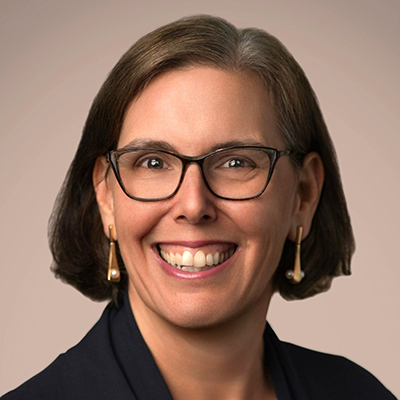
 MB
IM
MB
IM
-

Models for Financing an Environmentally Sustainable Business Transition
There is undeniable evidence that changes to the climate impact the day-to-day lives of individuals, communities, and corporations alike. The latest report from the UN Intergovernmental Panel on Climate Change (IPCC), released in August...Read Report -

New Models for Financing Vaccination Programs in Southeast Asia
In order to brainstorm mechanisms to continue to finance important vaccination delivery programs, the Milken Institute convened a Financial Innovations Lab® in Jakarta in August 2016. After years of economic growth, Indonesia has begun to...Read Report -

Innovative Finance to Address Africa’s Infrastructure Needs
As of 2015, African state governments had financed infrastructure development on their balance sheets alone, resulting in slower progress constrained by budgetary restrictions. In many regions across the African continent, the poor state of...Read ReportImage
Caitlin MacLean
Managing Director, Catalytic Capital, Milken InstituteCaitlin MacLean is a managing director on the catalytic capital team at the Milken Institute. She oversees the research, development, execution, and follow-up of our Financial Innovations Labs, which promote financial solutions to overcome economic and social challenges. -

Capital Access in Israel's Underserved Markets
In 2014 the Milken Institute convened a Financial Innovations Lab® on the topic of how to build mechanisms for financial inclusion. Unlike a number of previous Labs that have focused on easing barriers to capital for entrepreneurs and small...Read Report