


Stories from the Field
SHARE
SHARE
Looking back, when did you first begin noticing changes in your cognitive health, and what stands out to you about those early and more recent experiences?
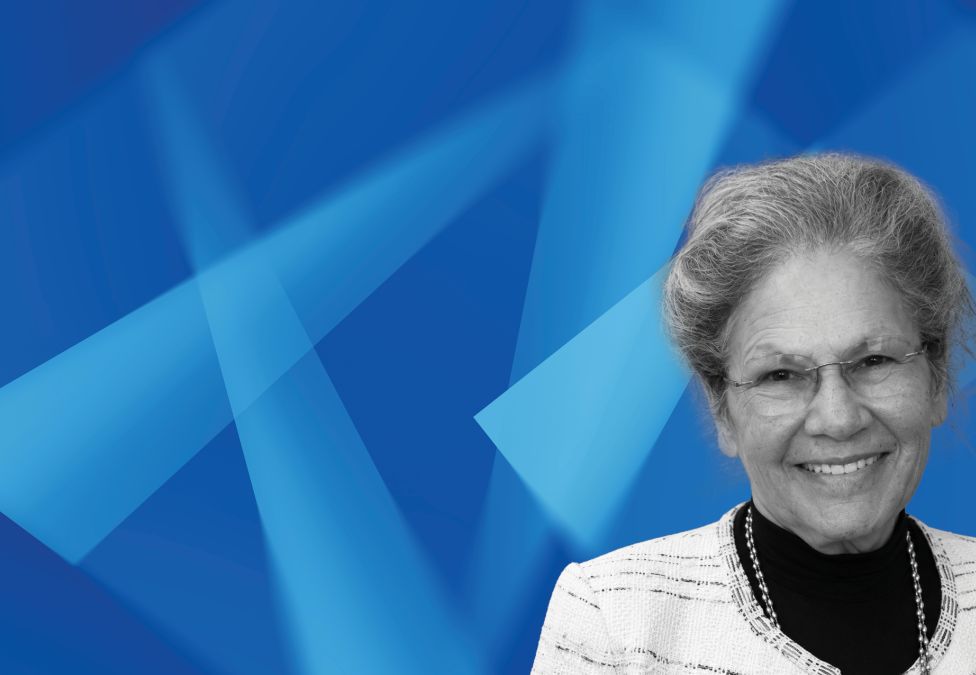
I was diagnosed with Alzheimer’s in September 2025. But the elevator is older than the diagnosis, and so are the banisters, and so is the afternoon in 1990 when I drove my ten-year-old niece home and could not find her street. The house is right in front of us, Aunt Ava, she said, with a loving disdain I have never forgotten. I made nothing of it. I was always getting lost. It was just getting worse. None of this is in anyone's dataset. No doctor ever asked me what I had stopped doing, or what I had rebuilt, or what I had invented to keep anyone from noticing. When I finally demanded to be tested, they asked me to name some animals and tell them who was president. I passed. I could have passed that test twenty years ago. I can pass it today, and I have Alzheimer’s.
Before you were diagnosed, were there subtle ways you found yourself planning differently or adjusting your daily life that only later made sense?
When we renovated our house, I asked for an elevator. For when we get old, I said, and everyone nodded, because that is a reasonable thing for a woman my age to want. Before that, it was the banisters—with lights underneath, on motion detectors, so the stairs would come up out of the dark to meet me. I told myself I was being sensible. I was being inventive. I had been getting more inventive for years, and I was getting tired. Alzheimer's announces itself long before it can be measured. It is revealed in a career quietly abandoned, a road not taken because parking there had become confusing, a friendship allowed to lapse because the names are gone. Researchers cannot see any of that. It is in our houses, our habits, and our small daily humiliations, and we are trained from the first diagnosis in the family to keep it there.
After your diagnosis, you made the decision to share your story publicly. What motivated you to speak out?
Because they are not particulars. They are data—and there are millions of us carrying that data around in silence, which is exactly where the researchers cannot reach it. Just a few weeks ago, The Washington Post published an article written by Sharon Schindal explaining why she declined a biomarker test for Alzheimer’s. She had reason to say yes. She had a family history that indicated the disease as a possibility. Nonetheless, she decided not to find out, fearing the adverse impact on her life. I shared that fear, and suspect that millions of others do, too. Millions of us are sitting on the earliest and most specific evidence this disease produces, and we are sitting on it in the dark.
The Milken Institute Alliance to Improve Dementia Care report, Advancing Blood-Based Biomarkers for Alzheimer’s and Cognitive Care, highlights the importance of earlier detection and diagnosis. From your perspective, why is the Alliance poised to tackle these issues?
That silence costs us. The science to treat Alzheimer’s is arriving. We have blood biomarkers now, and amyloid PET scans, and infusions that clear the plaques, and the first drugs that actually slow the disease rather than merely consoling us about it. Billions of dollars and forty years of brilliant work have produced treatments that finally do something—and they do the most for the people who start earliest. That is the whole cruel arithmetic of it. The better the medicine gets, the more it matters when you find out. Which means the bottleneck is no longer entirely in the laboratory. It is in the twenty or thirty years I spent installing banisters and telling no one. It is time for those of us sitting in silence to get tested and speak up. From us will come new data, and from that, new insights. Maybe Alzheimer's will remain incurable, but perhaps those of us in its earliest stages carry information that can help make it preventable.
This is exactly the gap the Alliance exists to close—putting researchers, physicians, policymakers, and people living with the disease in the same room, so a story like mine turns into a policy, a protocol, or a reason a doctor asks a better question than “name some animals.”
SHARE
Related Content
-

Request for Proposals: Kissick Family Foundation Frontotemporal Dementia Grant Program (2025-2026)
The Kissick Family Foundation Frontotemporal Dementia (FTD) Grant Program will fund a third cohort of research studies to understand the fundamental biology of why and how sporadic forms of FTD develop. In partnership with the Milken...Read Article -

Improving Early Detection of Cognitive Impairment and Dementia
The prevalence of mild cognitive impairment (MCI) and dementia is increasing as advancements in medicine, public health, and living standards extend human lifespans. Approximately 12–18 percent of Americans aged 60 and older have MCI, and...Read Report SM
KP
SM
KP
-
Concentrating on High-Value Alzheimer’s Needs to Get to an End (CHANGE) Act
On behalf of the Milken Institute Alliance to Improve Dementia Care, we thank you and your colleagues for addressing the growing public health crisis of Alzheimer’s disease and related dementias (ADRD) through the reintroduction of the...Read LetterImage
Diane Ty
Managing Director, Future of Aging, Milken Institute HealthDiane Ty is the managing director of the Milken Institute Future of Aging, leading efforts to advance healthy longevity and financial security through a life course perspective on aging. -

Scaling Comprehensive Dementia-Care Models
Despite scientific progress over the past 25 years, dementia remains one of the toughest health-care challenges. Alzheimer’s disease is the sixth-leading cause of death in the United States, and the number of deaths from all related...Read Report -

Building Workforce Capacity to Improve Detection and Diagnosis of Dementia
The Alliance to Improve Dementia Care, part of the Milken Institute’s Center for the Future of Aging, utilizes a multi-sector approach to develop recommendations to improve care for individuals living with dementia across all stages...Read ReportMM
-
Recommendations to Build a Dementia-Capable Workforce and System amid COVID-19
To address the impact that the COVID-19 virus is having on people living with dementia and their caregivers, this brief analyzes recent policy and funding updates and puts forward the following actionable recommendations to build a COVID-19...Read Brief -

Advancing Blood-Based Biomarkers for Alzheimer's and Cognitive Care
For the first time in health care's long search for answers on Alzheimer's disease, we have two reasons for hope: simple, accurate diagnostics and approved treatments that slow progression.Read Report
-

Story from the Field: Aimee DeCamillo
Longevity isn’t just a trend we’re watching. It’s at the very core of what we do at Manulife. People are living longer, but the path to living well in those extra years is far from guaranteed.Read Article -

Stories from the Field: Susan DeMarois
What inspired the California Department of Aging to promote Flipping the Script on Aging as a public health campaign? What observations, gaps, and/or opportunities influenced this direction? We’ve come to recognize that ageism is a public...Read Article