Power of Ideas
SHARE
SHARE
For all the progress made in health, the opportunity to achieve better health outcomes remains unequal. Innovation matters when it reaches the people who need it, and that does not happen automatically. Our challenge, and collective responsibility, is to address what stands between innovation and better health outcomes.
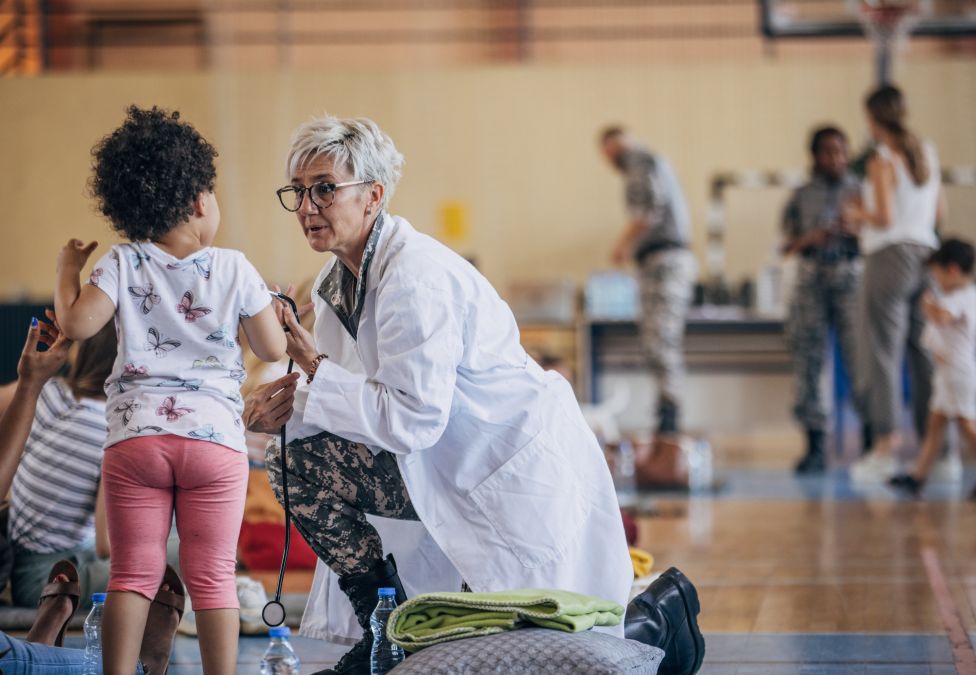
Communities are not “out there” waiting to be reached. They are already connected through relationships, routines, and places of trust. The challenge may be less about reaching people and more about understanding what stands between them and better health. Barriers can emerge across the journey to care, from trusted information and screening to transportation, affordability, and navigating what comes next.
Better health starts by listening to community leaders and building solutions with them.
Making health more accessible, therefore, requires seeing those gaps, understanding the barriers, and building bridges with the people experiencing them.
A recent visit to Meharry Medical College and Nashville General Hospital brought this to life. Many of the physicians are Meharry graduates who have chosen to dedicate their careers to serving the local community, bringing a deep understanding of the people and places they serve. Their commitment extends beyond medical care to what patients need to manage their health once they leave the hospital, from a “food pharmacy” to connections with local resources. It’s a recognition that health is shaped by much more than what happens in the exam room.
That raises two important questions: Who is not getting care? And who needs to come together to change that?
Answering those questions requires more than data. It requires listening.
Building from the Community Out
Too often, the blueprint is already drawn before communities are invited into the room. A better approach is to ask communities to help define the problem, identify barriers, shape solutions, and determine what meaningful progress should look like.
At Novartis, our early work through the Inclusive Health Accelerators, community-led partnerships that identify local barriers and codesign solutions, is putting that principle into practice. Our early learning reinforces a simple idea: better health starts by listening to community leaders and building solutions with those who understand the barriers best.
This is more than inclusion. Community leaders bring knowledge that institutions, quantitative data, and technology alone lack. They know where trust exists, why people disengage, what has been tried before, and which barriers may be invisible to outsiders.
The principle is universal, but the solution should not be.
A trusted pathway may begin in a barbershop, place of worship, school, local clinic, food bank, or with a community health worker. The goal is not to copy and paste the same intervention everywhere. It is to apply the same discipline: Understand who is being missed and why, listen, build with local partners, measure what matters, adapt, and sustain.
This also changes what it means to scale. Scale should not simply mean doing more of the same in more places. Sustainable progress means listening to each community, working with trusted local leaders, and building shared accountability, sustained investment, and stronger connections to health systems. It also means helping communities build lasting capabilities, including the skills, leadership, and resources needed to sustain progress beyond any one program or funding cycle. This all takes time.
No organization can do this alone. Communities, health-care professionals, health systems, governments, researchers, civil society, foundations, and industry each hold part of the solution. Data can help identify where people are being missed. Communities can help explain why. Local partners can help build pathways people will use and trust.
If better health is the destination, communities cannot simply be the last stop for solutions designed elsewhere.
They should help draw the blueprint.
SHARE
Related Content
-
To Deliver on Health Innovation, Understand People as Deeply as Disease
We are living through one of the most consequential and hopeful periods of health innovation in decades. Advances in science, data, and technology are transforming our understanding of disease—and what we can do about it.Read Essay -
Enabling Access to Clinical Research: An Action Plan for Policy and Practice Change
Joining a clinical trial in the US today is harder than it should be. Governed by dozens of entities, the system has become fragmented and burdensome.Read Report
-

Scaling and Sustaining Better Health Outcomes Through Prevention
Preventable illnesses remain a leading cause of death worldwide. Non-communicable diseases such as cardiovascular disease, diabetes, and obesity account for most premature deaths, fueled by limited access to healthy foods, inactivity, and...Read Report
-
The Power of Community for Rare Disease Research
Collaboration, communication, and community are the foundation for meaningful progress in any field. For individuals living with a rare disease, it means even more: A supportive community can alleviate feelings of isolation and foster...Read ArticleImage Quinton Banks, PhDFormerly Milken Institute
-

Community Health Workers: An Effective, Underutilized Health Intervention
Community health workers (CHWs), also known as promotoras, community health navigators, and lay health workers, have been utilized in the US since the 1950s; however, their emergence onto the health-care scene, especially in under-resourced...Read Article
-

Advances in Science: A Decade of Progress in Alzheimer’s Disease Research
Rajiv Ahuja, associate director at the Milken Institute, focusing on the future of aging, moderates this Advances in Science webinar with featured guest Richard J. Hodes, M.D., Director of the National Institute on Aging (NIA) at the...View Webinar -
A Better Health-Care System Begins with Trust
I’ve watched our industry move through cycles of innovation, frustration, and reform. When the frustration builds, I understand the instinct to ask whether we’d be better off starting over.Read Essay -
Better Health Begins with Reimagining How We Deliver Care
Consider what getting care can demand of a family. A single mother with cancer may need to arrange for someone to pick up her children during weekly infusions.Read Essay -
Better Health-Care Access Begins at Home
My mother cared for me. Now I care for her. When she fell, she spent several days in the hospital, resulting in bills that were more than $100,000.Read Essay