Power of Ideas
SHARE
SHARE
We are living through one of the most consequential and hopeful periods of health innovation in decades. Advances in science, data, and technology are transforming our understanding of disease—and what we can do about it.
After more than 25 years in health care, it is clear to me that our greatest breakthroughs are only as powerful as our ability to connect them to the people who need them.
Our greatest breakthroughs are only as powerful as our ability to connect them to the people who need them.
The evidence presents us with a critical challenge. In the US, geography and other factors can influence our destiny: A staggering 20-year gap in life expectancy exists based on where we live and our economic circumstances. In a season of breathtaking scientific progress, we must also discover new ways to translate care innovations into better health for all.
Part of the answer lies in looking beyond the innovation itself to the broader patient experience that determines whether—and how—people benefit from it.
Without the right diagnosis, patients can become trapped in a cycle of uncertainty, delays, and missed care opportunities, often disengaging before reaching the treatment they need. In a study of nearly 12,000 patients overdue for follow-up after an abnormal cancer screening result, fewer than one in four receiving usual care completed recommended follow-up within 120 days.
That is why improving access must start with a commitment to understanding people—and the barriers they face—as deeply as we understand disease.
We need to look at health care from the patient’s perspective, understanding not only the biology of their disease but also their feelings, behaviors, needs, and experiences, and the clinicians, caregivers, and communities shaping their journey. When we take the time to look and listen, gaps that might otherwise be overlooked become more obvious.
Consider pulmonary arterial hypertension. In a multinational real-world study, patients reported an average 17-month delay from symptom onset to diagnosis. And more than 40 percent of those surveyed were initially misdiagnosed, slowing their path to treatment.
Too often, care challenges arise not from a lack of suitable interventions but from the inability of our systems to reach patients and quickly connect them to effective treatments.
Today, artificial intelligence (AI) is starting to show enormous potential to improve patient journeys. Across oncology, neurology, and chronic disease, AI tools are detecting subtle diagnostic signatures—from early-stage lung malignancies to less distinct neurological lesions—with greater sensitivity than human clinicians, potentially turning early detection into life-changing and life-saving interventions.
This illustrates a broader opportunity to leverage data and AI to gain fresh insights across the entire patient journey—revealing where people are missed, delays occur, and additional support could change what happens next.
Of course, technology alone cannot heal our fragmented systems. Data and insights must be paired with a willingness to act at scale across sectors to serve patients and improve outcomes.
I see that principle at work in our company’s collaboration with City Cancer Challenge (C/Can) across regions in Africa, Eastern Europe, and Latin America. Rather than beginning with a predetermined intervention, C/Can works city by city with local governments, health authorities, clinicians, and patient groups to identify gaps and codesign solutions around local needs. Through an expanded five-year partnership, the initiative aims to strengthen cancer care for women in 15 cities—hoping to reach more than 300,000 women and train more than 2,000 health professionals by 2030. Cities will track improvements in diagnosis timelines, treatment initiation, and completion.
Scaling impact does not mean replicating the same solution everywhere. Instead, we need approaches that allow communities to identify their own barriers and build enduring and effective solutions.
While the future of health will undoubtedly be shaped by extraordinary scientific breakthroughs, discovery and invention are only the beginning. We must also understand what stands between breakthroughs and the people they are meant to serve. Together, we can assemble the insights, technologies, and partnerships needed to overcome barriers to better care and improved lives.
When we understand people as deeply as we understand disease, we will be able to ensure that the next era of health innovation is defined not only by the possibilities science creates but also how widely and rapidly people benefit from them.
SHARE
Related Content
-
Who Should Draw the Blueprint for Better Health?
For all the progress made in health, the opportunity to achieve better health outcomes remains unequal. Innovation matters when it reaches the people who need it, and that does not happen automatically. Our challenge, and collective...Read Essay -
Enabling Access to Clinical Research: An Action Plan for Policy and Practice Change
Joining a clinical trial in the US today is harder than it should be. Governed by dozens of entities, the system has become fragmented and burdensome.Read Report
-

Scaling and Sustaining Better Health Outcomes Through Prevention
Preventable illnesses remain a leading cause of death worldwide. Non-communicable diseases such as cardiovascular disease, diabetes, and obesity account for most premature deaths, fueled by limited access to healthy foods, inactivity, and...Read Report
-

The Power of Community for Rare Disease Research
Collaboration, communication, and community are the foundation for meaningful progress in any field. For individuals living with a rare disease, it means even more: A supportive community can alleviate feelings of isolation and foster...Read ArticleImage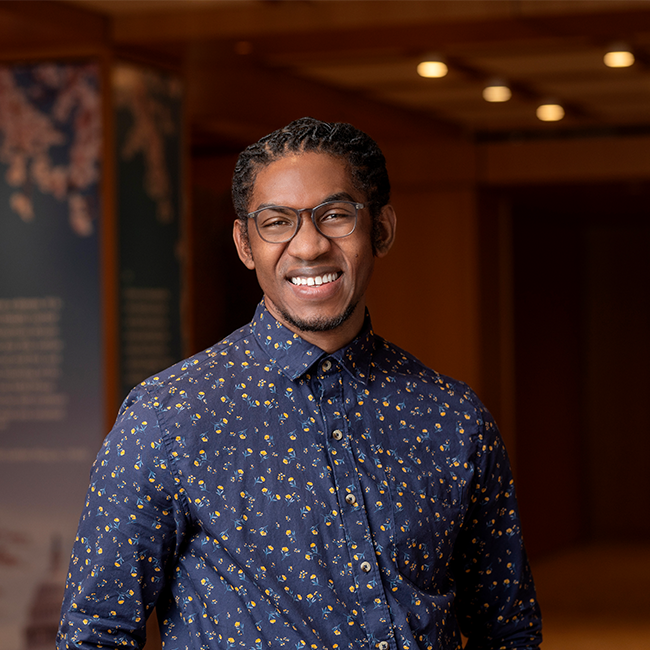 Quinton Banks, PhDFormerly Milken Institute
-

Community Health Workers: An Effective, Underutilized Health Intervention
Community health workers (CHWs), also known as promotoras, community health navigators, and lay health workers, have been utilized in the US since the 1950s; however, their emergence onto the health-care scene, especially in under-resourced...Read Article
-

Advances in Science: A Decade of Progress in Alzheimer’s Disease Research
Rajiv Ahuja, associate director at the Milken Institute, focusing on the future of aging, moderates this Advances in Science webinar with featured guest Richard J. Hodes, M.D., Director of the National Institute on Aging (NIA) at the...View Webinar -

Better Health for All: A New Paradigm for Human Optimization
For most of modern history, we have defined health care by what happens after something goes wrong.Read Essay -
A Better Health-Care System Begins with Trust
I’ve watched our industry move through cycles of innovation, frustration, and reform. When the frustration builds, I understand the instinct to ask whether we’d be better off starting over.Read Essay -
Better Health Begins with Reimagining How We Deliver Care
Consider what getting care can demand of a family. A single mother with cancer may need to arrange for someone to pick up her children during weekly infusions.Read Essay