Power of Ideas
SHARE
SHARE
When our son Jack was diagnosed with SCN2A—one of the leading genetic causes of epilepsy and autism—we were told, like many others, that there was nothing we could do. And like many rare disease parents starting research foundations and biotechs to find a treatment for their children, we didn't believe or listen to that advice.
It's an arduous journey: pivoting from a career you were successful in to something you never thought you'd be learning. We use “it's not rocket science” to describe simple tasks anyone can learn. Unfortunately, developing a new medicine actually is kind of like rocket science.
Like anything complicated, though, if you break things down into their primary drivers and think in first principles, you can find the pivot points with the most leverage. That's what I've built my career on, and these are the three areas I feel provide some of the highest-value, lowest-dollar ways to make better health accessible to more people.
Funding small patient foundations directly gives every disease a real shot at a treatment.
Food as Medicine
In 2025, Tufts researchers published a study in Diabetes Care modeling produce prescriptions for the 6.4 million US adults with diabetes who can't reliably afford food. Over 10 years, the program would prevent roughly 121,000 heart attacks, strokes, and other cardiac events, add 122,000 years of healthy life, and return $2.7 billion in net savings after paying for the food.
Diabetes is one disease. The Centers for Disease Control and Prevention counts 129 million Americans with at least one major chronic disease, and the federal Dietary Guidelines say more than half of adults have one tied to diet. What happens when we model the rest?
Making produce prescriptions a covered benefit in Medicare and Medicaid, as some states already do, puts a treatment that works and pays for itself within reach of everyone.
Newborn Genetic Testing
Every newborn gets a heel-prick blood test for a few dozen diseases. New York's GUARDIAN study, published in JAMA, used that same blood spot to sequence each baby's genome and confirmed 120 serious, treatable conditions in its first 4,000 babies. Standard screening would have caught 10 of them.
California's Project Baby Bear spent $2 million sequencing 184 critically ill infants, diagnosed 40 percent within three days, and saved $2.5 million in hospital costs. Every family skips the diagnostic odyssey, which the EveryLife Foundation estimates costs up to $517,000 per patient. Adding genome sequencing to standard newborn screening gives every child, no matter which hospital they're born in, the earliest possible start.
Direct Research Foundation Funding
The National Institutes of Health counts roughly 30 million Americans, about one in ten, living with a rare disease, and 95 percent of those diseases have no approved treatment. For most, the only group working to create one is the patient foundation, which must raise the money itself.
The Cystic Fibrosis Foundation is a great example. Parents started it and paid drug companies directly to develop treatments, and children who once died as teenagers now live into their fifties. But it had decades and hundreds of millions of dollars. Most patient foundations have a few parents and a bank account.
The SCN2A Foundation, which I started in 2023, sat at a standstill until a single gift changed it. A technology founder whose daughter had just been diagnosed raised roughly $160,000 for us. That one donation made everything that follows possible.
On roughly $250,000, we've funded repurposed drug discovery projects, built a treatment roadmap, established a biorepository, built an AI tool trained on our disease corpus for families, secured counsel from Morrison & Foerster, and launched a global map that connects patients, clinicians, and clinical trials that match their mutation. We've shaped three industry trials and recently developed a prescreening tool for a Phase 3 study that has already brought families into the program.
None of this is a system working. It was luck and timing, and luck isn't a policy.
Funding small patient foundations directly gives every disease, not just those with wealthy, well-connected families, a real shot at a treatment. Judge applicants by how far they have moved a disease toward a treatment per dollar, not by their size, and tie the money to milestones patients care about: a cell model built, a drug filed, a trial enrolled.
So how do we make better health accessible to more people? We already have the answers. Prescription-producing models pay for themselves, newborn sequencing saves money and lives, and patient foundations de-risk drug discovery for an entire industry on budgets that would be rounding errors anywhere else. Fund all three, and better health reaches millions more affordably, and the next treatment gets a real chance to exist.
SHARE
Related Content
-

Bridging Gaps in Clinical Trials: Strategies for Increasing Access and Representation
Despite high levels of spending on health care in the United States—almost double that of peer high-income countries—health outcomes continue to lag across a wide range of disease conditions. The differences in the incidence, prevalence...Read Report
-
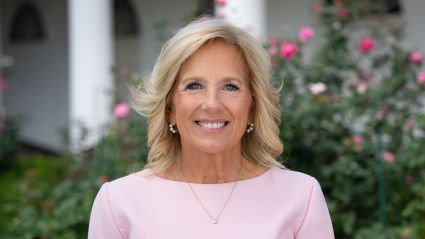
Milken Institute Launches New Women’s Health Network, Former First Lady Jill Biden Joins as its Chair
Today, the Milken Institute announced the launch of the Women’s Health Network to serve as a global collaborative to collate, elevate, and advance existing and new efforts across the women’s health ecosystem. The Milken Institute has also...Read Article -
Investing in the World’s Health Is Good for Business
The collapse of US foreign assistance is an opportunity to build a more prosperous world. Once the world’s largest donor, the United States has slashed funding for the US Agency for International Development, President’s Emergency Plan for...Read Essay -

Transforming Health Outcomes Through Strategic Collaboration
Solving the complex challenges within our health-care system requires more than policy changes or technological advancements—it demands a deeper understanding of the social barriers individuals face. There is no one-size-fits-all solution.Read Essay -
Maternal Mortality and Race: Problematic Levels and Problematic Gaps
The United States has one of the worst maternal mortality ratios (MMRs)—the number of maternal deaths per 100,000 live births—of countries in the Organisation for Economic Co-operation and Development (OECD). Though part of this is due to...Read Article AP
-

Milken Institute Feeding Change Commitment of Support for the White House Conference on Hunger, Nutrition, and Health
Washington, D.C. – September 28, 2022 – Feeding Change, a program of the Milken Institute, commits to convening its private sector Food Is Medicine (FIM) Task Force to elevate, accelerate, and scale coverage and implementation of a range of...Read StatementImage
Holly Freishtat
Senior Director, Feeding Change, Milken Institute HealthHolly Freishtat is the senior director of Feeding Change at the Milken Institute and leads the food systems portfolio. -

How We Can Give Every Cancer Patient the Best Chance to Survive
The fight against cancer is at a crossroads that can be summed up by two numbers. The first: 70 percent. That is the number of people who, for the first time, are living at least five years after a cancer diagnosis. It reflects the...Read Essay -

Better Health for All: A New Paradigm for Human Optimization
For most of modern history, we have defined health care by what happens after something goes wrong.Read Essay -
Better Health Begins with Reimagining How We Deliver Care
Consider what getting care can demand of a family. A single mother with cancer may need to arrange for someone to pick up her children during weekly infusions.Read Essay