Collaboration as Philanthropy's Greatest Asset | October 2026
The most pressing opportunities emerge when unlikely partners come together.
In This Issue:
- Bridging Two Influential Communities to Drive Philanthropy Forward and Rebuild Trust
- Creating a New Field and Finding Unexpected Opportunities in Brain Health
- Connecting Entrepreneurs to Investors and Community-Builders to Accelerate Impact
- New Reports, Insights, and Opportunities
- Strategic Philanthropy in the News
Bridging Two Influential Communities to Drive Philanthropy Forward and Rebuild Trust
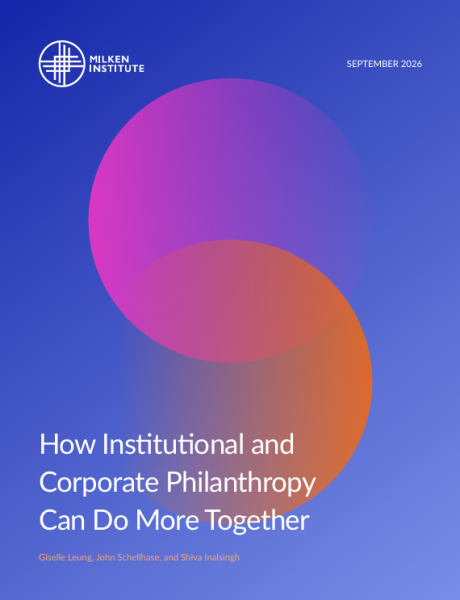
Collaboration across philanthropy is no longer a nice-to-have—it's now a strategic imperative. In the face of increased scrutiny of its legitimacy, influence, and effectiveness, the philanthropic sector must look to new opportunities to build trust and instill renewed confidence in its ability to deliver meaningful change. Our latest report, How Institutional and Corporate Philanthropy Can Do More Together, maps a unique opportunity for two influential funding communities—institutional foundations and corporate philanthropy—to unlock greater impact. Through examples of different models of collaboration and a practical framework, the report helps institutional foundations and corporate foundations move from intention to action, outlining concrete steps to identify opportunities, build trust, and collaborate effectively—for some, perhaps for the first time.
To accompany the report findings, the Milken Institute Strategic Philanthropy team also hosted a breakfast roundtable in New York during Climate Week, “From Parallel Pursuits to Collective Impact: The Next Era of Philanthropic Partnership,” bringing the two funder communities together for a private discussion exploring how their complementary strengths might lead to a more collaborative future.
Creating a New Field, Exploring Unexpected Opportunities in Brain Health
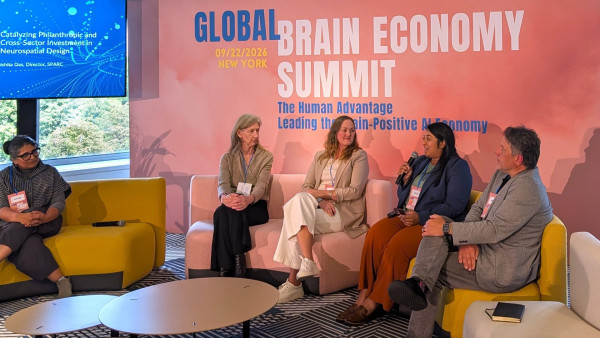
Have you ever walked into a space where the design immediately made you feel calm or more focused, or perhaps anxious? If so, you're not alone—we spend 90 percent of our time indoors, and the spaces around us impact how we think, feel, and behave. Research in neuroscience and health is increasingly revealing why these responses occur and identifying how specific features of the built environment affect the brain and body, helping create buildings and spaces designed to support health and well-being. The challenge lies in the cross-sector implementation needed to conduct the research, develop talent, and catalyze the field towards shared action.
The Milken Institute Science Philanthropy Accelerator for Research and Collaboration (SPARC) has partnered with The Pedersen Foundation to develop two new publications examining how neuroscience, health, design, and related disciplines can come together to combine research with practical application:
- Download Bridging Neuroscience, Health, and the Built Environment: A Giving Smarter Guide, which shares neurospatial design’s core principles, key players, and challenges to broad adoption and presents four interconnected philanthropic priorities as critical areas where investment can advance neurospatial design to improve human health.
- Download The Growing Case for Neurospatial Design: Investing in Health and Prosperity, which provides a compelling rationale for adopting neurospatial design across workplaces, health-care facilities, educational spaces, and residential communities. The report highlights two pathways with actionable opportunities to promote spaces designed to provide health and economic benefits.
Connecting Entrepreneurs to Investors and Community-Builders to Accelerate Social Impact
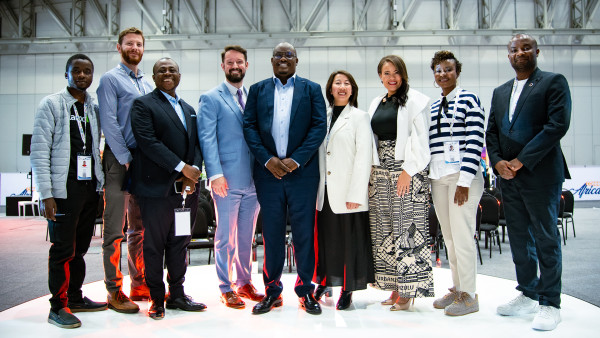
New for 2026, the Milken-Motsepe Prize Program piloted its first 12-week Accelerator Program, designed to help past winners and finalists strengthen their investment readiness, sharpen their growth strategies, and position their business for long-term success. The inaugural cohort was selected by the Milken Institute Prize team based on identified business needs and opportunities for growth across the portfolio.
In partnership with Africa's largest startup campus and entrepreneurship hub, 22 on Sloane, the inaugural cohort participated in workshops, mentorship, and coaching tailored to their needs. The program culminated in an onstage pitch event at the Global Entrepreneurship Congress in Cape Town in September.
Up next: Our semifinalists for the Circular Economy prize will be announced in the coming weeks—stay tuned for more!
New Reports, Insights, and Opportunities
The Global Brain Care Coalition: A Model to Put Brain Science into Action
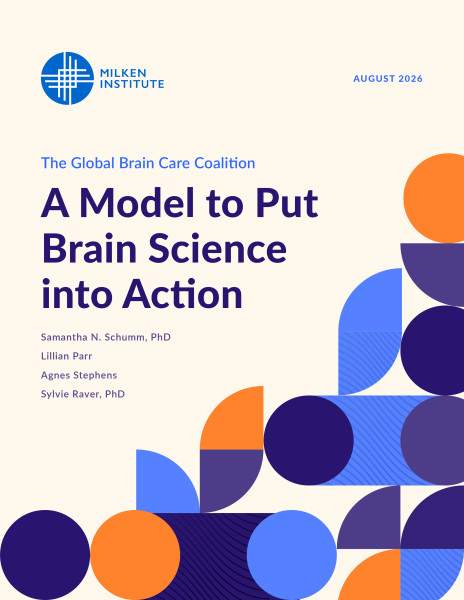
The Global Brain Care Coalition (GBCC) was founded in 2024 within Mass General Brigham to short-circuit that translation delay by bringing rigorous brain science into practical tools. The effort is grounded in the Brain Care Score, which assesses modifiable factors that influence brain health. Building such an initiative requires strategy, structure, and relationships to bolster foundational science. From 2024 through 2026, SPARC partnered with the GBCC, providing strategic and operational guidance as the GBCC moved from a founding vision to an active coalition. A new case study examines that partnership to outline what it takes to accelerate translation, including how to leverage an academic medical center’s infrastructure and the roles of philanthropy, operational support, and community engagement. For funders and institutions weighing similar work, the GBCC's experience offers a useful example and set of lessons. Download the report.
Milken Institute and Kissick Family Foundation Select Recipients of $2.5 Million in New Funding for Frontotemporal Dementia Research, Launch New Funding Cycle
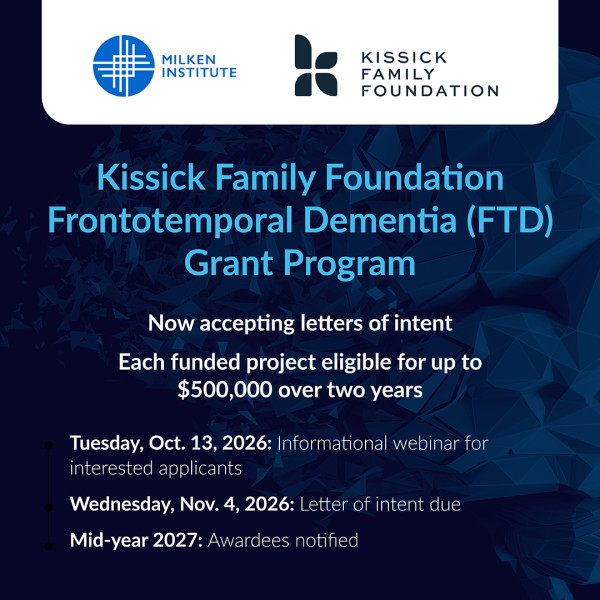
Five research teams have been selected to receive a total of $2.5 million through the third funding cycle of the Kissick Family Foundation Frontotemporal Dementia (FTD) Grant Program, investing in research that accelerates foundational discoveries, advances novel treatment options, and ultimately improves outcomes for people living with sporadic FTD. Additionally, the program’s fourth funding cycle is now accepting research proposals to understand the fundamental biology of why and how sporadic forms of FTD develop.
Community Violence Intervention Series: A Framework for Safer Communities

In a recent Insights article, Associate Director Crystal Miller examines the growing impact of community violence intervention (CVI), one of the most promising strategies for addressing gun violence. CVI programs work to interrupt cycles of violence, mediate conflict, and connect individuals at highest risk with critical support services. From Baltimore, MD, to Oakland, CA, communities across the country are seeing meaningful reductions in gun violence, often attributed to multipronged strategies that incorporate CVI—but eliminating gun violence requires coordinated efforts and long-term investment to continue to build on its progress.
The article is the first in a four-part series exploring the need for coordinated investment across philanthropy, government, finance, and business to help scale this work to transform the future of community safety.
How Philanthropy Can Fuel the Next Generation of Biomedical Researchers

In a new Insights article, Benjamin Roberts, PhD, senior associate, and Das share how philanthropy can provide a jump-start for the engine behind the US biomedical enterprise: early-career researchers. Learn why rebuilding and sustaining this workforce requires coordinated philanthropic commitment.
Strategic Philanthropy in the News
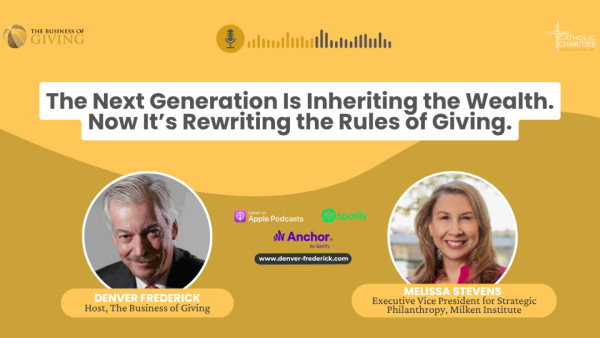
Melissa Stevens, executive vice president, discusses the next generation of philanthropists and how they’re shifting the status quo in Fortune: “They’re not thinking necessarily of themselves as philanthropists... They’re thinking of themselves as angel investors, impact investors, change makers, [and] advocates.”
Hear more from Stevens on how the next generation is rewriting the rules of giving from The Business of Giving podcast with Denver Frederick.
SPARC Managing Director Sylvie Raver wrote about SPARC’s work with the Tullman Family Office and The Duchossois Family Foundation to address gaps in support for veterans in “More Than Gratitude: How Strategic Philanthropy Can Transform the Veteran Transition”: “When servicemembers become veterans, they don't just leave a job. They leave an identity and a sense of purpose. Rebuilding that internal compass in civilian life is critical, yet this area receives the least philanthropic attention of all.”
SPARC Director Caitlyn Barret discusses how a $96 million gift is transforming pediatric brain cancer's clinical trial infrastructure in Clinical Leader: “Philanthropy is no longer putting a name on a building. It’s a partnership.”
SPARC Director Ishita Das shares further insights on the emerging field of neurospatial design in The Business of Giving, "How the Buildings Around Us Shape Our Brains, Bodies, and Health”: “Philanthropy is great at taking risk, and it can take risk better than any other form of capital right now.”