
Milken Institute Strategic Philanthropy Winter Newsletter: What’s Next for Strategic Philanthropy in 2026

In This Issue
Reflecting on a Decade of Impact with Strategic Philanthropy and What's Next
Top 4 Impact Stories: Corporate Philanthropy, Social Innovation, and the Biomedical Ecosystem
New Reports and Insights
Reflecting on a Decade of Impact with Strategic Philanthropy and What's Next
As philanthropy grows more complex, the Milken Institute marked 10 years of its Strategic Philanthropy work with a feature in Worth magazine, highlighting how funders can meet the moment with greater precision and collaboration. “Philanthropy can be an unrelenting North Star in turbulent times. It’s our society’s risk capital that’s advancing solutions, informing capital flows, and changing policies. It can crowd in the voices of those with lived experience. And it can be the connective tissue between ideologies and sectors,” says Melissa Stevens, executive vice president of Milken Institute Strategic Philanthropy.
Since 2015, Strategic Philanthropy has influenced the deployment of more than $3.2 billion, launched more than $100 million in funding programs in 2025 alone, and advanced innovative approaches across science and health, social innovation, and philanthropy leadership. Our programmatic funding spans science, health, and social innovation—from sarcoidosis, bipolar disorder, pediatric oncology, and frontotemporal dementia to the Milken-Motsepe Innovation Prize Program. Learn more about the celebration of our 10 years and our impact to date, and stay tuned for updates on what our work looks like in the next decade.
Top 4 Impact Stories: Corporate Philanthropy, Social Innovation, and the Biomedical Ecosystem
1. Corporate Philanthropy Leaders Continue to Find Strength with Peers Amid Turbulent Times

Corporate foundations play a vital role in philanthropy, deploying billions each year to create meaningful community impact. As the sector faces rising complexity and shifting priorities, the Milken Institute launched the Corporate Philanthropy Leadership Collective (CPLC) to connect executives, foster collaboration, and share strategic insights, proving to be essential for leaders as they navigate turbulent times and manage a wide range of stakeholders.
In 2025, the Collective doubled in size, engaging more than 90 corporate philanthropy leaders and influencing the deployment of more than $2 billion annually. Highlighted in Forbes by CPLC member Lynette Bell of the Truist Foundation, the initiative demonstrates how purposeful corporate philanthropy drives real-world impact.
These shifts are not limited to the United States. Globally, corporate philanthropy is evolving, as illustrated by an Alliance magazine article highlighting our Leading Through Transition report. The report analyzed 250 publicly listed companies and 91 corporate foundations across Southeast Asia and found a clear move from charity-driven giving toward more strategic, evidence-based approaches in response to growing societal challenges.
2. Philanthropists, Tech and Business Leaders Work to Reimagine Education and Work in the Age of AI

As artificial intelligence reshapes how people learn and work, philanthropic and civic leaders must rethink the US education ecosystem to ensure individuals are prepared to use—and shape—advanced technologies. New research from the Social Innovation portfolio's The Computing Imperative report reveals that nearly 60 percent of US schools and districts lack guidance on generative AI use, underscoring an urgent need for leadership, expertise, and investment.
In response, the Institute’s Social Innovation portfolio launched the Future of Education and Work initiative to mobilize philanthropic capital and drive systemic change—empowering learners to chart their own pathways to prosperity and strengthening communities in an increasingly AI-driven world, a call to action recently highlighted in an EdSurge feature with Managing Director of Social Innovation Emily Musil, PhD.
3. Over 31x in Additional Funding Has Been Catalyzed by the Milken-Motsepe Innovation Grand Prizes

With the conclusion of our third prize—the Prize in FinTech in May 2025—we analyzed post-prize fundraising data from participating teams. The results show that, in aggregate, since the program’s inception in 2021, the awarded capital has driven a 31x return, with teams raising $31 for every $1 awarded, tripling the impact from 2024.
At our Middle East and Africa Summit this past December, the Prize in AI and Manufacturing entered the final stage of the prize cycle, with five standout companies selected as finalists. One will receive $1 million in unrestricted funding, to be announced at the Milken Institute Global Conference in May 2026. The prize’s impact continues to extend beyond the competition itself, including recent momentum such as MMP4 finalist Spiro raising $100 million—the largest-ever investment in Africa’s e-mobility sector—as highlighted by TechCrunch.
4. SPARC Directs $40 Million to Childhood Brain Cancer Care Initiatives

The Science Philanthropy Accelerator for Research and Collaboration (SPARC) guided an anonymous donor’s $40 million investment to launch a major initiative to improve radiation treatments for children with brain tumors, led by Johns Hopkins. SPARC’s work with the Children’s Brain Tumor Network, a participant in the initiative, also contributed to a second effort: the Advanced Research Projects Agency for Health’s (ARPA-H’s) new Pediatric Care eXpansion (PCX) program. PCX will allow more than 200 pediatric health-care centers to securely exchange patient data to improve pediatric brain cancer care. To reflect SPARC’s involvement, the Milken Institute has pledged to share ARPA-H's commitment to a healthier future, alongside supporters including Google and Microsoft.
New Reports and Insights
Five Reasons Why Philanthropists Should Invest in Rare Disease Research
Rare diseases—individually and collectively—present a uniquely promising investment opportunity for philanthropic donors, given advances in scientific understanding of many rare diseases, powerful patient communities, and more. Read our recent Insights article.
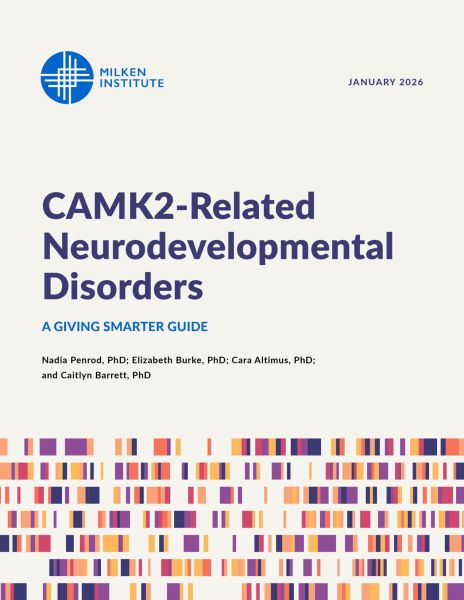
CAMK2-Related Neurodevelopmental Disorders: A Giving Smarter Guide
CAMK2-related neurodevelopmental disorders are rare genetic conditions that disrupt brain development, learning, and daily functioning. A new report from SPARC identifies where strategic philanthropic investment can accelerate progress, including networked centers of excellence, shared research tools, precision therapeutics, biomarkers, and collaborative data infrastructure. Read the full report.
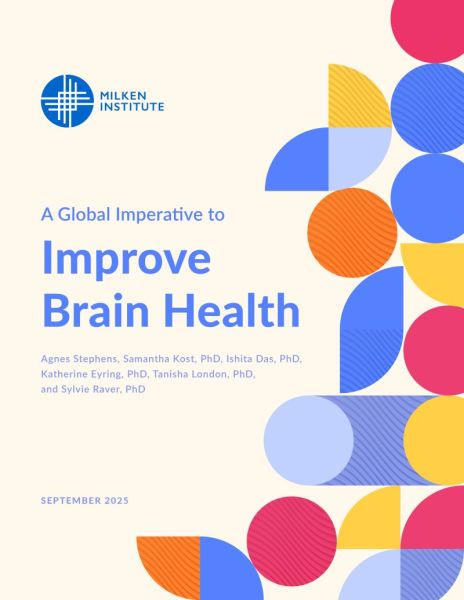
A Global Imperative to Improve Brain Health
Age-related brain diseases such as dementia, stroke, and late-life depression are rapidly increasing as the global population ages, with disproportionate impacts on marginalized communities and an expected economic burden exceeding $5 trillion annually by midcentury. Read the new SPARC report, which features new analysis showing that many of these conditions are preventable and calls for coordinated action across sectors to strengthen prevention, equity, and brain health systems worldwide.
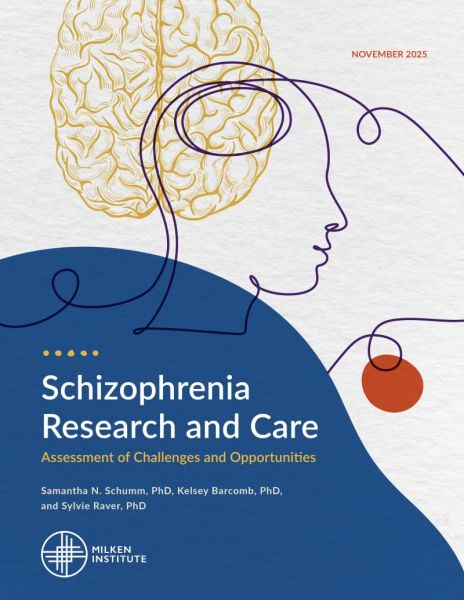
Schizophrenia Research and Care: Assessment of Challenges and Opportunities
Schizophrenia affects roughly 24 million people worldwide, yet care systems are often fragmented, leading many to rely on emergency services and experience poor outcomes, with only about 20 percent achieving functional recovery. This SPARC report highlights five areas—research, treatment, care models, social context, and systemic barriers—where targeted philanthropy can drive meaningful progress toward proactive, person-centered care. Download the report to learn more.
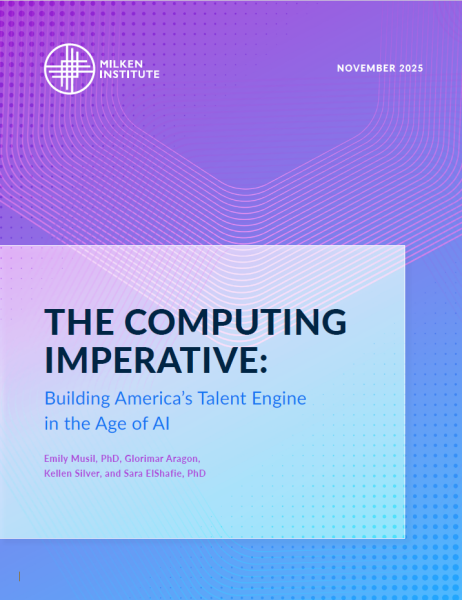
The Computing Imperative: Building America’s Talent Engine in the Age of AI
AI is transforming every sector, yet US education and workforce systems are not keeping pace. This report outlines four actions to build a future-ready workforce: make computing a basic literacy, reinvent higher education, reskill workers, and create local talent ecosystems. Read our report and see how we can reimagine the future of education and work for all Americans.
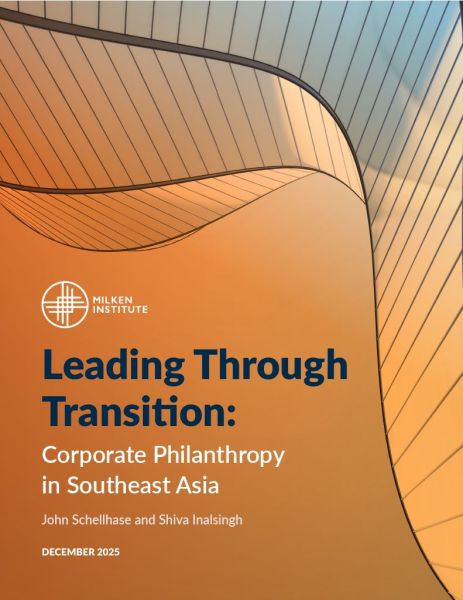
Leading Through Transition: Corporate Philanthropy in Southeast Asia
Leaders are redefining how business and social impact intersect. This report identifies four key themes shaping the region: adopting strategic, data-driven approaches to giving; aligning philanthropy with sustainability goals; prioritizing deeper community impact; and bridging perspectives across stakeholders. Download our findings.