Insights
Putting Billions Back to Work on Africa’s Balance Sheet




Africa does not lack financial assets to invest in its future. With more than $4 trillion in domestic capital, the continent has ample resources to replace declining foreign assistance and reduce investment gaps in infrastructure, housing, and lending to micro-, small-, and medium-sized enterprises (MSMEs). However, African assets aren’t working as hard as they need to.
While private credit exceeds 140 percent of gross domestic product in the US, most sub-Saharan African countries remain below 30 percent, limiting productive lending needed to create jobs for African youth. A powerful tool to unlock this capital is not new but remains underutilized in Africa: securitization.
Securitization transforms illiquid assets, including loans, receivables, and rents, into investment-grade products aligned with the mandates of institutional investors such as Africa’s growing pension funds. It enables capital recycling, broadens investor participation, deepens capital markets, and puts money back to use to expand lending. Securitization serves as a bridge between Africa’s growing domestic savings and pension assets and the funding needed to realize its economic development priorities.
Africa’s securitization market is estimated by Financial Sector Deepening (FSD) Africa at roughly $35 billion, concentrated in a few markets, such as South Africa and Egypt.
Africa holds billions of dollars in mortgages, MSME loans, FinTech receivables, infrastructure loans, consumer finance, and microfinance portfolios. Meanwhile, African pension and insurance assets exceed $700 billion and are growing rapidly, with regulators expanding their ability to invest in alternative assets.
Proven models exist across a range of sectors and issuers.
Institutions such as the African Development Bank (AfDB) and the Banque Ouest Africaine de Développement (BOAD) have played catalytic roles. AfDB’s Room2Run transactions in 2018 and 2022 transferred risk on $3 billion in assets. BOAD securitized $246 million in 2023 and $270 million in 2025, attracting participation from regional banks, pension funds, and insurers and demonstrating local investor appetite for these products.
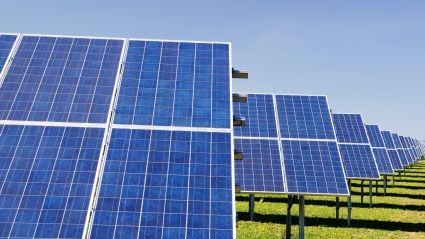
Private issuers have also stepped forward. In 2025, Sun King closed a $156 million local-currency securitization for pay-as-you-go solar and consumer devices. Senior tranches were funded by Absa, Citi, KCB Bank Kenya Limited, and Stanbic IBTC, demonstrating how future customer repayments can be converted into investable assets while expanding access to essential technologies. Emerging housing securitizations—including Acorn Holding Africa’s affordable student housing real estate investment trusts (REITs) in Kenya and West Africa’s first multi-originator residential mortgage-backed security—demonstrate how capital can be recycled to unlock new lending for affordable housing.
Africa’s data-rich FinTech sector is well suited to securitization. JUMO pioneered asset-backed securitization in Uganda with Standard Bank, converting short-term, uncollateralized mobile money loans into tradable securities. These transactions show that even small, short-tenor loans can attract institutional capital.
African agriculture also shows potential including a recent example from Apollo Agriculture, a Kenyan lender, that recently completed a local-currency securitization that converted future repayments from smallholder farmers into securities sold to IDH Farmfit Fund.
Africa’s microfinance institutions serve millions of borrowers and manage loan portfolios in tens of billions of dollars, with strong repayment performance. Reefy Microfinance in Egypt securitized its loan portfolios to expand lending. For microfinance, securitization offers a path beyond reliance on donor and DFI funding.
African commercial banks hold the largest pools of securitizable assets. NSIA Banque Côte d’Ivoire has issued multiple asset-backed securitizations of business loans to expand its SME lending. A $90 million issuance in 2025, anchored by the International Finance Corporation (IFC), British International Investment, and BOAD, attracted local and regional investors and demonstrated how securitization can unlock domestic capital markets.
Securitization can play a critical role in financing Africa’s data centers. According to McKinsey, rising demand for capacity could require $10-$20 billion in investment. As a financing tool, securitization for data centers has grown rapidly, with future rental cash flows from investment-grade corporates pooled and tranched for sale to investors.
The key ingredients to scale securitization in Africa are in place. What is required is a coordinated shift from a small set of demonstrative transactions to repeated execution by a wider range of African organizations, building on proven models.
African commercial banks must play a leadership role. A more aggressive push by these institutions to securitize portions of their SME, consumer, and housing portfolios would free balance sheet capacity, improve capital efficiency, and expand credit to the productive sectors of the economy.
Pension funds and insurers must step in as anchor private investors. Africa’s institutional investors need what these instruments offer: long-duration, predictable cash flows; diversification beyond sovereign bonds; and exposure to growth sectors such as housing, energy, and MSMEs. As pension systems deepen, the constraint is not capital; it is the availability of suitable products and regulatory flexibility.
Development finance institutions (DFIs) should double down on their catalytic roles. African and international DFIs have proven their value as market builders. AfDB’s Room2Run transactions set the pace, and the African Development Bank Group, together with Africa50, has signaled its intention to build toward multi-originator synthetic securitization platforms to crowd in private capital at scale. The African Finance Corporation and African Export-Import Bank have similarly played leadership roles, with the potential both to securitize their own assets and to support others.
Philanthropic partners and traditional donors also have catalytic roles to play. Donors can support the market infrastructure needed for scaling: building evidence, strengthening regulatory and legal frameworks, developing pipelines, and standardizing models. The World Bank–IFC Joint Capital Markets Program (J-CAP), the UK government’s flagship MOBILIST program, and FSD Africa have demonstrated how targeted public and philanthropic resources can unlock domestic capital.
Securitization is about unlocking African balance sheets to fund African development priorities and build capital markets that work for African savers and borrowers.
Africa already has the assets, savings, expertise, and experience. There is tremendous opportunity and demand to redeploy capital into infrastructure investment, consumer and SME lending, and housing development. The time has come for securitization to move from being viewed as an exceptional transaction to a core balance sheet and funding tool, deployed repeatedly and at scale.



If you believe in Africa’s economic future, as we do, you may also be frustrated that opportunities for US retail investors to participate are scarce. Investors seek growth, and the numbers on Africa...