Insights
Billion-Dollar Opportunities to Close Africa’s Agriculture Financing Gap




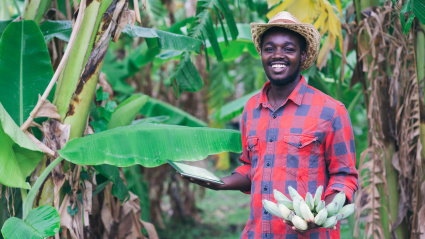
While urbanization and the growth of the services sector continue at a rapid pace across the continent, agriculture remains the backbone of many African economies. Approximately half of Africa’s workforce is employed by the sector. Yet agriculture consistently receives less than 5 percent of total commercial lending—far below its contribution to GDP—leaving a persistent financing gap estimated between $75–200 billion annually.
Traditional donor funding that supported African agriculture has declined significantly over the past several years, while African governments have struggled to scale their investments as debt service consumes an increasing share of their budgets. Africa needs to unlock new sources of domestic capital through structures that match their investment needs and mandates.
Funding relatively small productivity and market development activities will not make a dent in this financing gap. Africa’s agricultural sector requires financing mechanisms capable of mobilizing billions. The good news is that such solutions exist, and several already have transactions that can be replicated and scaled.
Debt-for-nature swaps have gained traction globally, including in Africa, with the notable recent $500 million transaction in 2023 in Gabon. Many of those transactions were underpinned by political risk insurance offered by the US International Development Finance Corporation (DFC). Kenya’s announced $1 billion debt-for-food security transaction with the DFC demonstrates the model’s potential in African agriculture. These transactions can reduce debt service costs and generate several hundred million in savings that can be applied to agricultural investment over a decade or more. To fully scale this potential opportunity, Africa would need to see:
African banks and microfinance institutions hold hundreds of millions in performing agriculture and small and medium-sized enterprise (SME) loans, but lack mechanisms to recycle that capital. Loan securitization offers a proven solution. By pooling agricultural and SME loans into securitization vehicles, banks can:
Examples, including transactions by NSIA Banque in Côte d’Ivoire and Benin, show how securitization can turn illiquid loan portfolios into hundreds of millions in new financing for SMEs in partnership with donors, including West African Development Bank, International Finance Corporation, and British International Investment, with the participation of local investors, including pensions, banks, and insurance companies.
The recent $156 million securitization from Sun King for pay-go solar receivables further illustrates investor appetite and the potential to develop similar offerings for agriculture-focused interventions such as pay-go solar irrigation or tractor services.
Africa has billions of dollars in large, consistent export flows of commodities such as cocoa, coffee, tea, and cashews that generate US dollars. These revenues can underpin commodity-linked bonds or syndicated loans if structured transparently to benefit farmers and cooperatives investing in further development of the sector. Private-sector-led examples offer more promise vs. legacy government-led examples. This opportunity could support some of Africa’s largest cooperatives in making significant investments in value-added processing and reinvesting to replace aging tree crops with more productive, climate-resilient varieties, if governance and financing models are appropriately developed.
African sovereign wealth funds are expanding rapidly across the continent, with more than $100 billion in assets under management, and are increasingly able to anchor large agricultural investments. A recent leading example is the $2.5 billion Dangote-Ethiopia fertilizer project, where Ethiopia Investment Holdings took a significant equity stake alongside Dangote. Similar models can support:
These investments can be further scaled through co-investment with far larger Gulf sovereign wealth funds, whose food security strategies are increasingly targeting Africa.
Guarantees are among the most cost-efficient tools in development finance. When structured well, they mobilize several times more capital than traditional loans and attract new investors.
Nigeria’s Incentive-Based Risk Sharing System for Agricultural Lending (NIRSAL) has proven how it can successfully unlock more agricultural investment. In 2025 alone, NIRSAL guaranteed over $69 million in agricultural loans. With $500 million in authorized capital, NIRSAL provides guarantees to help banks finance parts of the agriculture value chain considered too risky. These guarantees create opportunities to expand both portfolio-level investments by financial institutions and make individual projects investment-grade.
On the donor and philanthropic side, ACELI has also demonstrated the ability to mobilize hundreds of millions of dollars in additional capital for agricultural SME lending through a combination of guarantees and incentives provided to financial institutions. The AGRI3 Fund aims to raise $1 billion in financing for agriculture by providing credit enhancement and technical assistance to investment projects and businesses.
With donor resources declining and guarantees now defined as eligible for official development assistance, donors are likely to expand their use as a tool, providing an opportunity to significantly scale agriculture lending on the continent.
African agriculture-focused funds have often been too small and considered too risky to attract non-development-focused institutional investors. But new fund of funds provide a powerful opportunity to channel institutional capital into agriculture while better managing risk.
Donor-developed platforms such as Financing for Agricultural SMEs in Africa and Mastercard Foundation fund of funds vehicles deploy capital across multiple funds, lenders, and geographies to diversify risk, reduce concentrated foreign exchange exposure, and offer other credit enhancements and loss protections that can create entry points for international institutional investors, as well as local pension funds and insurance companies.
Africa’s agriculture financing gap cannot be closed with incremental solutions or traditional project-based donor assistance. The sector demands market-based mechanisms capable of mobilizing billions and better aligned with the funding mandates of domestic institutional capital sources, which now manage more than $1 trillion in assets. Debt swaps, securitization, commodity-linked finance, sovereign wealth funds, guarantees, and funds of funds are not theoretical ideas but opportunities for replication and scale to help improve the lives of the hundreds of millions of Africans who rely on the agricultural sector.



If you believe in Africa’s economic future, as we do, you may also be frustrated that opportunities for US retail investors to participate are scarce. Investors seek growth, and the numbers on Africa...