Power of Ideas
SHARE
SHARE
My mother cared for me. Now I care for her. When she fell, she spent several days in the hospital, resulting in bills that were more than $100,000. She spent another month in rehab and skilled nursing, and, like many families, we hired help to make sure she was well cared for as she returned home. I run a Medicare Advantage health plan, and I still found myself asking the questions millions of Americans ask: How are people expected to figure this out, and how can they afford it?
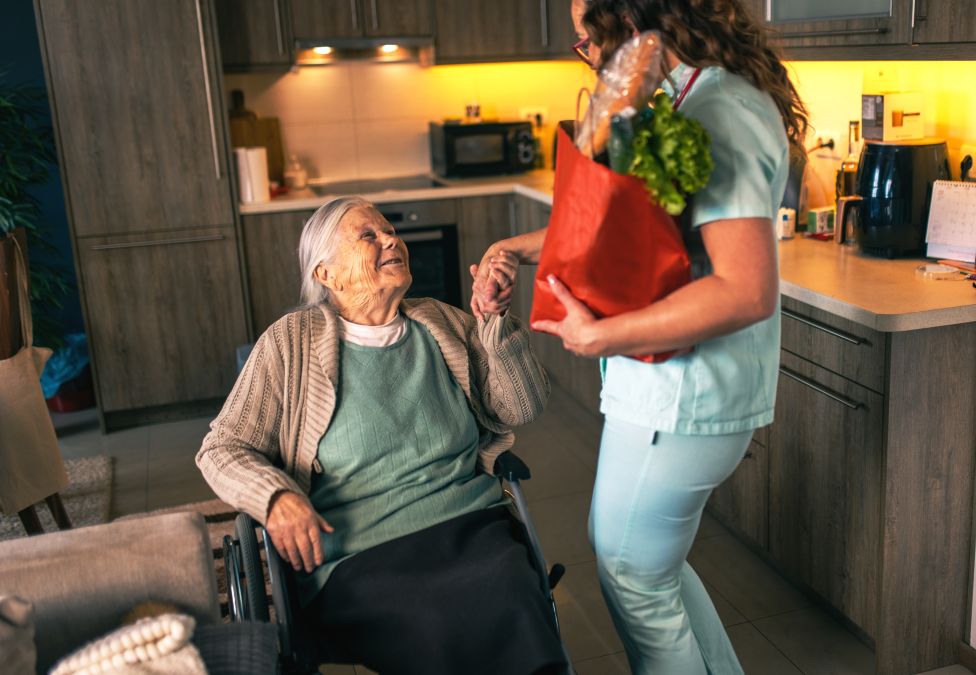
I’ve come to more fully appreciate that making better health accessible to more people isn’t just about making care more affordable and easier to navigate. It’s also about recognizing that the most important part of the care journey begins at home and providing support to the caregivers already there.
Care Begins Where People Live
For older adults, the events that drive cost and suffering—the fall, the missed medication, the infection that becomes septic—rarely come out of the blue. Often, they are preceded by small things nobody catches or addresses. Care teams are fragmented. Information is delayed or incomplete. And caregivers, who see the most, are excluded from clinical workflows.
Caregiving is love made practical. Our health system should make that possible for every family.
With better information and real integration of caregivers, we can identify problems sooner, intervene earlier, and surround seniors with support at home. Sixty-three million Americans—nearly one in four adults—provide ongoing care to a loved one, and more than half perform medical tasks with little or no training. They are already part of the care team. We should treat them that way and pay for their hours as we would any other benefit.
When caregivers are supported and connected to clinicians, the care they deliver becomes one of the most cost-effective interventions we have. Emergency visits decline. Hospitalizations fall. Savings from fewer acute events can be reinvested into more care, not less. Prevention becomes a cost saver rather than a cost driver. Seniors stay safer and more secure in their homes.
We do not need to scale caregiver support everywhere at once. We can start with the 5 percent of Americans who account for nearly half of all health spending and improve as we go. Better health is a journey we should all take together, combining our knowledge and resources to keep seniors healthier for as long as we can.
Access Is More Than an Appointment
Access to a physician means little if you can’t get to the office, afford groceries alongside prescriptions, or climb the stairs. Health for older adults is built at the intersection of medicine, housing, food, transportation, and family, reaching well beyond traditional health-care services. In a national survey of more than 2,000 Americans 65 and older, 90 percent reported at least one social barrier to their health. A system that opens its doors only at the clinic ignores the people who cannot get through them.
Caregivers are often the first to see these barriers, from the empty refrigerator to the missed ride. Integrating them into care teams strengthens our ability to address the social factors before they become a crisis.
The models exist. Home-based clinical teams, remote monitoring, caregiver support, and benefits that address food and transportation produce measurable results today. What we need now is alignment of incentives, payment, and policy that reward long-term health and independence rather than isolated transactions. Any sector that pays for volume will get more costly services. Any sector that pays for outcomes will get better health.
My mother taught me that caregiving is love made practical. Our health system should make that possible for every family. Move more care into the home. Treat caregivers as essential members of the care team. Scale what already works. If we do, we can build a system where aging in America is safer, more dignified, and more supported, and where better health becomes possible for millions.
SHARE
Related Content
-

The Future of Aging and Longevity: A Decade of Progress, A Decade to Act
What will it take to make longer lives better lives for everyone?Read Report -

Before Treating Dementia, We Have to See It
Every three seconds, someone in the world develops dementia.Read Essay -

Age Is Not a Diagnosis
My father was 73 when doctors started explaining away his abdominal pain. First pancreatitis, then inflamed mesentery.Read Essay -

Advancing Blood-Based Biomarkers for Alzheimer's and Cognitive Care
For the first time in health care's long search for answers on Alzheimer's disease, we have two reasons for hope: simple, accurate diagnostics and approved treatments that slow progression.Read Report
-
Stories from the Field: Susan DeMarois
What inspired the California Department of Aging to promote Flipping the Script on Aging as a public health campaign? What observations, gaps, and/or opportunities influenced this direction? We’ve come to recognize that ageism is a public...Read Article -

Digital Technology Bundles: A Testing and Validation Blueprint for Fall Prevention
Falls are the leading cause of injury, both fatal and nonfatal, among adults aged 65 and above. In response, an array of fall-prevention technologies has become available; however, an abundance of “point solutions”—apps, products, services...Read Report
-
Stories from the Field: Stacy Dillow
What inspired HPE to prioritize caregiving support for your employees? Did a personal caregiving experience or story influence the decision to implement these benefits? At HPE, we genuinely believe that our people are our greatest strength...Read Article -

Request for Proposals: Kissick Family Foundation Frontotemporal Dementia Grant Program (2025-2026)
The Kissick Family Foundation Frontotemporal Dementia (FTD) Grant Program will fund a third cohort of research studies to understand the fundamental biology of why and how sporadic forms of FTD develop. In partnership with the Milken...Read Article -

Family Caregiving: Every Sector, Every Solution
“Even as a health-care professional, I experience how overwhelming the cost of care is each year. No one should have to carry that burden alone.” During a private roundtable at the 2025 Milken Institute Global Conference, Sandra Abrevaya...Read ArticleImage
Priyanka Shah
Associate Director, Future of Aging and LongevityPriyanka Shah is the associate director of the Milken Institute Future of Aging and Longevity, which advances healthy longevity and financial security for all through a life-course perspective on aging and longevity.