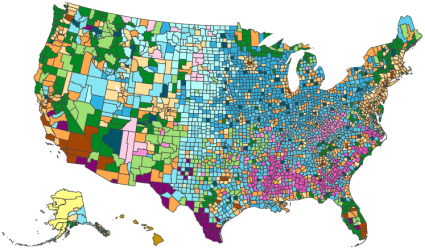
A much-debated concept to support affordable housing is that of a duty to serve (DTS) policy, which would impose an obligation on the secondary mortgage market institutions of Fannie Mae and Freddie Mac or their successors to ensure that adequate lending occurs in specified segments of the primary market. Today, there is a DTS on three areas of housing: manufactured housing, rural housing, and affordable housing preservation. In the policy debate over housing finance reform, there are discussions of creating a DTS that would encompass a broader definition of affordable housing, rather than just these three targeted areas.
An affirmative DTS is more challenging than other affordable housing reform issues because it imposes an obligation on secondary mortgage market institutions to boost lending in the primary market. Imposing a responsibility to take affirmative action, rather than to reflect primary market lending activities, could require costly changes to secondary market firms business strategies and economic performance to bring about requisite changes in the primary market.
This paper first discusses the DTS as it exists now and the broader conception of a DTS in housing finance reform.

LOS ANGELES, CA (February 6, 2024) — Austin, Texas has demonstrated the best performance among large cities, according to the 2024 Milken Institute Best-Performing Cities (BPC) Index, taking the top spot after an impressive three-year run...
Diversity awareness is becoming an essential element of many policy efforts, from access to health care and financial inclusion to initiatives addressing systemic racism and inequities. Yet most of these discussions and initiatives overlook...
California’s San Francisco and San Jose—in the top five last year—dropped to Tier 2 due to high housing costs and short-term job loss; Idaho Falls, Idaho, is No. 1 among small US cities. Los Angeles – Feb. 17, 2021 – Provo-Orem, Utah has...
At the outset of the global pandemic, US residents were consumed with questions regarding how the pandemic would impact their lives. Health and safety were a main concern, with economic uncertainty following close behind. As widespread...
Several housing finance reform models, including the Treasury and HUD plans recently issued at the direction of the White House, support an expanded role for Ginnie Mae in the future housing finance system. Understanding Ginnie Mae’s...
Milken Institute and Urban Institute experts discuss a draft bill under discussion as of March 2018 in the Senate Banking Committee to reform the housing finance system. Given the breadth and the complexity of the bill, which would...
Californians face an unprecedented challenge finding affordable housing. Over the past 30 years, the precipitous rise in housing prices, development constraints, and stagnant growth in real income have cultivated a housing ecosystem that...
Leaders from across the political spectrum articulate the virtues of homeownership. As expressed in the above quotations, both Republican and Democratic presidents emphasize that homeownership is part of the American dream. Besides the...
Both in the foreclosure crisis and in the recent recovery, California has represented a bellwether of the national housing market. The housing crisis that began in 2007 caused considerable economic damage in California and across the...
John Schellhase is a director of Strategic Philanthropy at the Milken Institute. He contributes to and manages projects related to strengthening corporate philanthropy, including overseeing the Institute’s Corporate Philanthropy Leadership Collective.