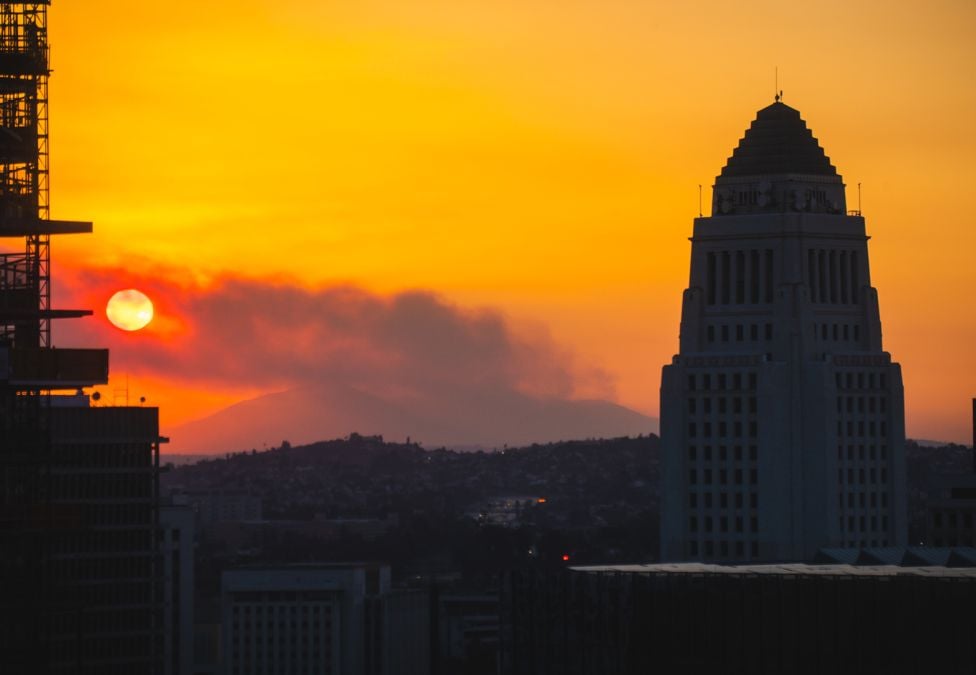
January marks the one-year anniversary of the Eaton and Palisades fires that devastated Altadena, the Pacific Palisades, and Malibu, destroying over 16,000 structures, killing 31 people and leading to hundreds more related deaths, and ranking as the costliest wildfires in recent US history.
The wildfires prompted a whole-of-society response. The federal government obligated $5.7 billion in debris removal, disaster relief, and recovery support to homeowners and business owners. The state of California allocated $2.5 billion to aid relief and recovery, and both state and local government suspended environmental regulations and fast-tracked permitting to facilitate an efficient rebuild. And the Milken Institute estimates that private charitable giving—from individuals, corporations, and institutions—neared $1 billion in 2025.
But as the region shifts into long-term rebuilding that will take years to complete, the financial gap between committed recovery dollars and the cost to rebuild remains enormous. It is not clear where the capital will come from nor how it will flow to the communities, residents, and business owners that need it.
Meanwhile, Angelenos are suffering. Surveyed fire-affected residents from Altadena, the Palisades, and Malibu report sustained financial distress and worsening mental health. Thousands of fire survivors cannot yet return home. Those who still have the resources to afford temporary housing might soon hit a liquidity crunch when limited insurance resources expire and personal savings run out.
Governor Gavin Newsom appealed for $34 billion more in federal recovery money for LA fires recovery in December, but the federal cavalry might be slow to arrive for California, North Carolina, and other states waiting on administration and congressional funding amid proposed FEMA reforms. While this budget debate sorts out, it is clear that the future of disaster recovery in an era of worsening extreme weather events will require a new framework of shared responsibility that builds local response, recovery, and resilience capacity while still giving communities the support that only the federal government can provide.
Los Angeles could be a test case for this new bottom-up approach and for the use of financial innovations that create “blended finance” models for recovery. Under a new framework to make resilient rebuilding affordable, state and local government, banks, corporations, private investors, and philanthropic institutions need to compile shared “capital stacks” that deliver patient, low-cost capital to infrastructure and housing projects.
To help accelerate these efforts, the Milken Institute is maintaining our commitment to support a resilient, collaborative rebuild in Los Angeles by publishing research, convening experts to inspire collaborative action, and offering free project development tools.
- In addition to our research on charitable giving after the fires, our ongoing Financial Innovations Lab is focusing on new ways to bring private capital to bear on funding resilience infrastructure to advance lasting insurability.
- Our October LA Roundtable for Recovery, made possible by the James Irvine Foundation and hosted in collaboration with the Los Angeles Economic Development Corporation, brought together leaders in affordable housing preservation, economic development, government, and philanthropy to invent ways to solve big challenges facing the region with shared knowledge and resources.
- The Community Infrastructure Center, a no-cost philanthropically funded platform that forms part of our Pathways to Capital initiative, is poised to serve as a clearinghouse for cataloguing community-based infrastructure reconstruction and new construction projects, connecting project owners to technical assistance based on their needs, and ultimately connecting project owners to affordable capital from mission-driven lenders.
While the road to recovery will remain long and hard, there are reasons to be hopeful about this shift toward innovative bottom-up progress in Los Angeles.
As of mid-December, 12–13 percent of destroyed homes in Altadena and the Palisades were fully permitted to rebuild. This growing momentum places the county and city well ahead of the progress Paradise, CA had made within one year of the 2018 Camp Fire (but behind Santa Rosa’s progress within a year of the 2017 Tubbs Fire). And efforts like the LA Builders Alliance Homeowner Portal and The Resiliency Company’s PILLAR Platform could streamline rebuilding for more survivors in 2026.
Private charitable giving for LA wildfire relief broke records in 2025, and philanthropy is starting to deploy grants and patient investment capital to catalyze rebuilding—for instance, affordable single-family and multifamily housing projects in Altadena.
Emerging blended finance solutions are poised to drive down the costs of resilient reconstruction, such as Bank of America’s $10 million in 0 percent-interest loans to three community development financial institutions to jumpstart affordable home and business rebuilding, or The Resiliency Company’s $250 million Resilient LA Delta Fund, which will provide low-interest loans to homeowners that help them afford the cost of the “delta” between a code-compliant rebuild and a rebuild that meets Insurance Institute for Building and Home Safety Wildfire Prepared Plus standards.
The public sector is also building tools for resilient recovery, including the state’s $10 billion Climate Resilience Bond (Proposition 4), the fast-tracked creation of Climate Resilience Districts by Los Angeles County in Altadena and the Santa Monica Mountains, and the implementation of permitting reform and endorsement of AI permitting tools by state and local government.
There will be ample opportunities for both new and established financial institutions to participate in the recovery effort. Since Hurricane Katrina, there has been a 20-year history of traditional lenders fulfilling their Community Reinvestment Act (CRA) obligations by backing community redevelopment in disaster-affected census tracts within three years of a presidential disaster declaration. Tracts in Altadena, the Palisades, and Malibu have two years of CRA eligibility left.
2026 must be the year that blended public-private finance takes the lead in large-scale reconstruction. Even when more federal money comes, the burden will remain on state, local, and private actors to develop new ways of working together and financing durable infrastructure and resilient housing. LA still has the potential to show the world how diverse leaders can work together, pool resources, and innovate for a recovery for all.